
A leaking plastic pipe stops in four moves: close the water, drain and dry the pipe, clamp or splice the damaged spot, then restore pressure slowly and watch the repair for ten minutes. A clamp is only a bridge. Treat it as a temporary fix until the pipe is replaced. If you want a local plumber to handle it, start at Santa Ana Plumbing Co and describe what you see.
This page covers the patch, the pipe types, outdoor and tap leaks, and and what to do when the whole run has aged out.
What comes first when a plastic pipe starts to leak?
Turn the main valve off, run the lowest tap until the line empties, and wipe the pipe dry. Then lay a towel under the spot, photograph it, and decide whether to patch or call. Do the shutoff before anything else, since every minute of flow soaks more drywall.
A main that refuses to turn leaves the shutoff in the meter box at the curb. Leave the pipe wrench alone, because a cracked valve body makes a drip into a flood.
Plastic pipe leaks fall into three kinds. A weeping joint is usually a bad glue seal or a fitting that was pushed back out. A split along the pipe suggests freeze, UV damage or age. A pinhole is a puncture from a nail or screw, or a defect. The kind tells you which repair to reach for.
Which repair works on PVC, CPVC and PEX?
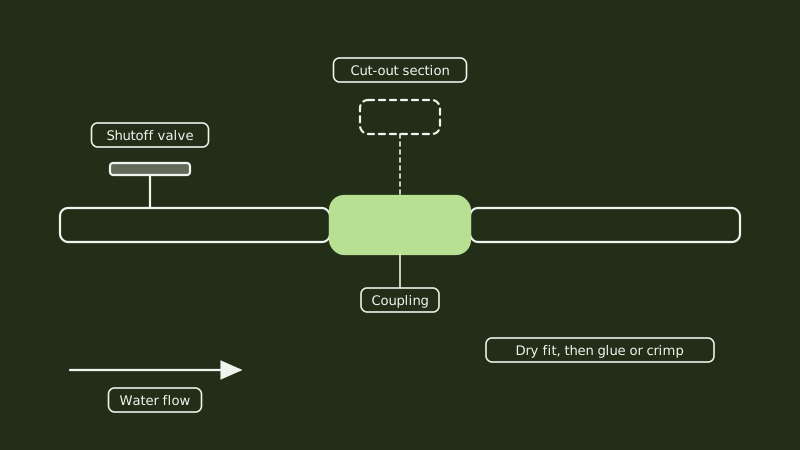
PVC and CPVC both take solvent cement, but they need different cement, and the joint must be dry and primed. PEX does not take glue at all: you cut out the damage and join it with a push-to-connect or crimp fitting. A clamp bridges a small split on any of the three.
| Pipe | What it looks like | Typical fix |
|---|---|---|
| PVC | White or gray, rigid, drains and irrigation | Cut out the bad section, join with PVC cement and a coupling |
| CPVC | Cream or tan, rigid, hot and cold supply | CPVC primer and CPVC cement, or a push-fit coupling |
| PEX | Flexible, red, blue or white tubing | Push-fit, crimp or clamp fitting; no glue |
Cure times differ by product and weather, so follow the label on the can. Some quick-set cements hold small cold lines in minutes, others want hours before full pressure. A push-fit coupling has no wait, but it needs a clean square cut and the pipe pushed in to the depth mark. Tug each side afterward to check it is locked.
You cannot glue a wet joint reliably. If the pipe will not stay dry, use a clamp or push-fit coupling instead and fix it properly later.
How do I stop a leak in a plastic pipe outside the house?
Outdoor leaks are usually irrigation PVC or a hose bib line. Close the irrigation valve or main, dig back to the damaged spot, cut out the broken piece and splice in new pipe with a coupling. Sun makes outdoor plastic brittle, so a repair is a good time to replace any chalky, discolored stretch beside it.
Santa Ana has a mild climate, so freeze splits are rare here. More often the cause is sunlight, a shovel strike, a lawn mower or roots pushing against a fitting. If water is surfacing in the yard and you cannot tell which pipe it belongs to, shut the main and watch the meter. A dial that moves with every tap closed points to a leak somewhere on the property.
Pipe past the meter is the homeowner's to fix. The utility handles the street side. Once the pipe runs beneath a slab or driveway, the question becomes slab leak repair or repipe, which is plumber work.
How do I stop water leaking from a tap?
Turn the little oval-handled stop under the sink clockwise, then open the faucet to empty it. A spout that drips points to a tired cartridge or washer, and a wet base points to an O-ring. Water below the sink often means a loose supply connector. Swap the part that is at fault.
Parts cost little. Matching the cartridge is the hard bit, so carry the old one with you. A longer walkthrough sits on fixing a leaky faucet. If the shutoff valve itself drips when turned, or will not close, that valve needs replacing and is a good plumber visit.
When should I replace the pipe instead of patching it?
Replace the run when you have patched it more than once, when the plastic is brittle or discolored, when you find several weeping joints, or when the pipe is a type with a poor record. A patch covers the damage you can see, while the rest of a tired pipe keeps aging underneath it.
A lot of Santa Ana housing dates to the 1920s through 1950s and began life with galvanized or copper supply lines. Plastic arrived later, in remodels and repipes. Polybutylene is the plastic to worry about: gray or blue, found in houses from about 1978 to the mid 1990s, and known for failing. If you find it, see the page on polybutylene replacement. Replacement work involves permits, which a plumber handles, so ask about that in the quote.
How long should household supply pipes last?
Material decides it, and every figure here is an estimate. Copper commonly lasts 50 to 70 years, CPVC 50 years or more when kept out of the sun, and PEX is often quoted at about 40 years. Galvanized steel is usually near the end after 40 to 50 years, and Santa Ana hard water ages pipe faster than gentle water does.
Rather than count years, watch for signs: brown or rusty water, falling pressure, pinhole stains on drywall, green crust at copper joints and repeated leaks. Two of those together is a reason to book an inspection. For the process, read how a house gets repiped, and for money, the numbers on a whole-house repipe.
What is the name for a person who repairs water pipes?
That is a plumber. California requires anyone taking plumbing work from the public to carry a C-36 contractor license, and CSLB's website lets you check one. A handyman may do small jobs under $1,000 without one, but not work that needs a permit. Pipefitters and sprinkler fitters are related trades with different scopes.
How do I avoid paying too much for the repair?
Verify the license, get the figure written down before work begins, and hold back most of the payment until the end. When it is not an emergency, collect two quotes. Useful quotes name the pipe, the footage, the fittings and who pulls any permit. A round figure with nothing under it is the red flag.
Overcharging tends to hide in three places: a high visit fee that is not credited to the job, parts marked up with no label, and a "repipe" proposed for what is a single bad fitting. Ask to be shown the failed piece. The state board caps a remodeling deposit at $1,000 or ten percent of the price, if that is lower.
How should I prepare for the plumber's visit?
Move stored boxes away from the leak and keep the main closed until the plumber says otherwise. Jot down the day it started and anything you have attempted. Add the house's build year and any earlier repipe. Show the main shutoff on arrival. If the pipe hides in a wall, a phone photo of the stain helps.
Common questions
How do I join two pieces of broken pipe?
Use a repair coupling matched to the pipe: a push-fit coupling for PEX, CPVC or copper, or a solvent-cement coupling for rigid PVC. Cut the damaged section out squarely, deburr the ends, and push or cement each pipe into the fitting. A rubber and steel repair clamp wraps over a split without cutting.
How do I temporarily fix a busted pipe?
Close the supply, towel the pipe off, then bolt on a repair clamp or wind self-fusing silicone tape over the split. A pinhole can take epoxy putty. All of these buy days, not years. Plan a proper replacement of the damaged section, and keep a bucket under it until then.
What signs say a quote is inflated?
Set it beside a second written quote and the published ranges. Parts, labor and the visit fee should be listed apart. A refusal to itemize, pressure to sign today or a demand for most of the money upfront all count against it.
How do I steer clear of plumbing scams?
Check the contractor license on CSLB, demand scope and price in writing, and pay no more than the legal deposit. Use a check or card so a record exists. Treat door-to-door offers after a storm with suspicion. A straight plumber will tell you when the fix is small.
Sources
- Contractors State License Board, Learn About Home Improvement Contracts
- InterNACHI estimated life expectancy chart for home components (typical lifespans, treated as a rough guide)
- Manufacturer installation instructions for push-to-connect fittings and solvent cement (follow the label on the product you buy)
Last updated