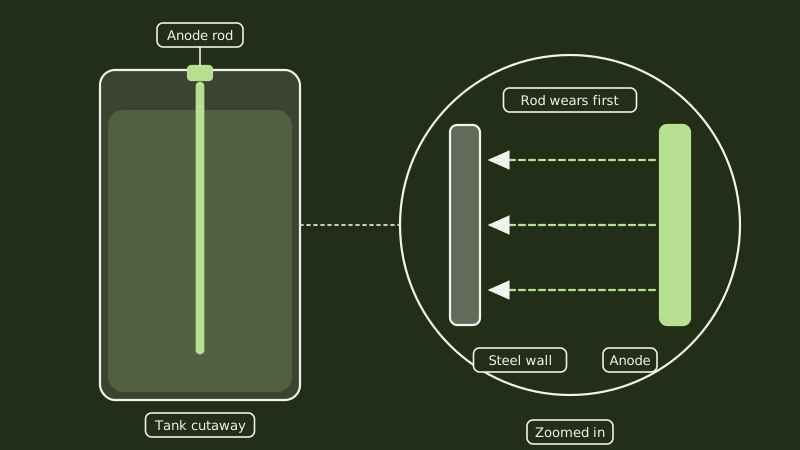
The anode rod is a long metal rod threaded into the top of a tank water heater. Because it corrodes first, the steel tank corrodes later. Most guides suggest inspecting it every one to three years and replacing it roughly every three to five, sooner with softened or very hard water. A new rod commonly costs $20 to $75, and a plumber's visit about $150 to $350. It belongs with our wider coverage of water heaters in Santa Ana, where a tank unit is one of the choices, and it shows how to judge when yours is due.
What does a water heater anode rod actually do?
This part is a sacrificial metal rod, usually magnesium, aluminum or a zinc-aluminum blend, that hangs inside the tank. Water makes metal corrode, and the rod, being more reactive than steel, takes the attack instead of the tank walls. When the rod is used up, the tank starts to rust, so the rod is the cheapest part that protects the most expensive one.
The same principle protects ships and buried pipelines, and engineers call it a galvanic anode. In a water heater it is simply a consumable part. Tankless units have no storage tank, so they have no anode rod.
You will notice the rod's work only when it fails. Signs that it is spent include rotten-egg smell in hot water, rust-colored hot water, popping and rumbling from sediment, and a tank that is old for its type. Each of those can have other causes, so the rod is a check, not a diagnosis.
When should an anode rod be replaced?
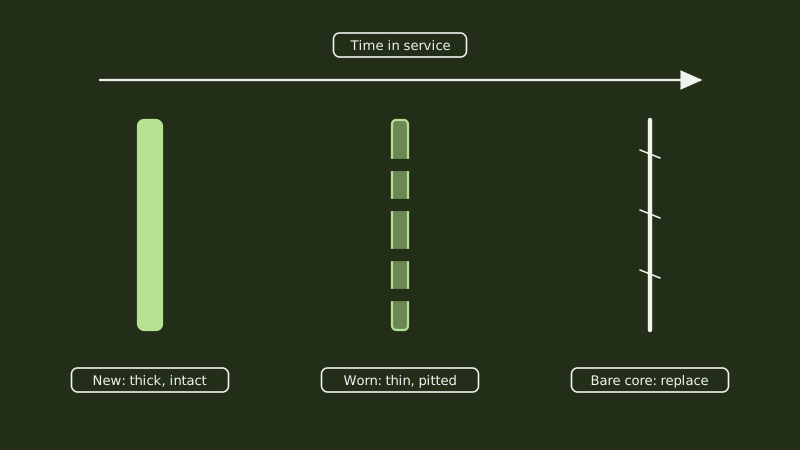
Replace it when more than about half of the steel core is bare, or when the rod has dwindled to a thin wire. Guides give an inspection every one to three years and replacement around every three to five. Hard water, a softener or heavy use shortens that. Your model's owner manual is the safest guide.
These intervals come from plumbing cost and service guides rather than from one standard, and they disagree at the edges. One source says softened water can consume a magnesium rod in about a year, another says an aluminum rod in very hard water lasts two to three years. I have not checked Santa Ana's current water hardness figures, so lean toward the shorter end of the range for a heater that is past its fourth year.
The four rod types:
- Magnesium: the usual factory choice, good in soft water, used up faster in hard or softened water.
- Aluminum: lasts longer in hard water; some manufacturers prefer it.
- Zinc-aluminum blend: sold to tame the sulfur smell some supplies develop.
- Powered anode: electrically driven, lasts a decade or more, and costs several times as much.
Some manufacturers specify the rod or limit changes, and a few warranties depend on keeping the original type. Read the label and manual first, then see water heater lifespan and replacement timing for how rod care affects the tank's life.
What does replacing an anode rod involve?
You need a socket that fits the hex head, usually 1-1/16 inch, and clearance above the heater to pull a rod that can be three or four feet long. Cut the electricity or gas, shut the cold inlet, run a hot faucet to bleed off pressure, drain a few gallons, then back out the old rod. A segmented flexible rod suits tight closets.
Hot water under pressure sits inside, so let the tank cool before opening anything. The hex head often seizes after years of heat and scale. An impact wrench or a long breaker bar helps, and a rod that will not budge is the signal to hand the job over, because muscling it risks cracking the tank top or fittings.
Wrap the new threads with plumber's tape or sealant if the manufacturer calls for it. Refill the tank with a hot tap open so air escapes, check the fitting for drips, and then restore power or gas. For a gas heater, do not touch gas lines or controls yourself beyond relighting as the manual shows. Gas piping is contractor-only in California, and so is any job requiring a permit or priced at $1,000 and up.
A like-for-like rod swap is routine maintenance, and I am not aware of a permit being needed, though you can confirm with the City of Santa Ana. A failed or leaking tank is different; see what a water heater permit involves.
Is a new rod enough, or does the whole heater need replacing?
A fresh rod pays off while the tank is healthy and fairly young, roughly under eight to ten years. Rust around the base, puddles or a seeping seam say the heater itself is done. A rod protects a healthy tank; it cannot repair one that is already rusting through.
If your heater is within the warranty period, check whether maintenance records are required. If the rod seems fine and the tank is older, ask a plumber to look before spending on a new one. Full-replacement pricing is in the Santa Ana water heater cost guide, and a tank that already weeps is dealt with in plumber for water heater leak.
When the rod is gone and the tank is intact, a new rod can add years. When the tank has started to weep, no rod will help.
What will a new anode rod cost me?
As a guide, the rod itself costs about $20 to $75, with flexible segmented rods around $30 to $70 and powered anodes $150 to $300. Having a plumber do it commonly runs $150 to $350 all in, with labor near $50 to $150 an hour for roughly an hour of work. A seized rod, a tight closet or a gas heater raises it.
| Item | Typical range (guide only) |
|---|---|
| Standard rod, part only | $20 to $75 |
| Flexible segmented rod | $30 to $70 |
| Powered anode | $150 to $300 |
| Plumber visit including the rod | $150 to $350 |
These figures come from published national guides read in November 2026. The plumber who comes to the house gives the actual price in writing. Ask if it covers disposing of the old rod and flushing sediment, and run the contractor's license number through the state contractors board before work starts.
What should I do next?
Read the data label for the heater's age and model. Four years past the last check? Book a rod inspection. Past ten years? Ask about replacement instead. Tell us about the heater through the price request page and a nearby plumber is lined up. Phones are staffed weekdays, 9am to 5pm. The wider list of jobs is on the Santa Ana Plumbing Co home page.
Common questions
How long should the swap take?
About an hour when the rod turns freely and there is headroom. A seized rod, a cramped closet or a full drain-down can push it toward two. Doing it yourself usually takes longer, since cooling, draining and hunting for the right socket all add time.
What should the plumber tell me before starting?
Which rod type goes in and why, since it depends on your water. Whether the price bundles part, labor and a flush. Whether the heater's warranty terms were checked. Their contractor license number, which you can confirm online. And the plan if the old rod refuses to turn.
Is someone needed at the house the whole time?
Someone should open the door and okay the quote, particularly if a seized rod changes the plan. Heaters hide in garages, closets and utility rooms, so keep the route clear. Hot water goes off briefly, so schedule showers around the visit.
Can a softener make the anode rod wear out faster?
Yes. Softened water is more aggressive toward magnesium rods, and some sources say a rod can be used up in a year or two. If you have a softener, inspect more often and ask a plumber about an aluminum or zinc-aluminum rod. Check the heater warranty before switching types.
Sources
- Published anode rod replacement prices and service intervals from several plumbing cost guides, checked November 2026
- Water heater manufacturer owner's manuals (check the one for your model)
- California Contractors State License Board
Last updated