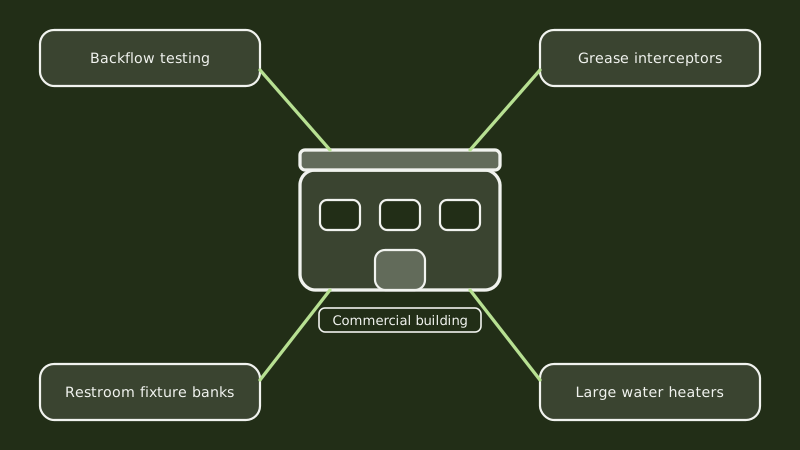
A commercial plumber handles the water, drain, gas and fixture systems in buildings that are not single-family homes: restaurants, retail units, offices, apartment blocks and warehouses. The work covers day-to-day repairs, planned maintenance, buildouts for a new tenant, and the testing that local rules demand, such as annual backflow device tests. The overview of commercial plumbing in Santa Ana shows how we arrange these visits, and this page explains each job in plain terms.
What jobs does a commercial plumber actually do?
A commercial plumber repairs and replaces pipes, fixtures, water heaters, drains and valves in non-residential buildings, runs new lines for tenant improvements, installs grease interceptors and backflow assemblies, tests backflow devices, locates leaks and clears main sewer lines. Scale and code are the differences: bigger pipe, more fixtures, stricter rules.
In practice the list breaks into five groups. Repairs cover leaking supply lines, failed flush valves, broken restroom fixtures and clogged floor drains. Replacement jobs cover commercial water heaters and booster pumps. Buildouts add restrooms, sinks and kitchen lines when a space changes use. Compliance work covers backflow testing and grease control. Emergency calls cover burst lines and sewage backups. Which of these you need often depends on the building: a dental office needs fixtures and compressed-line work, a bakery needs floor drains and a grease interceptor.
What is commercial backflow testing?
Each backflow prevention assembly has to be proven once a year: water must not be able to creep backwards into the public supply, and the test shows whether it can. A tester holding a current backflow tester qualification attaches gauges, runs the test, and files a report with the water supplier. California agencies cite Title 17, section 7605 as the source of the annual requirement.
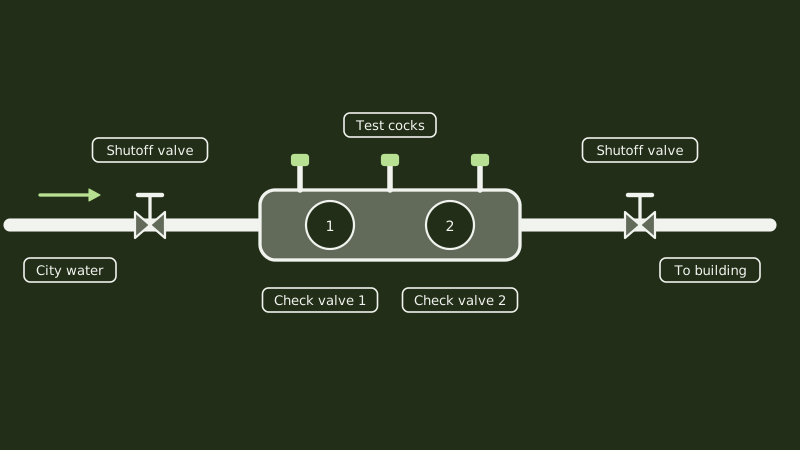
Buildings that need an assembly tend to be those with a fire sprinkler system, an irrigation system, a boiler, a commercial kitchen or any process that could put contaminants into the pipes. The water supplier decides which sites need one and sends a notice when a test is due. In Santa Ana, the supplier for most addresses is the city's own water division, so notices come from the city. A failed device gets repaired or swapped, then tested a second time.
Our page on backflow certification and testing goes into rules, and what backflow testing costs lists published prices. Published figures from California testers run around $75 to $200 per device for a routine test, and a repair or rebuild after a failed test is published at roughly $150 to $500. The plumber's written quote has your actual price.
How does commercial plumbing differ from residential plumbing?
Commercial plumbing involves larger pipe, higher flow, more fixtures sharing one system, and a heavier set of codes. Work needs permits, inspections and often coordination with a landlord, a property manager or a health inspector. Jobs are timed around opening hours, so night and early-morning visits are common. A house call is usually one fixture and one decision-maker.
Materials differ as well. Commercial buildings use bigger copper, cast iron or plastic lines, commercial-grade valves, and fixtures designed for hundreds of uses a day. Water heaters may be large storage units or banks of tankless units feeding several restrooms. A tenant also has legal obligations to the landlord, so check your lease to see who owns repairs on shared pipes before you call.
What do restaurants and food businesses need from a plumber?
Restaurants and other food businesses need grease control, floor drains that carry wash-down water, hand sinks, three-compartment sinks and a hot water supply sized for dishwashing. In Santa Ana, the city's Fats, Oils and Grease control program requires a grease interceptor for new high-risk food service establishments and for existing ones that remodel or increase production.
OC San, the Orange County Sanitation District, also requires food service establishments that discharge to the sewer to hold a FOG wastewater discharge permit, with some reheat-only operations exempt. Its permit instructions give a minimum interceptor size of 750 gallons and a maximum of 1,500 gallons, with two compartments. A plumber sizes and installs the unit, and a separate hauler pumps it. The city or OC San can confirm which of these rules reach your particular business.
Who is allowed to do commercial plumbing work in California?
Under state law a contractor license becomes mandatory once a job reaches $1,000 for labor plus materials, or needs a permit at any price, and plumbing falls in class C-36. Ask for the license number up front and run it through the state board's search. Backflow testing adds a second condition: a tester whose qualification the water supplier accepts.
For a business owner, a permit matters. The City of Santa Ana issues permits for plumbing alterations in its boundaries, and other Orange County cities have their own building departments, so a unit in Costa Mesa or Irvine is permitted there. Put two questions to the plumber: does this job need a permit, and who applies for it? Unpermitted work can complicate a lease, an insurance claim or a sale of the building.
How much does a commercial plumber cost?
Pricing is either per job or per hour, and it usually lands above residential rates because systems are larger, visits happen after closing time and paperwork is heavier. We do not publish a flat hourly figure for commercial work, since scope varies too much. See commercial plumber hourly cost in Santa Ana for the factors that set the rate.
Ask for a written scope, the price for that scope, and whether permits, parts and testing fees are in it. Ask how after-hours visits are charged, and whether a second visit is needed for a test or inspection. Annual maintenance can lower the cost of surprise repairs, and a plumber can set out what a plan would cover for your site.
When should a business call a commercial plumber instead of a handyman?
Call a plumber for anything that touches water supply, drains, gas or a backflow device. A handyman can tighten a loose fixture or replace a flapper, but cutting into pipe, working on gas or changing a restroom layout is plumbing and may need a permit. Using the wrong person risks leaks, failed inspections and voided insurance.
A good test is whether the work changes the system or only the fixture. A burst line, a sewer backup, a recurring clog in a main drain, a failed backflow test and any remodel that moves a sink are plumber jobs. Leave gas to a contractor entirely. A gas smell means an immediate walk outside for everyone, followed by a call to SoCalGas (1-800-427-2200) once clear of the building, or 911 if anyone is hurt or threatened.
Common questions
How often does a commercial building need backflow testing?
Every assembly needs a test annually under the Title 17 rule that California water agencies cite, and again after installation, repair or relocation. Some suppliers require more frequent tests for high-hazard sites. Your water supplier sends notices and sets the deadline, so confirm timing with them and keep the tester's report on file.
Does a commercial plumber handle emergencies?
Yes, burst pipes, sewage backups and major leaks are standard commercial calls. Close the main water valve if reaching it is safe, move anything electrical out of the way, then call. Raise after-hours handling when you request the quote. We can set up a plumber for your site, though no arrival time is promised before you hear back.
Can anyone but a plumber install a grease interceptor?
Yes. A grease interceptor is a plumbing installation that needs a permit, correct sizing and a connection to the sewer line. The City of Santa Ana and OC San set the triggers and size limits for food service businesses. A separate hauler pumps the interceptor on a schedule.
Who pays for plumbing repairs in a leased space?
Your lease decides. A common split is tenant for fixtures and drains inside the space and landlord for the main supply and shared lines, though terms differ. Read the repair clause, notify the property manager in writing before an expensive repair, and ask the plumber to document the cause and location so responsibility is clear.
Commercial jobs can be priced through the quote page. The wider list of services starts at the Santa Ana Plumbing Co home page.
Sources
- City of Santa Ana, Fats, Oils and Grease control program
- Orange County Sanitation District (OC San), Fats, Oils and Grease source control program
- OC San, Core Elements of the FOG Ordinance (OCSD-25)
- California Code of Regulations, Title 17, section 7605 (annual backflow assembly testing), as cited by California water agencies
- California Contractors State License Board, plumbing contractor classification C-36
- Published backflow testing prices from California testers, checked November 2026
Last updated