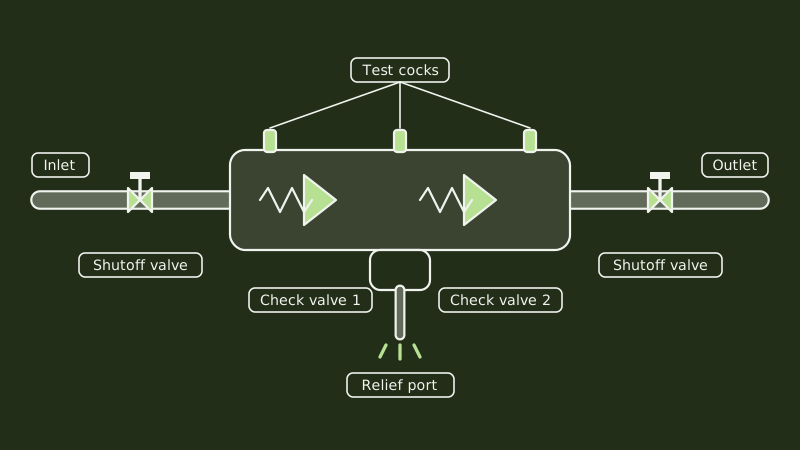
A backflow prevention assembly is a set of valves that keeps used or tainted water from running the wrong way into the clean supply. In California these assemblies are tested at least once a year by a qualified tester, and the water supplier collects the results. This page covers the test itself, the cost and what a failure means. The wider rules are on the backflow certification testing page.
Why does a backflow assembly need a test every year?
Because the parts inside are springs and rubber seals that wear, and a failed one gives no warning. When pressure in the main drops, a worn assembly can let sprinkler water, chemicals or fire-line water creep back into the public supply. California's cross-connection program has water suppliers require testing at installation, after any repair and at least annually.
Water suppliers enforce this, not plumbers. In Santa Ana the City runs a cross-connection control program, and the testing, reporting and notices go through it. Where an assembly is on record for your address, a yearly notice normally arrives. The test is quick compared with the cost of a contaminated supply, which is why the rule exists. For the property types most likely to have one, see the commercial plumbing page.
Who is allowed to test my backflow device in Santa Ana?
A tester whose credential is recognized by the state water board, who holds a City of Santa Ana business license, and an active account on the City's SwiftComply reporting portal. Reports go through that portal only; email, mail and fax are not accepted by the City. An ordinary plumber without those credentials cannot file your report.
That is why searching for a plumber is not enough. Ask any company that offers testing for its tester's certification number and confirm it files through the City's system. A plumbing contractor can hold both the plumbing license and a tester's credential, but the two are separate. Our guide to choosing a backflow testing company lists the questions that matter.
How does the tester actually check the device?
The tester attaches a calibrated gauge to the small test ports on the device, closes its shutoffs in a set order and reads the pressure drop across each check. A healthy assembly holds its readings. The results go onto a form and then into the City's portal. A single residential assembly is typically a short visit.
The water is turned off briefly while the tester works, so tell anyone inside. If an assembly fails, the tester usually repairs it with a rebuild kit and retests the same visit, or tells you the part is worn out. Where there is doubt about a cross-connection elsewhere on the property, a camera inspection or a walk of the piping may follow. For the inspection side of older manufactured homes, see mobile home plumbing inspection.
What should a backflow test cost?
Published California price guides put an annual test of a typical residential irrigation device at about $75 to $150, with some quotes up to $250 for larger devices. A rubber-kit rebuild after a failed test runs roughly $100 to $400, and replacing the whole assembly costs more, from the high hundreds into the thousands.
Prices vary by device size, access and whether the tester files the report for you. Some guides include the filing fee; others do not. Find out what the quote includes: test, report, retest, parts. For commercial properties with multiple devices or fire lines, rates are higher and quoted per device. We list more in our backflow testing rates guide and in what a residential test costs.
Where do backflow assemblies hide around a property?
Look near the water meter, beside the house where the irrigation line splits off, and at any fire sprinkler connection. A sprinkler system is the usual residential case: a bell-shaped vacuum breaker or a pair of valves with small brass test ports sits above ground on the line feeding the lawn. Larger buildings may keep the assembly in a vault or a utility room.
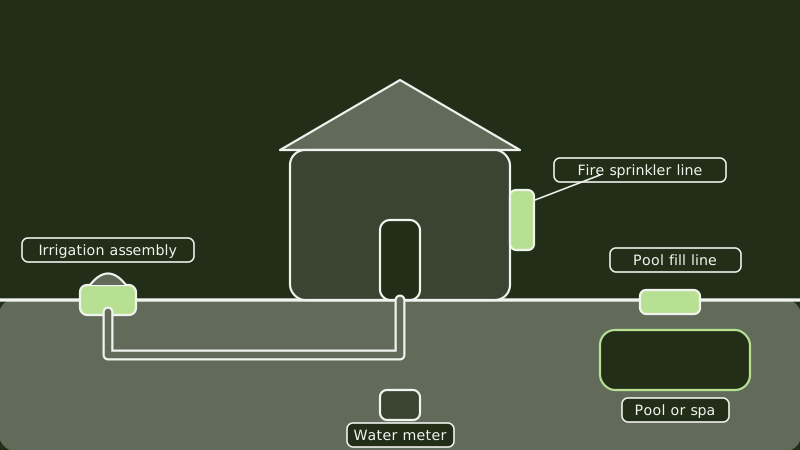
If you are not sure you have one, the City's cross-connection notice is the best clue, since the supplier already knows which addresses have an assembly on record. A tag on the body of the device lists its make and serial number, which a tester reads for the report. If the device is buried in an overgrown planter, clear access before the visit; a tester cannot read gauges through shrubs and a few minutes of trimming saves an extra trip.
What happens if my backflow assembly fails?
You must have it repaired or replaced and retested within the supplier's deadline, which guides commonly put at about 30 days. Ignored notices can lead to fees and, under some programs, to water service being shut off, so check the City's notice for its own deadline. Do not ignore the notice. Book the repair and send the retest through the same portal.
Most failures are worn check valve seals and are fixed with a rebuild. If the assembly is old, discontinued or damaged by freezing or debris, replacement is cleaner. A permit may be needed for replacement or relocation; the permit guide explains the steps, and the City's Building and Safety division is the contact. Keep copies of every report.
Common questions
How much of the day does the test take up?
Plan on a short visit for one residential assembly, with the water off for a little while. Several devices, or a failed one needing a rebuild, take longer. The tester submits the report, so in Santa Ana you usually file nothing yourself when the company is registered in the City's portal.
How do I vet a backflow tester?
Ask for the tester's credential number and who recognizes it. Confirm the company holds a City of Santa Ana business license and files reports through SwiftComply. Ask what the test price includes, what a rebuild costs and who covers any filing fee.
Must someone be present for the test?
Someone should open gates and point out the shutoffs, because water is interrupted for a short spell. Many assemblies sit outdoors near the meter, so a gate or lock may be in the way. The tester does not need an audience.
Is there a difference between a backflow preventer and an assembly?
In everyday speech they mean the same thing. The assembly is the whole valve set, and the type depends on the hazard: some are simple vacuum breakers for sprinklers, others are double check or reduced pressure assemblies for higher risks. The supplier tells you which kind your property needs. A plumber can identify the type from the tag on the device.
This guide is one of many on the plumber guide for Santa Ana.
Sources
- City of Santa Ana, backflow program
- City of Santa Ana, cross connection control management plan
- State Water Resources Control Board, Cross-Connection Control Policy Handbook
- Published backflow testing and repair price guides for California, checked November 2026
Last updated