A plumbing inspection of a mobile home walks through the supply piping, drains, fixtures, water heater, shutoffs and any gas connections, usually with a camera for the drain line and a pressure test for the supply side. It gives you a written list of defects before you buy, or a diagnosis after a leak. Park water connections often include a backflow device, and our page on backflow testing covers that side.
Mobile and manufactured homes are plumbed differently from a house on a slab or crawl space. Lines run in tight spaces under the floor and inside thin walls, and the park, not you, owns part of the system.
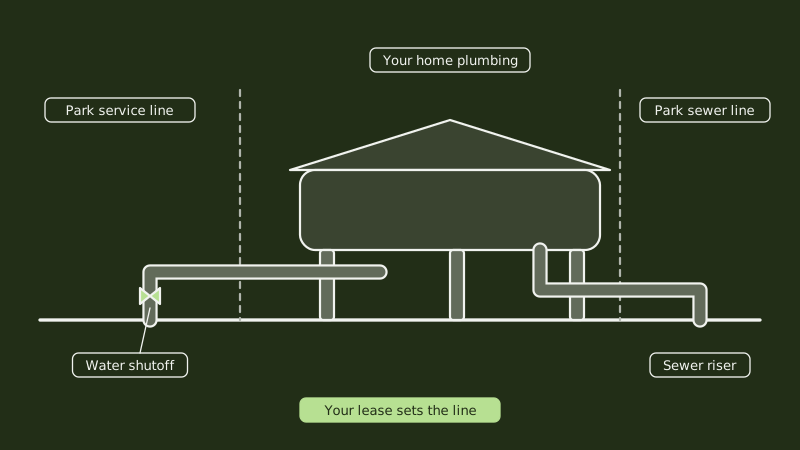
Which plumbing belongs to the park, and which belongs to me?
In a California mobilehome park, the park operator is responsible for the park's common utilities, including park-owned water, gas and sewer lines up to the connection at your lot. You are generally responsible for the plumbing on your own space and inside your home. The Mobilehome Parks Act and Title 25 of the California Code of Regulations set these rules.
State inspection booklets list improper plumbing, including leaking fixtures, among violations. A violation in the park's system goes to the park as a notice, while one on your space or in your home goes to you. Unsure where your side of the lot connection begins? Ask park management or the enforcing agency before anyone digs.
This also matters for repairs. Work on the park's system, like a main or a lot connection, is the operator's job. Work from the lot connection inward, like a shutoff, a hose bib or pipe under the home, is typically yours. A plumber doing your inspection will note where a defect sits and who it belongs to.
What does a mobile home plumbing inspection cover?
A thorough inspection covers the supply pipes and their material, water pressure, shutoff valves, fixtures and connections, the water heater and its strapping, drain and vent piping, the connection to the park sewer, any gas piping and appliances, and signs of leaks or water damage under the home. It ends with a written list of defects.
Specific items a plumber checks:
- Supply pipe type. Copper, PEX, CPVC or older plastic. Polybutylene, the gray plastic pipe fitted in many North American homes between about 1978 and the later 1990s, has a record of failures, so finding it matters. See polybutylene pipe replacement.
- Leaks. Wet spots, stains on the underside, soft flooring around tubs, toilets and sinks, and drips at joints.
- Water pressure. A gauge reading at a hose bib. High pressure strains old fittings, and a regulator may be needed, as discussed in water pressure regulator replacement.
- Water heater. Age, leaks, relief valve and discharge pipe, venting, and earthquake straps. California wants every residential water heater strapped against quake movement.
- Drains and traps. Slow drains, gurgling, sewer odor, and how the drain pipe is supported under the home.
- Gas piping. Connections to the range, heater and dryer. A gas smell at any point means going outdoors and phoning SoCalGas, 1-800-427-2200.
- Shutoff valves. Whether they exist, turn and seal.
Access matters. In many mobile homes the pipe runs under the floor in a tight crawl space or behind panels, and inspectors may need to open an access panel. Tell the plumber about locked skirting, pets or dense vegetation ahead of the visit.
Should the drain line get a camera run too?
For a camera run, a compact waterproof lens is fed through the drain line, exposing cracks, low spots, roots, blockages and separated joints. It earns its place before a purchase, when drains keep backing up, or when odor or damp turns up near the line. Most plumbers can show you the footage and mark where trouble sits.
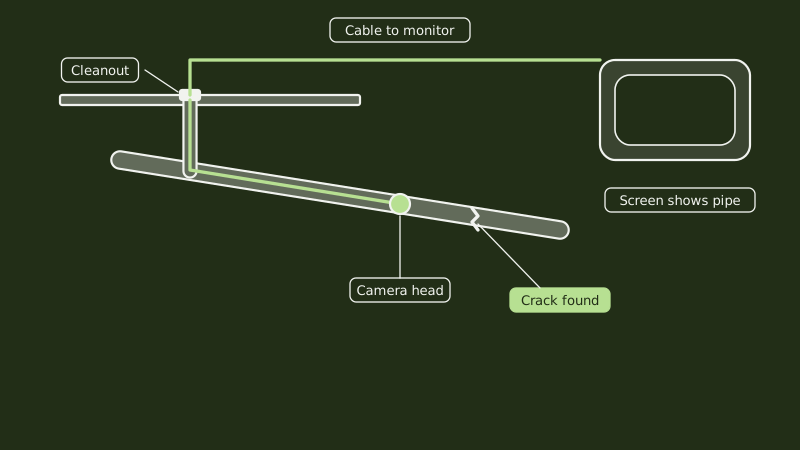
Many mobile homes use plastic drain pipe laid in shallow runs under the floor, where it can sag and hold water. Cameras find those low spots, called bellies, which cause repeat clogs. They also show whether the line meets the park sewer cleanly.
A camera does not fix anything, so ask what the report will include: video, a written summary, and the location of defects measured from a known point. A recorded file is useful in a sale negotiation, and for your records. Keep in mind that a camera can only follow the line as far as it can travel.
What should I check before buying a mobile home in Santa Ana?
Book a plumbing inspection before closing, ask the seller for any repair records or permits, and read the park rules on utility work. A buyer's inspection should include the supply type, water heater and drains, and a look underneath. Findings give you grounds to negotiate or walk away.
Ask whether earlier plumbing work was permitted. Mobilehome park rules require a permit to install or alter plumbing, issued by the local enforcing agency or by the state housing department, HCD, which enforces the rules in most parks. HCD also has authority over alterations to the home itself. Confirm who enforces rules in your park before any work starts.
The park may also need to approve work that affects its utility system. Ask management early. A pre-purchase inspection costs less than one failed supply line under a floor, and it tells you whether you are looking at a minor fix or a larger project like a repipe. For a sense of what that costs, see what a repipe costs.
Who handles repairs, and is a permit part of it?
Past a minor fixture swap, hire a plumber carrying a California contractor license, and plumbing changes inside a park need a permit from the local enforcing agency or HCD. Check with your park and the agency before work begins, because the permit route differs from a house in a city neighborhood.
CSLB suggests verifying a contractor's license online and collecting several written bids. In its guidance, a California contractor license applies once labor and materials reach $1,000. Get a written scope that names the parts, the labor and the permit, and ask who handles the inspection request, since the permit holder normally must request it.
Water heater replacement carries its own rules. Replacing one in a house within Santa Ana needs a city permit, but a mobilehome park falls under the Mobilehome Parks Act, so confirm which office issues it for your space. Our page on water heater permits explains the city side.
How do I arrange an inspection?
Tell us about the home, its age, the park and your reason for inspecting it, through the quote page. A plumber from the area visits through our service, with the inspection and camera prices written out before the appointment. Mention crawl space access and any leaks you already know about.
Have these ready: the age of the home if you know it, the pipe type if you have seen it, the location of the main shutoff, and any park rules about contractors. Your park may require proof of insurance or notice before outside workers come in. You can browse everything else we cover from the home page.
Common questions
Will the inspection tie up much of my day?
Visual checks on an average home commonly run an hour or two, with a drain camera adding more. Access underneath decides most of it, since locked skirting, stored clutter and a squeezed crawl space all slow things down. The plumber can name a window after learning the layout.
What can I ask to judge an inspector's fit for a manufactured home?
Collect the license number and run it through the state lookup. Find out what the inspection includes, whether a camera run is priced in, what the written report contains, and if the plumber knows manufactured homes well. Learn what happens when a defect appears, with the price on paper beforehand.
Must I attend the inspection myself?
Yes, or send someone dependable. The plumber needs to get into the home, find the water shutoff and reach the crawl space, and hearing the findings first-hand helps. Warn the park if the contractor needs a gate pass, and empty the cabinets beneath sinks first.
Does the park or the owner pay for plumbing repairs?
It depends on where the problem is. The park operator maintains the park's common and park-owned lines, and the resident maintains plumbing on their own space and inside the home. If a leak is at the lot connection or in the main, tell park management. If it is at your fixtures, under your floor or in your water heater, it is typically yours.
Sources
- California Department of Housing and Community Development, Mobilehome Parks Act inspection booklets (HCD MP 200 and MP 202)
- California Code of Regulations, Title 25, Chapter 2, Mobilehome Parks and Installations
- California Health and Safety Code section 19211, water heater bracing
- SoCalGas, recognize a natural gas leak (bill insert, 2025)
- Wikipedia, Polybutylene
Last updated