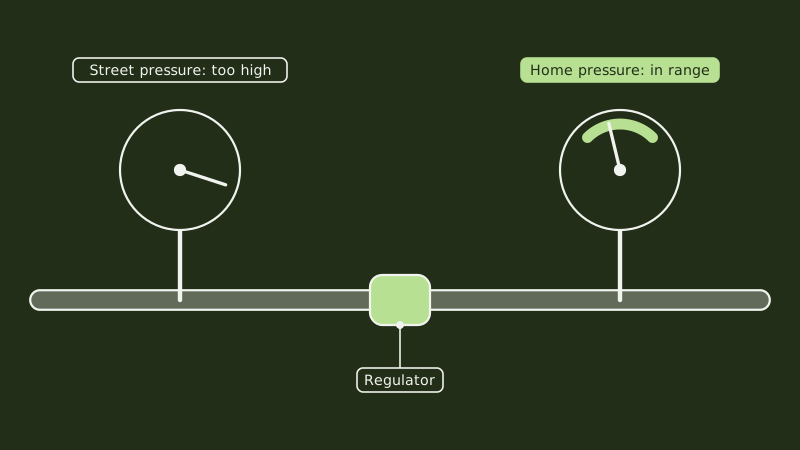
A water pressure regulator, also called a pressure reducing valve or PRV, replaces when it drifts, sticks or leaks: pressure at your hose bib reads above 80 psi or far below normal, pipes hammer, fixtures drip, or water seeps from the valve body. A plumber closes the main, cuts out the old valve, fits a new one behind a strainer, and sets it using a gauge. For pressure trouble across the whole house, start with pressure problems throughout a house.
Not every house has a regulator. Where one exists, it normally sits on the main line beside the shutoff valve, and you can find it by tracing the pipe in from the meter.
Why does a house need a pressure regulator in the first place?
It reduces the pressure of water entering your house from the street to a steady, lower level that your fixtures and appliances can handle. Utility pressure can be high, and a regulator trims it. Plumbing code in California calls for pressure at fixtures of no more than 80 psi, and a regulator is how homes meet it where supply pressure is higher.
California limits come from the plumbing code, which Padre Dam Municipal Water District quotes as a minimum of 15 psi and a maximum of 80 psi at the point of use. San Jose Water adds that a regulator can bring indoor pressure down to a comfortable 50 to 60 psi, and that regulators are required in new buildings where pressure is above 80 psi. Rules for older houses are less strict, though a plumber can advise whether one is worth adding.
High pressure is hard on a house. Each fixture, hose, washing machine valve, toilet fill valve and water heater is built for a limit. Above it, parts wear faster, and weak points leak. A working regulator spares the heater and its relief valve from constant strain too.
How do I know my pressure regulator is failing?
Signs include banging pipes, faucets that drip or spit, a toilet that keeps refilling, a water heater relief valve that drips, a spike on a pressure gauge, or flow that is very weak throughout the house. A reading above 80 psi at a hose bib confirms trouble, and low pressure everywhere with a good main supply points to a stuck regulator.
You can test it. Thread a pressure gauge onto an outside hose bib or the laundry tap while every fixture is off, then read the dial. Gauges are inexpensive at hardware stores. Normal indoor pressure is often 50 to 60 psi. A figure well past 80 suggests the regulator is not holding, or that the house has none. A reading that is far too low can mean a clogged strainer or a regulator stuck partly closed.
Neighboring symptoms have pages of their own: banging pipes and the causes of low pressure. A high water bill can follow a bad regulator too, since fixtures leak and run, and high water bill causes covers that side.
Where does the regulator sit, and what does swapping it involve?
Look where the main line enters the building, whether that is a front wall, the garage or beside the main shutoff. You are hunting for a bell-shaped brass fitting with an adjusting screw on top. Replacement means closing the main, relieving pressure, cutting out the old valve, soldering or threading in the new one with a strainer, then restoring water and setting pressure to a gauge.
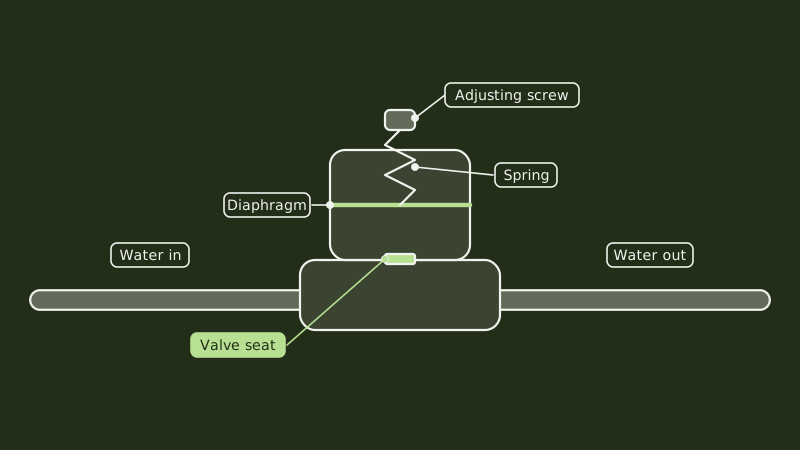
More hiding places are listed under finding the regulator, and the job itself is walked through in changing a pressure regulator.
Details of a good installation:
- The new valve is sized to the main line and rated for your pressure.
- A strainer sits ahead of the regulator, unless the regulator is built-in with one or is large enough not to need it.
- Unions on either side make future replacement easier.
- The plumber sets pressure with a gauge, often to the 50 to 60 psi range, and tests for leaks and noise.
- A thermal expansion tank follows if the new regulator makes the plumbing a closed system.
That last point surprises people. Once a regulator or check valve prevents flow back toward the street, heated water in the house has nowhere to expand, and the relief valve at the heater can start to drip. The link between the two is explained in expansion tank replacement.
Can I replace a pressure regulator myself?
Some owners adjust a regulator's screw with a wrench and gauge, which is within reach. Replacing the valve means cutting or unthreading the main line, which risks leaks that flood the house if done wrong. It may need a permit, and a mistake can damage the line. In most homes, bring in a plumber.
If you adjust it, slacken the lock nut, turn the screw in small steps, and read the gauge after every turn. Clockwise typically raises pressure and counterclockwise lowers it, but follow the maker's directions. Never keep turning if pressure does not respond, because that means the internal parts are worn.
Replacing the valve means working on the main supply, soldering or threading near the meter or shutoff, and getting the pressure right. The $1,000 labor-and-materials line for a California contractor license may apply to a replacement, and some cities treat a main-line change as permit work. Ask Santa Ana's Building Safety staff before starting.
How much does regulator replacement cost, and how long does it last?
Cost varies with the valve size, how easy the main is to reach, and on any expansion tank that has to go in as well. The valve is a modest part, and most of the price is plumbing labor, so a quote that includes parts, labor, a strainer and testing is more useful than a headline number. Figures are in what regulator replacement costs.
There is no fixed life for a regulator. Many work for years, then drift or stick. Hard water scale can affect small internal parts, and the City's supply is very hard, around 15 grains per gallon. If your regulator is old and you see symptoms, replacement is usually better than another adjustment.
Insist on a written quote. CSLB suggests confirming the license number online and weighing several bids for identical scope. To start a visit, describe your pressure problem on the quote page, and a plumber from the area comes out.
Common questions
What pressure should my house water be?
Many plumbers aim for about 50 to 60 psi inside the house. California plumbing code sets a limit of 80 psi at the point of use and a minimum of 15 psi. If your gauge reads above 80, a regulator is needed or yours has failed. If it reads far below normal, look for a clog or a stuck valve.
How many hours should a regulator swap take?
With easy access, a plain swap commonly fills a couple of hours: water off, valve out, new valve in, pressure set, everything tested. Hard-to-reach spots, corroded pipe or a new expansion tank add time. Water is off during the work, so plan around it.
Can a bad regulator damage my water heater or pipes?
Yes. Pressure above the limit strains fixtures, hoses, valves and the heater, and may leave the relief valve weeping. Over time, weak points can leak or burst. A regulator that fails closed gives weak flow, while one that fails open gives high pressure, which is more harmful.
Does a regulator make my water pressure low?
A working regulator lowers high street pressure to a comfortable level, which can feel gentler than before but is within normal range. If pressure is weak throughout the house, the regulator may be stuck partly closed, set too low, or its strainer may be clogged. A plumber can test and adjust it.
For the wider picture, start with Santa Ana Plumbing Co.
Sources
- Padre Dam Municipal Water District, water pressure (California Plumbing Code limits of 15 to 80 psi)
- San Jose Water, water pressure (regulators, 50 to 60 psi indoors, existing properties)
- Plumbing industry guidance on pressure regulators, expansion tanks and closed systems, checked November 2026
- California Contractors State License Board, finding the right contractor
Last updated