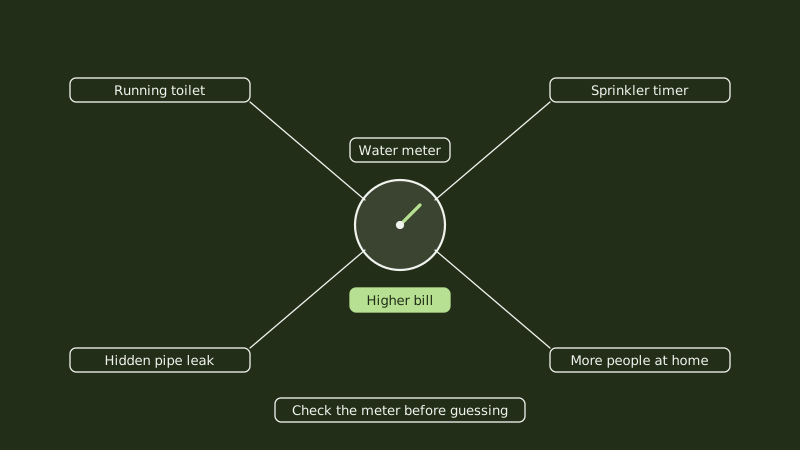
Water bills rarely spike for mysterious reasons. The culprit is usually a toilet flapper that seals badly, a sprinkler line with a crack, or a pipe leaking where nobody looks. The EPA estimates an average household sheds around 9,400 gallons a year this way, and some homes lose a great deal more. A simple meter check separates a leak from a habit change. If you need other plumbing answers, the Santa Ana Plumbing Co home page maps out what we arrange.
What are the usual reasons a water bill goes up?
Think leaks first, habits second. The common list is a running toilet, dripping faucets, a hidden leak in a wall or buried line, irrigation that leaks or runs long, high pressure, a billing change, or simply more people and more laundry. Hidden leaks cause the nastiest shock because nothing looks wet.
A rough order for checking, cheapest first:
- Usage change. Visiting relatives, a newborn, refilling a pool, a heat wave or new plantings all add gallons.
- Toilets. A faint, constant trickle into the bowl is the leading household leak.
- Outdoor water. EPA reports outdoor use averages above 30 percent of a home's water, and as much as 60 percent in arid regions like ours.
- Faucets and shower valves. Small drips accumulate.
- Hidden leaks. Wall pipes, lines under a slab, or the buried run from the curb to the foundation.
- Pressure. Pressure that is too high stresses fixtures and speeds up wear.
- The meter or the bill itself. Occasionally a meter misreads, or a rate or billing period shifts.
How can I tell if I have a leak by reading the meter?
It takes two hours. Shut off every tap, appliance and the ice maker, note the meter, and leave water alone. Compare readings afterward. Movement means a leak. Closing the house main then splits the cases: a stopped meter puts the leak indoors, a moving one points to the buried supply line outside.
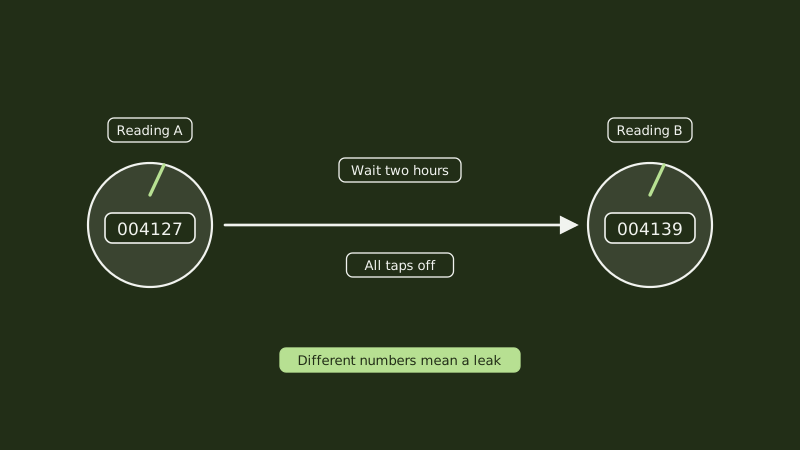
EPA recommends this check. Everybody in the home should stay out of the washer, dishwasher and taps during the window. Many meters carry a small triangle or dial that turns even at a trickle, which reveals slow leaks faster than the big digits do. As a yardstick, EPA says a family of four passing 12,000 gallons in one chilly winter month probably leaks badly, but our winters are mild, so the sharper comparison is this month against the same month last year.
If the test points at a wall or the yard, spotting a burst pipe is the next read.
Why is the bill high when nothing at home has changed?
A silent toilet leak ranks first, then a sprinkler valve or head that seeps overnight. Both run unnoticed. A seasonal swing, a mis-read meter or an unusually long billing period can raise the total with no change in the house at all.
Work through these checks:
- Dye test for toilets. Drip food coloring into the tank, resist flushing, and check the bowl ten minutes later. If color has crept into the bowl, the flapper is not sealing. EPA suggests replacing worn flappers on a five-year cycle at the longest. Pages on a toilet bowl that keeps running and fixing a running toilet give the repair steps.
- Sprinkler zones. Walk each zone and look for mushy turf, puddles, geysers and spray hitting pavement. EPA estimates a crack only 1/32 inch wide can waste roughly 6,300 gallons a month.
- Hose bibs. An outdoor spigot that weeps with a hose attached loses water all day. A leaky outdoor faucet is among the easier repairs.
- Sinks and showers. A faucet dripping once each second loses upward of 3,000 gallons annually, per EPA. See leaky faucet repair.
- Water heater. Moisture at the relief valve on top or side of the tank, or on the pipe running down from it, means the tank is venting or leaking, and it deserves a plumber's attention.
- Water softener. Regeneration cycles use water. Read whether a softener can push the bill up.
- Appliances and HVAC. A humidifier with a stuck valve, an ice maker supply line or a condensate drain from the cooling system can run unseen. Look inside cabinets, behind the refrigerator and around the air handler.
What would cause an extremely high bill in a single month?
A big leak or a stuck valve. Picture a failing pipe, a sprinkler valve stuck open, a toilet that gives out entirely, or a hose left running. Read the meter right away, and close the main if it keeps moving, because every gallon that passes the meter lands on your account.
Ask the water provider for a fresh meter read and for how a leak adjustment or high-bill review works. Some utilities offer relief after a documented repair, but that is each utility's own policy, so do not assume it. Keep the repair invoice and photos either way.
Can high pressure and that banging sound be behind the bill?
Indirectly, yes. Strong pressure shoves more water through every open fixture and wears out washers and valves early, so drips multiply. A thump when a tap or appliance valve closes is water hammer, a shock wave from flow stopping abruptly, and it frequently signals pressure that is higher than it should be.
Under the California plumbing code a regulator is required when static pressure goes beyond 80 psi, and an inexpensive gauge threaded onto a hose bib reveals your own number. Replacing the regulator is a known job, described in changing a water pressure regulator. Arrestors tame the bang itself, as covered in the water hammer sound. Gas piping stays off the DIY list, since state law reserves it for contractors. A gas smell means walking out and phoning SoCalGas from the sidewalk at 1-800-427-2200.
Do older Santa Ana houses leak more?
They can. Houses built between the 1920s and the 1950s may still hold galvanized steel supply, early copper and worn fixtures, plus pipes below slabs that nobody sees. A plumber can pressure-test the system and use leak detection to find a hidden leak without opening more than needed.
When the pipes themselves are failing, PEX repiping may be raised, though it is a far bigger decision than finding one leak. Renters should report a leak to the landlord quickly and keep the date in writing.
Found the cause and want it handled? Send a price request and a local plumber will visit.
Common questions
How much water can a running toilet waste?
EPA does not give one figure, but a bad flapper can leak day and night. The dye test settles it in ten minutes. A new flapper is a cheap part, and trading an old toilet for a WaterSense one is worth roughly 13,000 gallons a year to a typical family.
Could the utility have made a mistake?
Occasionally. Meters misread, bills can cover extra days, and rates change. Compare the reading printed on the bill with the dial at the curb. If they disagree, or the amount looks impossible, call the water provider, ask for a re-read and note what you are told.
Do I shut off the water if I cannot find the leak?
If the dial still turns once everything is off, close the main valve while you arrange help. That stops the meter and limits damage. Run the lowest tap until the pipes empty, and keep the main closed until a plumber has examined things.
Can a hidden leak be fixed without ripping up floors?
Often. A reroute sends a new line over the top, through walls or the attic, and caps the old one below the slab. The best route depends on how the house was built, and a plumber can price both. The slab leak repair cost page lists typical ranges.
Whose job is it to investigate a bill like this?
The water provider handles re-reads and billing questions. When the meter test turns up a leak, a plumber finds and fixes it. A leaking sprinkler line may be the job of an irrigation specialist. If you cannot tell which, ask for a plumber's visit.
Sources
Last updated