A running toilet is rarely a mystery once the lid is off. What you hunt for is tank water sneaking down into the bowl, or a refill that never receives its stop signal. The parts are cheap, and most owners finish in an afternoon. If the trouble survives fresh parts, toilet repair is the page for booking a local plumber, who is arranged by us with a written price up front. For the wider list of plumbing work we handle in Santa Ana, start at the home page.
What makes a toilet keep running after it has flushed?
Tank water is escaping, or the refill mechanism never closes. Four parts cause nearly all of it: a flapper that has gone stiff, a chain with the wrong slack, a fill valve with a worn seal, and a float riding too high so the tank overfills into the overflow pipe.
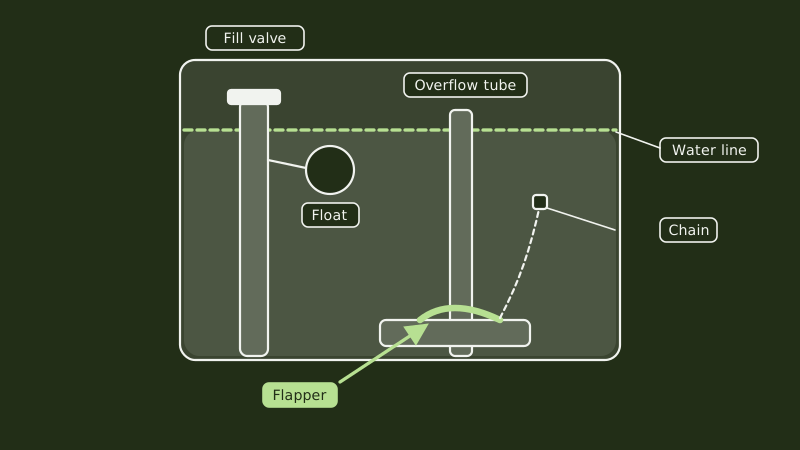
Here is what each part does, so the checks below make sense:
- Flapper. A rubber stopper over the drain hole in the tank floor. It rises on a flush and drops to seal the tank again. Rubber stiffens, warps and slimes over.
- Chain. Joins the handle lever to the flapper. A tight chain props the flapper open. A very loose one can wedge beneath it.
- Fill valve. The tall column that refills the tank. A worn internal seal lets water seep through after it should have closed.
- Float. The cup or ball that tracks the water height and tells the fill valve when it has had enough.
- Overflow tube. The open standpipe in the middle. Water that tops it spills straight down the drain, and the float never sees it happen.
The EPA Fix a Leak Week guidance warns that a worn flapper can seep silently for thousands of gallons across twelve months, and recommends replacing that rubber piece no later than the five-year mark. A toilet like this is also a top suspect when a bill climbs for no obvious reason, as covered in high water bill causes.
How can I tell which part is to blame?
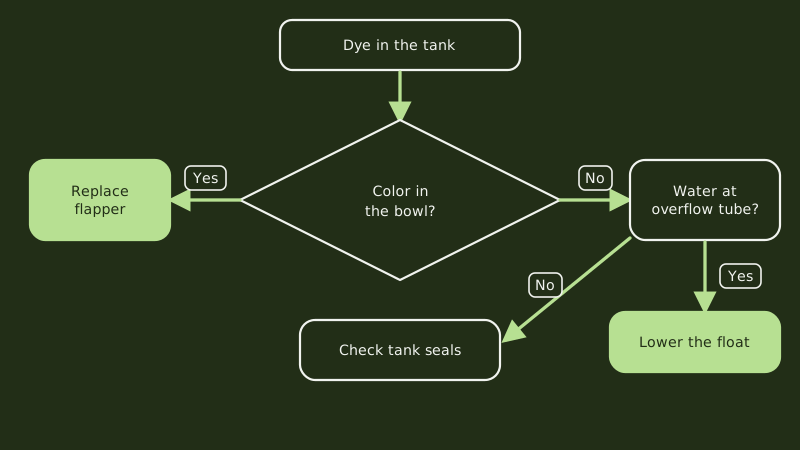
Try a dye test. Squeeze some food dye into the tank and walk away for ten minutes with no flushing. Colored water in the bowl afterward means the flapper or its seat is seeping, the same test EPA lays out. If the bowl stays clear yet the tank keeps refilling, suspect the float setting or the valve.
Then go through these quick checks, cheapest first:
- Listen. Steady hissing is the fill valve passing water. A short burst every few minutes, the so-called phantom flush, is the flapper seeping and the valve topping up.
- Look at the water line. It belongs roughly one inch beneath the top of the overflow pipe. Anything higher spills.
- Push down on the flapper by hand with the tank full. If the noise stops, the seal is not doing its job.
- Rub the flapper seat clean. A damp rag removes the slime or crust that stops even a good flapper from landing flat.
- Check the chain. About a half-inch of play with the flapper shut is right, and nothing should be snagged.
Santa Ana's tap water is hard. The city reports hardness near 250 parts per million, so crust on tank parts is a realistic guess in this area, though it takes a look in your own tank to confirm.
How do I replace a flapper and set the chain?
Adjust the chain first, since it costs nothing: hook it so there is about a half-inch of slack. If the flapper is cracked, brittle, warped or sticky, replace it. Close the wall valve, drain the tank with a flush, slip the flapper's ears off the pegs on the overflow tube, snap the new one on and turn the water back on.
Matching the part matters. Take the old flapper, or a photo of it, to the hardware store. Common sizes are two inches and three inches across, and some brands, Kohler among them, use model-specific designs, so a quick match saves a return trip. EPA's advice is the same: check the width. After fitting, repeat the dye test.
A pitted or chipped seat can defeat a brand-new flapper. Light crust comes off with a fine scouring pad. Rough damage means a new flush valve or a new toilet, which is a plumber's job. Related guides: toilet flapper repair, flapper and gasket replacement and the overflow tube.
What if the float or the refill valve is at fault?
Lower the level. Many fill valves have a clip, screw or sliding rod on the float: adjust it until the refill halts roughly one inch below the lip of the overflow pipe. If the valve keeps hissing at the correct level, the seal inside has worn out, and a replacement valve at roughly $10 to $25 is the fix.
Swapping the valve takes a few steps. Close the wall stop and flush until the tank is dry. Disconnect the supply hose from the underside of the old valve, then spin off the locknut below the tank. Pull the old unit out, seat the new one, then set the height to suit your tank. Hand-tighten the hose and add a quarter turn at most, as plastic threads crack easily. Open the water slowly and watch each joint.
When the wall stop itself refuses to close or weeps around its stem, swap it first. Instructions sit in swapping the shut-off valve under a toilet. In Santa Ana houses from the 1940s, the original stop valves are common, and many are seized from decades of sitting still.
Should I fix a running toilet myself or call a plumber?
Most are doable at home, because flapper, chain and fill valve swaps need only basic hand tools. Call a plumber when fresh parts change nothing, the wall valve will not shut, water appears around the bowl's base, or the bowl rocks. Those symptoms point to the seat, the flange or the wax ring.
A wax ring failure looks different from a running toilet. Water pools on the floor beside the base instead of the tank refilling endlessly. That seal sits beneath the bowl, meaning the whole bowl has to come up and go back down on a new ring. Caulking the base to hide it traps the leak against the subfloor. For that symptom read repairing a leaking toilet.
California law sets a licensing line for paid work. CSLB says a contractor needs a California license when a job reaches $1,000 counting both materials and labor. A toilet reset sits far below that, but ask any plumber for a license number anyway. Weighing a repair against a new toilet? The ranges in toilet installation prices help.
Common questions
How much will a running toilet cost to fix?
Parts for a do-it-yourself flapper or fill valve run roughly $5 to $30. A plumber visit commonly lands between $100 and $300 as a guide, shifting with parts and time of day. The price is settled in writing before anyone comes out, and these numbers are only a rough guide, not a quote.
Why does the toilet refill every few minutes on its own?
The flapper is leaking slowly, the water in the tank drops slightly, then the valve tops it off. Plumbers call it a phantom flush. A dye test confirms it. A new flapper with a wiped-clean seat cures most. Hard-water crust on the seat can defeat a new-looking flapper, so wipe first.
Will a running toilet push my water bill up?
It can. EPA notes that a worn flapper may waste thousands of gallons per year silently, and that a typical household loses upwards of 9,300 gallons yearly to leaks of all sorts. If the bill rises and nothing about your habits changed, run the dye test and then check the meter with every tap off.
Can I wait for a plumber if the toilet is running?
For a day or two, usually yes, though water is going down the drain. Turn the small valve behind the toilet clockwise and open it only when you need to flush. If the tank is overflowing onto the floor, shut that valve at once and mention it when you send the request form.
Why does a brand-new toilet run?
Look at the same four items: chain slack, water level an inch below the overflow top, a flapper lying flat, and a float that was left high at the factory. If it still runs after adjusting, a nicked flapper seat or a chain hooked on the handle lever is the likely culprit.
Sources
Last updated