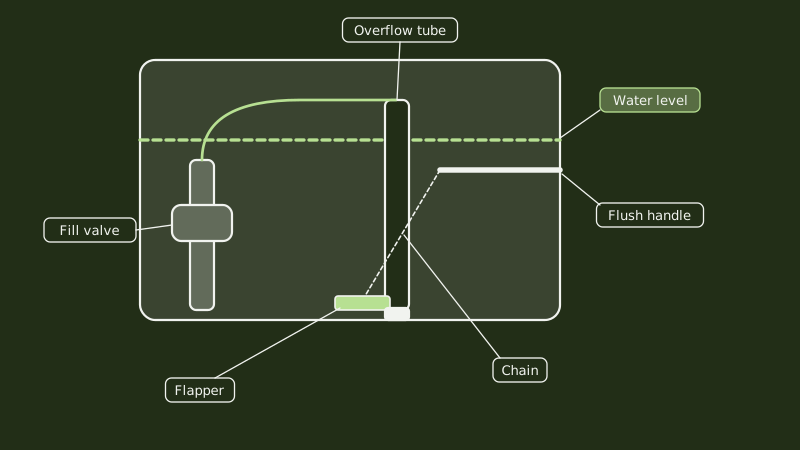
Three parts decide whether a toilet behaves: the fill valve refills the tank, the flapper seals it between flushes, and the gaskets keep water inside the tank and the bowl joint. A hissing or endlessly refilling tank usually means the fill valve or flapper. Water on the floor usually means a gasket or the supply line. For the bigger picture, the toilet repair page shows when a plumber is worth calling.
Which symptoms blame the fill valve?
Suspect the valve if the tank keeps hissing, overfills into the overflow tube, refills very slowly, or fills noisily and then stops late. Take off the lid and watch. A stream down the overflow tube says the float rides too high or the valve cannot seal. Dribbling water with a low level means it is clogged.
A fill valve opens when the float drops after a flush and closes when the float rises. Wikipedia's description of a flush toilet notes that the float, or ballcock, controls this refill, and that newer designs delay refilling until the flapper has closed. Common failures are a worn seal that will not stop the flow, grit that jams the valve, and a float set to the wrong height. In Santa Ana's hard water, minerals can crust the valve too, and the city lists its water at about 250 parts per million.
How do I replace a toilet fill valve?
Close the supply valve, flush the tank empty, sponge out the remainder, detach the supply line, unscrew the locknut beneath the tank, and lift the old valve out. Drop in a new one set to the right height, tighten the nut by hand plus a quarter turn, reconnect the line, and clip the refill tube to the overflow tube.
A fuller sequence for a standard tank:
- Close the wall valve clockwise, then flush, holding the handle down while the tank drains. Soak up the last water with a sponge or towel.
- Set a small bucket underneath and loosen the coupling nut where the supply line meets the valve bottom.
- Unscrew the large plastic locknut under the tank and lift the old valve out.
- Compare the new valve to the old one and adjust it to the same height. The critical-level mark should sit above the overflow tube top, as the maker's sheet explains.
- Seat the new valve, tighten the locknut by hand, and add a quarter turn. Overtightening cracks the porcelain.
- Reattach the supply line, clip the small refill tube to the overflow tube, open the valve slowly and check for leaks.
- Adjust the water level to the mark in the tank, then run several flushes and keep an eye on it.
A kit costs little at any hardware store. A cracked tank or a seized supply connection is where a plumber helps.
When is it the flapper instead?
If the tank loses water between flushes, the bowl keeps refilling in small bursts, or the toilet kicks on by itself at odd moments with nobody near it, the flapper is the usual cause. It is the rubber seal over the tank outlet. After a couple of years of wear it can warp, harden or collect mineral deposits.
A simple check is the dye test. Stir some food dye into the tank water, hold off flushing, and look at the bowl ten minutes on. Tinted bowl water proves a leak past the flapper. EPA WaterSense advises replacing worn flappers within five years. Hard water speeds the wear in some homes, so a Santa Ana flapper may not last that long. Buy a flapper that matches your model, since sizes and styles differ, and check the chain has a little slack. Deeper coverage of those cases is under flapper repair, toilet bowl keeps running and running toilet fixes.
What does a tank gasket do and when does it need replacing?
The gaskets are rubber seals at two places: the flush valve gasket, where the tank outlet meets the base of the tank, and the tank-to-bowl connection. A bad one drips onto the floor or the back of the bowl. Replacing it means unbolting the tank from the bowl, a bigger undertaking than a flapper.
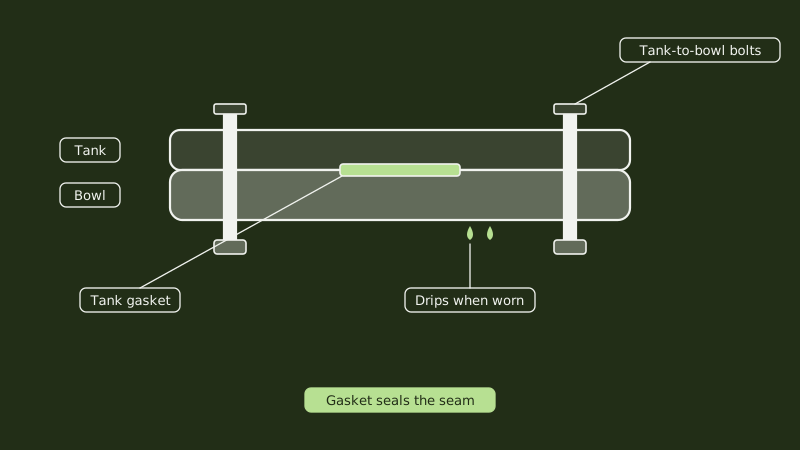
Look for water pooling behind the bowl or beading on the bolts that clamp the tank down. Sometimes the bolts are only loose, and snugging them evenly fixes it, but corroded bolts or a cracked tank mean replacement. If it leaks from the base of the toilet, the wax ring beneath the bowl is the likelier fault, a separate repair that appears in repairing a leaking toilet and toilet leak help. Tank removal and setting a toilet back on its flange takes care, and a heavy porcelain tank is easy to crack, so many owners choose to hire this out.
Can a running toilet really raise my water bill?
Yes. A toilet that seeps into the bowl may run around the clock, and it can be the biggest hidden leak in a house. EPA puts the typical household loss to leaks at more than 9,300 gallons a year. Its pages give no single toilet figure, though replacing all the old toilets in a home with WaterSense ones saves a family around 13,000 gallons a year.
Because the leak is quiet, people notice it on the bill first. Try the dye test, listen for hissing at night and watch the meter with everything off. The meter test and other suspects appear in high water bill causes.
Can a toilet cause a burst pipe?
The toilet itself does not burst, but its supply line can. The flexible hose from the wall valve to the tank is a common failure point, and when it splits it can release water fast. Replace a kinked, corroded or bulging supply line at once, and know where the wall valve is so you can close it quickly.
If a supply line or wall valve is leaking, close the main at the house and arrange a plumber. A toilet shutoff valve repair has its own write-up. Also see toilet overflow tube repair and flush repair for related faults. For help from a local plumber, request a price or look through the services on the Santa Ana Plumbing Co home page.
Common questions
What is the time cost of swapping a fill valve?
For most handy owners it takes under an hour, plus a trip to the store. A plumber may do it as part of a short visit. Seized fittings, a cracked tank or a corroded wall valve can stretch the job, and the price follows. Ask for an estimate before the work begins.
What goes in a quote for a toilet repair?
See whether the price covers parts, whether the shutoff valve and supply line get checked, and how a cracked tank or worn wax ring would change the total. Request it in writing, plus the contractor license number the state board lets you verify.
Must an adult be in the house for the repair?
Preferably, so the plumber gets into the bathroom and can shut the water off. The water to that bowl stays off for some of the visit, so plan to use a different bathroom, and clear the floor around the bowl beforehand. Pets should stay out of the way.
Is it safe to keep using a leaking toilet?
A slow drip from the tank or supply line is not an emergency, but water on the floor can ruin flooring and grow mold. If a supply line sprays or the wall valve will not close, shut the main and ring for help at once. Do not ignore a leak that appears after a flush.
Which toilet parts are worth replacing together?
If the flapper is five years old or older, replacing the fill valve and flapper at once is common, since both are cheap and the tank is already open. Many owners add a new supply line at the same time. A kit with matching parts keeps the job simple.
Sources
Last updated