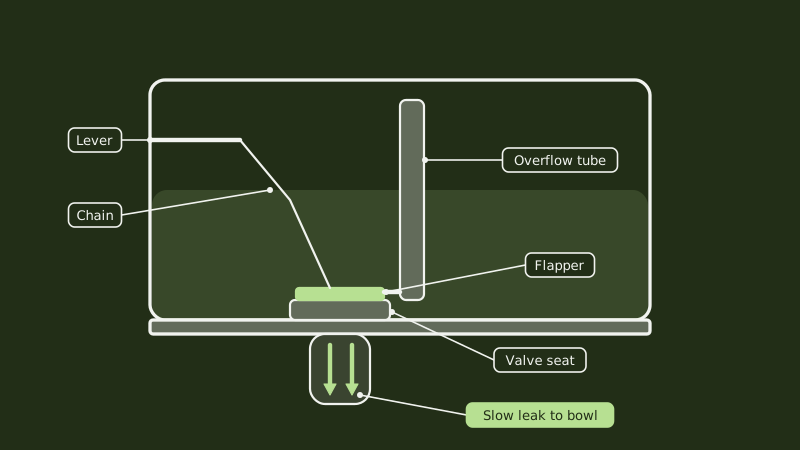
A toilet flapper is a rubber or silicone seal that lifts when you flush and drops back to hold water in the tank. When it hardens, warps or gets coated with mineral crust, it leaks into the bowl and the tank keeps refilling. Replacing it is a ten-minute job with no tools beyond your hands, and it is the first fix to try on any toilet that runs. If the symptoms point elsewhere, our overview of toilet repair in Santa Ana shows what else can be wrong.
Is the flapper really to blame?
Put a little food coloring in the tank and leave it for ten minutes. Tinted bowl water proves the flapper is not sealing, since no other part lets tank water slip into the bowl unflushed. This is the EPA's own test, and the agency adds that a worn flapper can lose thousands of gallons a year silently.
Other signs match. The toilet refills now and then without a flush, the tank level drops slowly, or the handle feels loose and the flapper hangs crooked. Press down on the flapper with a finger while the tank is full. If the refill noise stops, the seal was the problem. If it carries on, look at the fill valve instead, which the page on why a toilet keeps running explains.
Which flapper fits your toilet?
Most toilets use either a 2-inch or a 3-inch flush valve opening, and the flapper must match. Measure the opening that the flapper covers, or read the model and size on the old flapper. Some flappers have ears that snap onto pegs, while others use a collar that slides over the overflow tube. A universal adjustable flapper fits most, though a matched part seals best.
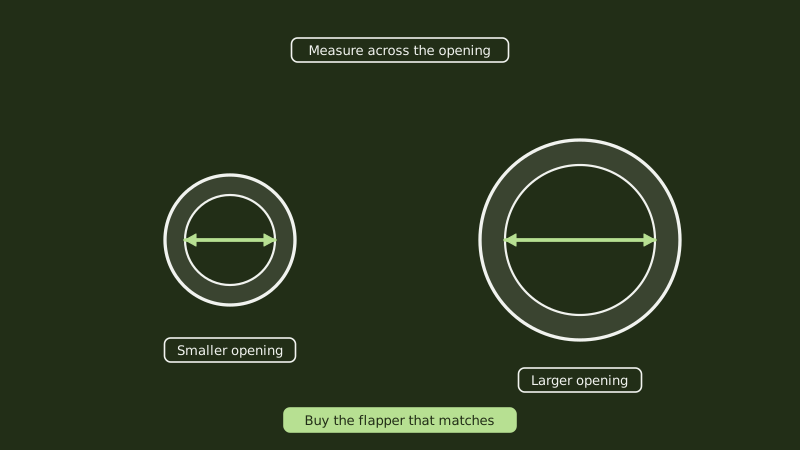
A quick way to tell the sizes apart is the hole in the tank floor: golf-ball scale means 2-inch, baseball scale means 3-inch. Many newer, high-efficiency toilets use the larger opening. Taking the worn part along to the shop helps. With a discontinued, older toilet, a universal model or a complete flush valve kit may be the better route, and the page on repairing a toilet overflow tube shows what a kit replaces.
Materials vary. Rubber is cheap but ages. Silicone and some modern compounds hold their shape longer. In Santa Ana, where the water is hard at roughly 250 parts per million according to the city, a flapper's life depends on mineral build-up as much as on the material.
What are the steps for fitting a new flapper?
Turn off the wall valve, flush until the tank is empty, then unhook the chain at the flush lever. Unclip the old flapper's ears from the pegs or slide the ring off the overflow tube. Fit the new flapper the same way, reconnect the chain, open the valve and let the tank fill. Flush several times and watch the flapper settle.
Details matter. Before fitting the new part, wipe the flapper seat, the rim the flapper rests on, using a wet rag or a soft scouring pad to remove slime and scale. A rough or pitted seat will wear out a new flapper quickly. Hook the chain onto the flush lever leaving slack roughly the thickness of a pencil while the flapper is closed. A chain pulled tight holds the flapper off the seat, and one that is too loose may fail to lift it.
Position is the last check. The flapper should drop straight onto the opening and sit flat. If it twists or catches on the overflow tube, adjust the ears or the ring.
Why does a new flapper still leak?
A new flapper still leaks when the seat is damaged or dirty, when the chain is too short or tangled, when the flapper is the wrong size, or or when the actual trouble is a cracked flush valve or an overfilling fill valve. Check each in that order. A chain that keeps the flapper open slightly is the most common cause.
Wipe and look again at the seat. A crack or a worn rim means the flush valve itself needs replacing, a job where the tank comes off the bowl. If the water line rises above the top edge of the overflow tube, the excess spills into it, and the fix is lowering the float, not changing the flapper. If you still cannot trace it, the broader running toilet repair page covers every step in order.
Chemicals can shorten a flapper's life. In-tank bleach or cleaner tablets are widely reported to harden rubber faster, so check what the toilet maker advises before using them. We have not verified one rule for every brand, and the manual for your toilet is the source to trust.
How often should a flapper be replaced?
EPA guidance is to renew flappers no less often than every five years. Hard water, chlorine in the supply and in-tank cleaners can wear one out sooner. A flapper that rubs off slimy, stiff, warped or chalky is due, even if the toilet is not yet running. It costs a few dollars, so replacing it early is cheap insurance against a leaking tank.
Make it part of a simple yearly check. Run the dye test, press on the flapper and inspect the chain. With the lid off, glance at the fill valve and flush lever too. Two or three small parts replaced together are less work than a repair visit later. The flapper's sealing gasket is a related part, and the page on flapper and gasket replacement covers those seals.
When should a plumber handle it?
Ask a plumber to step in once the wall shutoff drips or sticks, the seat in the flush valve is cracked, water shows at the toilet's base, or a new flapper and clean seat have not stopped the running. None of those is a flapper fault. A plumber can replace the shutoff, the flush valve, or the toilet itself.
For repeated trouble, an old toilet is worth evaluating. Parts add up, and a newer toilet uses less water per flush. Published ranges for a swap are on the page about having a plumber install a toilet. To get a repair priced, the quote page is where a visit begins.
Common questions
What should a flapper set me back?
A flapper is a low-cost part, and a full flush valve kit costs more. The part is the minor expense. Hiring someone brings in labor and a call-out fee, so the do-it-yourself route is the thrifty one.
Can I use any flapper on any toilet?
No. Size and style matter. A 2-inch flapper on a 3-inch opening leaks, and a poor match can pass the dye test then fail later. Measure the opening, or compare against the old part at the store. A universal adjustable flapper fits many toilets, but a matched part is more reliable.
How long does the job take?
About ten to fifteen minutes once you have the right part. Allow extra time to shut the water, drain the tank and test. Cleaning the flapper seat adds a couple of minutes. Do the dye test again afterward to confirm that the leak is gone.
Is it normal for a toilet to run after the flapper is changed?
For a short while, no. After flushing, the tank should refill and stop. If it keeps running, check the chain length, clean the seat again and make sure the flapper sits flat. If the fill valve is still hissing after that, the valve or float setting is the issue and not the flapper.
More guides start from the Santa Ana Plumbing Co home page.
Sources
- U.S. EPA WaterSense, Fix a Leak Week (worn flappers, food coloring test, replace at least every five years)
- City of Santa Ana, water quality FAQ (hardness about 250 ppm)
- Flapper fitting instructions from toilet parts makers and plumbing publishers, checked November 2026
Last updated