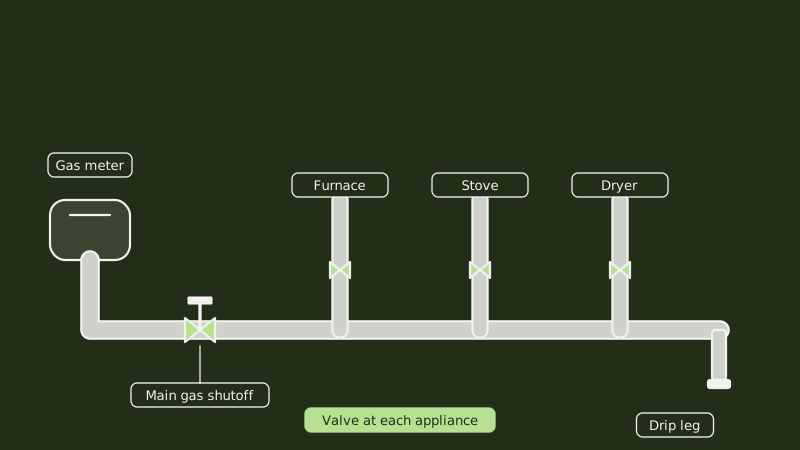
Yes. Extending, repairing, relocating or capping a gas line is plumbing trade work, and in California it is handed to a contractor, not attempted at home. Through us a plumber from the area visits for gas line repair and new runs alike, and you read the price on paper beforehand. Smell gas right now? Skip this page. Go outdoors, then reach the SoCalGas leak line at 1-800-427-2200.
Houses across Santa Ana carry gas piping from several eras, from steel pipe in older bungalows to flexible connectors added in later remodels. A lot of the work we hear about is simple, like a stub for a new range. Some of it is not, like a corroded section behind a water heater. Back at the home page you can see the other trades we cover.
Do plumbers do gas lines?
Plumbers do gas lines every day. In California the plumbing contractor classification, known as C-36, is the one usually used for gas piping, appliance connections and water heaters, and a plumber who holds that license can quote a new line, a repair, a cap-off or a move. Check the classification on the state license lookup before agreeing to a price.
CSLB tells homeowners to request the license number, then confirm it online, so you know it is current and belongs to the person at your door. Ask for the number early. A gas job is the wrong place to accept a handwritten phone number on a business card.
The line between what is yours and what belongs to the utility matters too. Pipe downstream of the meter, running into the house, is the homeowner's, and plumbers work on it. The meter set and the line in the street belong to SoCalGas, so a plumber will not work on those.
What should a new gas line cost around here?
National 2026 cost guides quote new gas piping at about $15 to $25 per foot, with most homeowners paying roughly $270 to $940 for a typical appliance run. A longer line, a trench, or a pipe routed through finished walls costs more, and permit and test fees come on top.
Examples help. A short branch for a new gas range is at the lower end. A line out to a barbecue or fire pit crosses a yard and costs more per run because of digging. Converting a wood fireplace to gas can run well into four figures once the vent and the hearth work are counted.
| Job | What drives the cost |
|---|---|
| Stove or dryer connection | Distance from the nearest tee, wall access |
| Barbecue or fire pit line | Trenching, depth, crossing a patio |
| Fireplace gas line | Hearth work, valve placement, vent changes |
| Moving a line | Old pipe removed, wall and floor patching |
| Repair of a corroded section | Length of damaged pipe, ease of reaching it |
These are guides only. The real price comes once the plumber has seen the route, and it should list materials, labor, permit and the pressure test. Pressure tests commonly add a modest charge on their own. Our page on gas line cost in Santa Ana goes further into the numbers.
Which material is gas pipe made from inside a home?
Gas piping in homes is usually black iron or galvanized steel, with corrugated stainless tubing and certain approved flexible connectors at appliances. Copper is sometimes found in older work, and the plumber picks the material the code and local rules allow for your appliance. Plastic water pipe is never a substitute.
Pipe choice affects price and the route, which is why your quote should name it. Materials and sizing are covered in our guide on natural gas line pipe materials. A steel run is threaded and sealed at each joint, and any joint can seep, which is why the finished run gets tested.
Does a gas line need a permit and a test?
Fresh or altered gas piping typically calls for a city permit and inspection. In Santa Ana, permits come through the Building Safety Division and its permits counter. The plumber usually pulls it, so ask in the quote who is responsible. The line is then pressure tested before gas flows.
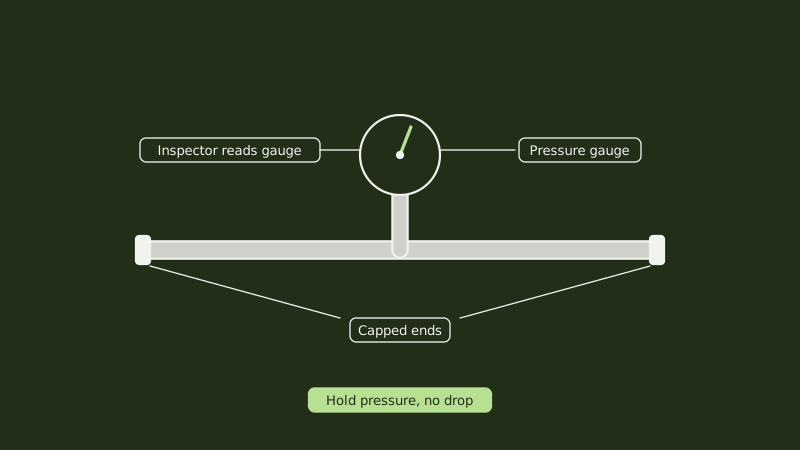
You do not want to hide a gas line job from the city. An unpermitted line can complicate a house sale or an insurance claim. For the general process, we explain how permits work in how to pull a plumbing permit.
Who handles a gas fireplace, a stove or a cap-off?
All three go to a plumber. A fireplace line needs a shutoff valve in an accessible place and a connection suited to the logs. A stove connection must be sized for the appliance. A cap-off seals a disused line with an approved fitting, so nothing can ever be opened by accident, and a plumber then tests the cap.
If you are replacing a gas appliance, ask the installer whether the existing line is the right size and in good shape. An old valve that will not turn fully is a common reason that a simple swap becomes a repair.
What if a plumber or digger hits a gas line?
Everyone moves away on foot, no switches are touched and nothing is lit. From somewhere safe, the SoCalGas number to use is 1-800-427-2200. If lives or property are in danger, ring 911 as well. Do not try to squeeze, tape or fix the pipe. SoCalGas asks that any pipeline damage be reported, even if it looks minor.
Before digging anywhere in the yard, dial 811 at least two business days ahead, a free service that gets utility lines marked. Hand tools only near a marked line. Most gas strikes happen because someone skipped this step.
Can the gas shut off by itself in an earthquake?
Yes, with an earthquake shutoff valve fitted on the house line, which closes the gas when shaking passes a set level. SoCalGas does not install them, and only SoCalGas or its contractors operate the service valve at the meter. A plumber installs the house valve, and resetting one is the subject of our earthquake shutoff valve reset page.
For the bigger picture on why households choose these, see emergency gas shutoff after an earthquake.
Common questions
How many hours does a gas line job usually take?
A short appliance run in an accessible spot can be finished in a few hours, including the connection and leak test. Longer lines, trenching or hidden routes take longer, and the city inspection may need its own visit. Expect a firmer estimate once the route has been inspected.
What should I check with the contractor first?
Look the license number up on the state site. Settle who applies for the permit, what pipe goes in, whether a pressure test is priced, and what the written total includes. CSLB also advises getting several bids and being wary of one far below the rest, and of any large cash deposit.
Can I run a gas line myself?
No. Gas piping is regulated, a small mistake can leak unnoticed, and most cities want a permit and an inspection. Plenty of plumbing tasks suit a patient homeowner, and this is not one of them. Should you ever catch the smell of gas, step outside first and phone the utility from the street.
How would I know a gas pipe is leaking?
Typical signs are a rotten-egg odor, hissing or whistling, dirt or water blowing near a pipe, and dying plants above a buried line. Some noses miss the additive and it can fade over time, so smell is not a sure test. Suspect a leak and you leave, avoid switches and flames, and dial 1-800-427-2200.
In this section
- Gas lines
How a quake gas shut-off valve works, what installing one costs in Santa Ana as a guide, who must do the work, and what to do right after…
- Natural gas line pipe types
What type of pipe carries natural gas in California homes: black steel, galvanized, CSST flexible tubing, buried polyethylene, plus depth,…
- Earthquake valve reset
How an earthquake gas shut-off valve is reset in a Santa Ana home, why SoCalGas suggests a professional, what to check first, and what a…
- Gas line costs
Gas line costs in Santa Ana, 2026: price per foot, totals for a range, dryer or barbecue, earthquake valve prices, hourly rates and permit…
Sources
- SoCalGas, recognize a natural gas leak (bill insert, 2025)
- SoCalGas, earthquake and excess flow valves
- California Contractors State License Board, finding the right contractor
- City of Santa Ana, Permits Counter
- Cost guides for gas line installation, 2026 (national figures, read November 2026)
Last updated