After a seismic valve closes, you reset it by following the manufacturer's instructions on the device, once you are sure there is no leak. SoCalGas accepts that approach but recommends that it, or a qualified professional, does the job, because the valve also stops a break you cannot see. Plumbers handle the pipework side, and our gas line page covers it.
The reasoning is simple. A valve that shut because of a real break will pour gas straight back into the house if you open it without checking. A plumber resets the valve, tests for leaks and relights pilots in a sequence that catches that. A homeowner doing it alone can skip a step without noticing.
What happens when the valve trips, and what should I check first?
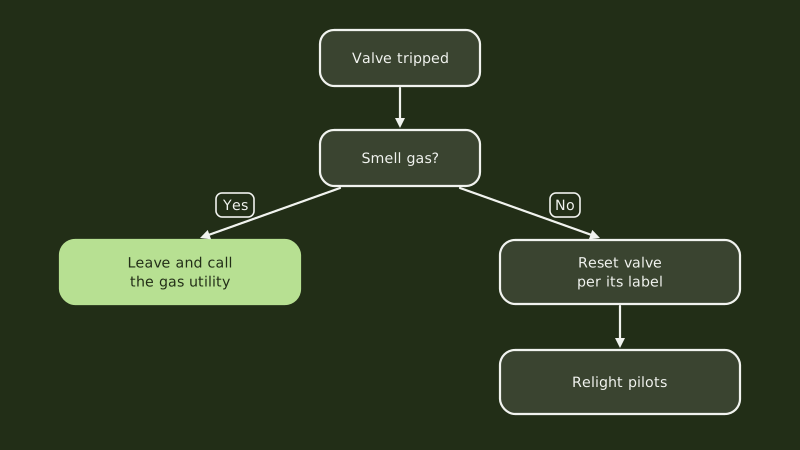
The valve has closed to stop gas flowing, so every gas appliance is now off. Before anyone touches the reset, step outside the house and sniff the air near the meter and along the walls. Any smell of gas, hissing, or damage to a pipe means leave, avoid switches, and contact SoCalGas using 1-800-427-2200.
Walk through the house once the air is clear. Set every gas control to off: stove burners, furnace thermostat, water heater dial. That way nothing fires up by surprise when gas returns. After strong shaking, also glance at the water heater. It should still be upright and held by its straps, as California law requires of residential heaters.
If a quake caused this, expect delays. SoCalGas notes that after a major event it can take days or even weeks for anyone to reach you, which is the reason people learn their valve beforehand.
How is a seismic gas valve reset, step by step?
Most valves reset by a lever, a plunger or a magnet, depending on the model. The usual order is appliances off, check for gas, reset per the label, wait while pressure returns, then relight pilots one at a time. Because the make and model change the details, the instruction printed on your valve wins over any general guide.
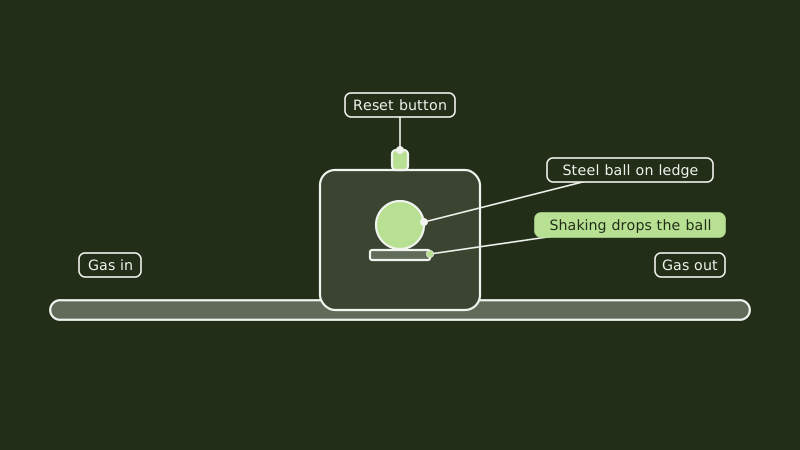
Wikipedia's overview of these valves says a motion-sensing valve is reset with either an external magnetic device or an internal lift mechanism. A ball inside the device drops to block the opening when the building shakes, and putting it back requires that tool or lever.
What you do not do: never reset a valve you can smell gas around. Never open the utility's own shutoff at the meter. SoCalGas says only it or its authorized contractors may operate the service shutoff valve, which is a different device from the earthquake valve downstream of the meter, inside your property.
SoCalGas advises having appliances checked for leaks and pilot lights relit before gas is restored to the house. If you are unsure about any step, stop there. The plumber arranged through our service resets the valve and runs the checks together. To request that visit, use the quote page.
Why did my valve shut when there was no earthquake?
Motion-sensing valves can be tripped by a heavy truck, construction vibration or a hard knock on the pipe, because the ball inside is set to respond to shaking. If it closes with no quake, reset it carefully, or have it replaced if it keeps happening. A valve that trips often may be mounted loosely or be too sensitive.
SoCalGas charges a fee to reset a valve and relight pilot lights when the valve closed for a reason other than an earthquake. The amount is not published on its page, so ask when you call. Ask the plumber to check how the valve is mounted, because a loose mount or strained pipe beside it may make it trip more easily.
Does my Santa Ana home need an earthquake gas shut-off valve?
We found no rule in the sources behind this page that forces every existing Santa Ana home to install one, and requirements vary with the city and the kind of work. The 1994 Northridge earthquake, magnitude 6.7, showed the risk: broken gas lines and toppled water heaters started numerous fires. Many owners fit a valve for that reason.
Ask the City of Santa Ana's Building and Safety staff what applies to your property, especially if you are remodeling, since permitted alterations can bring requirements. SoCalGas tells customers to check with their local Department of Building and Safety for the right valve size and manufacturer.
Our page on emergency gas shutoff after an earthquake lays out the decision in more depth. This page stays on resetting.
Who fits a seismic valve, and what is the price?
A plumber installs the valve on the house line, downstream of the meter. SoCalGas does not install them. National and California cost guides put the installed price around $250 to $800 for a standard valve, with a permit and a meter that is hard to reach pushing it higher. Treat those as a guide.
Look for a valve approved for California use and ask the plumber which model and which pipe size they would fit. Fitting one usually needs a city permit, and the plumber should say who applies for it. Our page on pulling a plumbing permit explains the steps, and gas line costs covers the wider price picture. SoCalGas suggests asking for a technician visit after any install that requires the service valve to be shut off, a visit that is free.
Do not confuse this valve with an excess flow valve. SoCalGas lists excess flow valve installation between $2,500 and $5,000 or more, depending on site conditions, a separate job from a house-side seismic valve.
Common questions
Is fitting a seismic valve a DIY job?
Fitting one means opening gas piping, which California regulates, and the work normally needs both a permit and an inspection. The safe answer is to hire a contractor whose license covers gas piping. Check the license number online first, ask which valve will be fitted, and confirm the written price includes the leak test.
Will SoCalGas reset the valve for me?
SoCalGas recommends that it or a qualified professional resets the valve, and it charges a fee when the closing had no earthquake cause. After a major quake, though, crews may take days or weeks to reach every house. Learn your valve's reset steps beforehand and keep a plumber's number handy.
What does an automatic gas shut-off valve do when the earth shakes?
It senses ground motion and closes automatically, cutting off natural gas to the house so a broken pipe or appliance connection cannot feed a fire. It does not turn itself back on. Someone has to reset it by hand, after checking for leaks, which is why the reset steps matter.
Do I still need to strap my water heater?
Yes. The valve and the straps do different jobs. The valve stops gas, and the straps keep the heater from falling and breaking its own connections. A state statute covering residential water heaters requires bracing or strapping, and the Northridge quake showed the price of skipping it. See water heater permits for what a replacement involves.
This guide is one of many on plumber santa ana.
Sources
- SoCalGas, earthquake and excess flow valves
- SoCalGas, recognize a natural gas leak (bill insert, 2025)
- Wikipedia, Earthquake valve
- Wikipedia, 1994 Northridge earthquake
- Cost guides for earthquake shutoff valve installation, 2026 (read November 2026)
Last updated