Permits in Santa Ana are issued by the City's Building Safety Division, and plumbing applications now go through the City's online permit portal. A contractor normally applies on your behalf. A homeowner can apply as an owner-builder in limited cases. Backflow testing is a different process, run through the water system, and it is covered in backflow testing in Santa Ana.
This page is about the plumbing permit itself: when you need one, how the steps run, and what the inspector comes to see.
Which plumbing work does the City want a permit for?
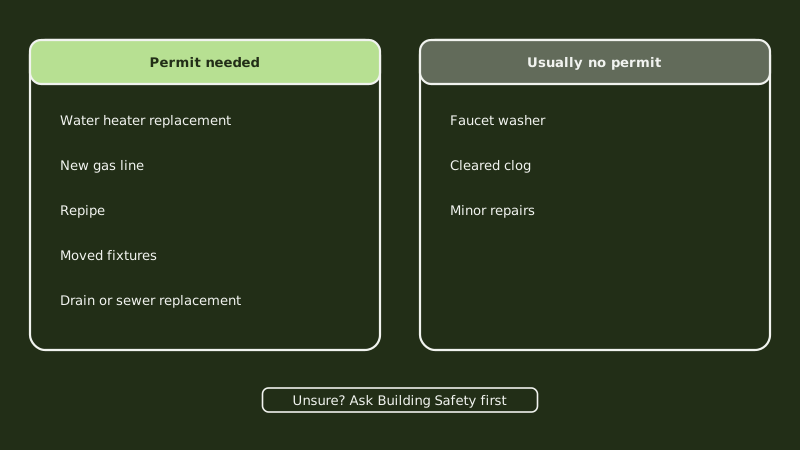
The City's own permit list names water heater replacement. New gas lines, repipes, moved fixtures and drain or sewer replacement belong in the same bucket. Minor repairs, a faucet washer or a cleared clog for instance, normally sit outside it. When unsure, ask the Building Safety Division before the work starts.
Why the line sits there: a permit exists so an inspector checks work that can leak inside a wall, leak gas, or let sewer gas into the house. Replacing like for like at the same spot is the simpler end of it. Adding a bathroom or rerouting lines is the bigger end and may call for plan review.
The City also runs a Same Day Express Permit program for residential plumbing replacements, with water heaters on the eligible list. It skips plan check, and applications go through the permit counters or the online portal.
Who is allowed to apply for the permit?
Usually the contractor applies, under a California contractor license in the matching class, and the permit carries that license number. A homeowner may apply as an owner-builder under state law, signing a declaration that they will do the work themselves. Tenants cannot, and paying an unlicensed helper breaks the exemption.
That is a general summary of California's owner-builder rule (Business and Professions Code section 7044), and cities may apply it differently, so confirm with the division. Gas piping and water heater installation have safety stakes, which is why many owners choose a contractor even when they could apply themselves.
Hearing "no permit needed" for work on the City's list should make you pause. Whether the permit gets pulled should be written into the contract, which CSLB says must state who obtains permits.
What are the steps to get a plumbing permit?
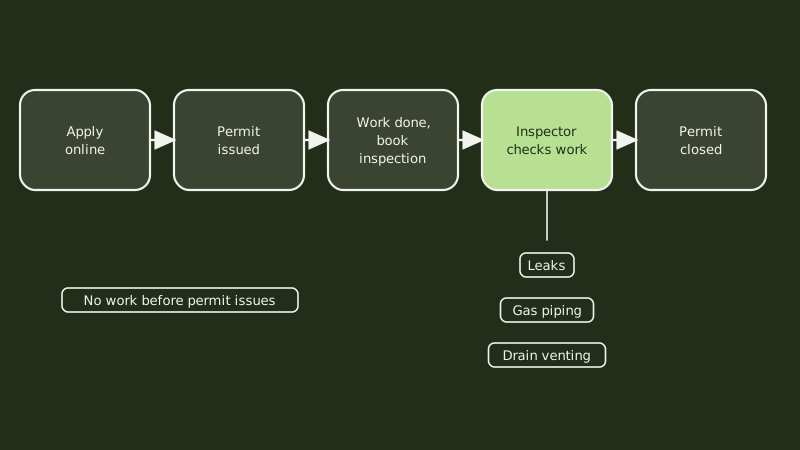
Create an account on the City's permit portal, choose the plumbing permit type, enter the address, owner and contractor details, describe the work and pay the fee. Once issued, schedule inspections through the same portal. The permit is closed after the final inspection passes. Work must not start until it is issued.
In order:
- Confirm the permit is needed. Check the City's permit list or call the division.
- Gather what the form asks. Property address, owner name, the contractor's California license number (or the owner-builder declaration), a description of the work, and the valuation or fixture count.
- Apply online. The City moved permit applications to its online portal, with a paper plumbing form also posted on the City site.
- Pay the fee. Fees come from the City's fee schedule. Look it up rather than trusting a number from a blog.
- Wait for approval or plan check. Express permits skip plan review.
- Schedule inspections. Rough inspection before walls close, final when finished.
How do I fill out the plumbing permit application?
Fill in the property address, owner and applicant details, the contractor license number or owner-builder declaration, a plain description of the work, and the count of fixtures or the project value. Describe the job in the same words the contractor's quote uses, such as "replace 50-gallon gas water heater, same location." Incomplete descriptions cause delays.
Typical entries: the number of fixtures added or moved, whether gas piping is involved, the water heater capacity and fuel, and the work location. If you are not the applicant, have the contractor complete the technical lines. Do not guess at valuation. Use the contract amount.
Do I need to draw plumbing plans for a permit?
Often no, when the job swaps one fixture for the same kind in the same spot. The Same Day Express program lists water heater replacements without plan check. A bathroom addition, new gas line or rerouted drains often needs a plan: a simple drawing showing fixture locations, pipe sizes, the water supply and the drain and vent layout. The City tells you at application whether plans are required.
If plans are needed, a contractor or designer normally draws them. A plumbing plan is a schematic, often a floor plan marked with fixtures and a riser diagram showing how drains, vents and supply lines connect. Ask the division what format the plan counter accepts before drawing anything.
What does the inspector check?
At each visit the inspector compares the work against the permit and the plumbing code: pipe sizes and materials, venting, supports, gas connections, shutoff valves, relief valve discharge and, for a water heater, seismic strapping and venting. A rough inspection happens before walls close, and a final one when the work is done.
Be there or have the contractor there, and leave access open. Sewer work brings in a camera inspection, where a lens on a flexible cable travels the pipe. It is a separate step that sizes up a drain job, and some permits may ask for the footage. Check with the division about yours.
Can I test a backflow device myself?
No. A backflow assembly is a protective device on the water line, and it gets tested once a year. The test is done by a tester who has passed an approved course, and Santa Ana wants test reports submitted through its own reporting portal. The property owner arranges it and keeps the paperwork.
The State Water Resources Control Board's cross-connection handbook sets the annual testing expectation, and the City's backflow page lists local tester requirements, including a City business license for the tester. If you have a sprinkler system, fire line or a commercial water line, you may have an assembly that needs testing. Further detail sits at backflow prevention assembly testing and backflow testing rates.
Installing or replacing an assembly is plumbing work and can need a permit. Testing it is not a permit matter in the same way.
Common questions
How quickly does the City issue one?
It depends on the job. Eligible residential replacements, including water heaters, can go through the City's Same Day Express program without plan check. Larger jobs go through plan review, which takes longer, and the City sets the schedule. Ask the contractor for the timeline, and remember that inspections add days to the end of the job.
What if the work already happened without a permit?
Expect to be told to apply late, and an inspector may ask for walls to be opened. The gap can also surface when the house is sold. The cleanest route is to call the Building Safety Division and ask. We cannot give legal advice, but a contractor can explain how it is usually handled.
What do I ask the contractor on the permit side?
Ask who pulls it, whether the price includes the fee and the inspections, and when the inspection will be scheduled. The permit should be taken out under the contractor's California license. Make sure the written contract states who obtains permits, because CSLB lists that among the items a home improvement contract should contain.
Can someone look at the job before the permit exists?
Yes. A local plumber can come out, find the fault and quote the job with the permit built in, and the work itself waits until the permit is issued. Describe it on our price request page to set that visit up.
For the wider picture, start with plumber across Santa Ana.
Sources
- City of Santa Ana, Permits Counter
- City of Santa Ana, Same Day Express Permit Program
- City of Santa Ana, Backflow program
- City of Santa Ana, Plumbing Permit Application
- State Water Resources Control Board, Cross-Connection Control Policy Handbook
- Contractors State License Board, Learn About Home Improvement Contracts
Last updated