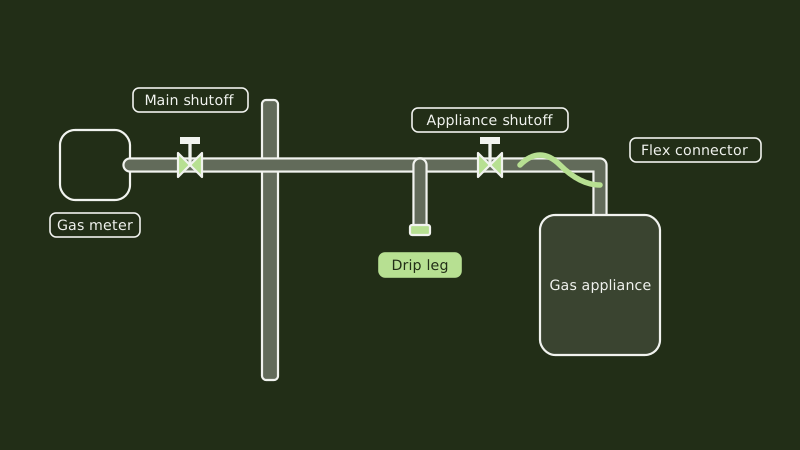
Home gas piping in California is governed by the fuel gas chapter of the state plumbing code, and adding, extending or replacing a gas line needs a permit and a city inspection. Replacing an appliance on its existing, compliant connections is usually treated differently. For the wider set of rules, see permits, codes and inspections; gas is the strictest part of them. Confirm local details with Santa Ana's Building and Safety division.
What code governs gas piping inside a Santa Ana house?
Fuel gas piping in homes falls under Chapter 12 of the California Plumbing Code, and Santa Ana's Building and Safety division enforces it. Editions and local amendments shift over time, so ask the city which version applies to your permit. The code sets pipe materials, sizing, supports, testing and connections.
City handouts from several California building departments summarize the same core rules, though their code editions range from 2019 to 2025. That is a reminder that the details are local. This page explains the pattern, and your inspector has the last word. Pipe materials are discussed on which pipe carries natural gas, and the main page on gas line pipe goes further.
Is a permit needed before gas pipe is touched?
Yes for new, extended or replaced gas piping. California cities generally require a plumbing permit to add, extend or replace any gas piping. Swapping an appliance onto existing, code-compliant connections and flexible connectors is often exempt, but altering, extending or resizing piping is not. Ask Santa Ana's Building and Safety division whether your job qualifies.
Some cities issue gas permits only to contractors with a California license for the work, and homeowners should expect that. Santa Ana runs a same-day express permit program for some residential replacements, such as water heaters, with no plan check; other gas jobs go through the normal counter. The page on how to pull a plumbing permit explains who files, what an inspector sees and how to book. The question of price is in gas line cost in Santa Ana.
What do inspectors look at on a gas line?
Typically two visits: a rough inspection before walls and ceilings are closed, and a final after the work is complete. Buried exterior runs may need a look before backfill. The inspector checks pipe material, support, joints, the pressure test, shutoff valves at appliances, sleeving where pipe passes through walls or under buildings, and bonding if flexible pipe is used.
A camera inspection is a drain-line tool and does not apply here. Gas piping is inspected by sight and by a pressure test, since a camera cannot find a leak in a pressurized line. Leave the walls open until the inspector has signed off; covering gas pipe early is a common reason for a failed rough inspection and a lot of rework.
How is a gas line pressure tested?
Before the pipe is hidden, it is tested with air, nitrogen or another inert gas, never fuel gas or water, at not less than 10 psi, and at least one and a half times the proposed working pressure, for at least 15 minutes with no drop in the gauge. Appliances must be disconnected during the test, and the gauge must suit the range.
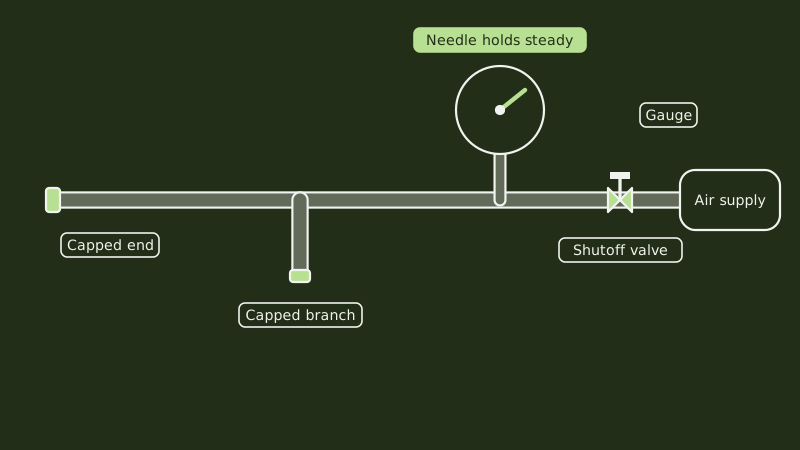
Those numbers come from municipal handouts that cite sections 318 and 1213 of the plumbing code, so read the adopted edition alongside the inspector. A leak test after the appliances are connected is separate and done with leak detection solution or an electronic detector. Gas is never tested with a flame.
What rules apply to appliance connections and flexible pipe?
Each appliance needs its own shutoff valve within reach, a sediment trap on the line near the appliance inlet, and a code-compliant connection. Unions are allowed only past the appliance shutoff, and flexible connectors must be listed for gas and installed as directed. Corrugated stainless steel tubing (CSST) has to be bonded, and fitted by a qualified installer following the manufacturer's manual.
Pipe under a building generally must be sleeved and vented. Because CSST rules and bonding details change with edition and product, a plumber with the proper contractor license works from the maker's manual and the current code. Never use a dryer vent hose or garden hose for a gas connection, and never reuse an old flexible connector on a new appliance without checking its listing.
Who may legally run or change the gas lines in a home?
State rules put gas piping in the hands of contractors holding a California license, and a permit comes with most of it. Owners should not run, alter or test gas pipe, even for a barbecue or fire pit. Do-it-yourself advice stops at the appliance shutoff; everything past it needs a plumber holding a contractor license and the city's inspection.
The licensing board's free lookup confirms classification, bond and status. Ask the contractor one thing first: who pulls the permit, when the rough and final inspections will occur, and what test the pipe will get. Gas line visits are arranged across the areas we cover, and the written quote should name whoever handles the permit.
What should I know about the meter, leaks and earthquakes?
SoCalGas serves the meter, and the owner generally answers for everything on the house side of it. Smell gas, hear hissing or see damage, and you leave at once. From outside, SoCalGas answers on 1-800-427-2200; 911 is for danger. Leave every switch alone, and do not attempt a leak repair yourself. Earthquake shutoff valves are covered separately.
SoCalGas warns that the odorant can fade, so your nose is not a reliable alarm. Santa Ana homes are in earthquake country, and an automatic shutoff valve is a common upgrade; read emergency gas shutoff valves for earthquakes and, if the valve trips, how to reset it. Water heater gas connections need strapping and venting too, per local rules.
Common questions
How long does gas line work take?
A short branch for a range or dryer can be finished in a day, with the rough inspection ahead of drywall and the final afterward. Longer runs, new meters or work under floors take longer. Inspection scheduling is part of the timeline, so ask the plumber when each visit is expected.
What belongs on the checklist before I hire for gas work?
Confirm the plumber's state license and its classification, who obtains the permit, how the line will be pressure tested, which pipe and connectors go in, and what the quote covers. Verify the license online at the board, and keep the price on paper.
Can I move a gas line for my range myself?
No. Moving or extending gas piping usually needs a permit plus a contractor with a state license, and a mistake can leak. You may be able to replace the appliance on its existing connection, which is a different task. Ask Santa Ana's Building and Safety division, and when in doubt, call a plumber.
Is a gas leak test different from a pressure test?
Yes. A pressure test uses air or an inert gas on the new piping before it is concealed. A leak check on the finished system uses detection solution or an electronic detector at joints and connections, once appliances are connected and gas is on. Both are part of safe work, and an inspector may ask to see them.
The rest of our guides start from plumber across Santa Ana.
Sources
- SoCalGas, natural gas leaks
- City of Santa Ana, same day express permit program
- California Contractors State License Board, consumer hiring guidance
- City building department gas piping handouts for several California cities (Agoura Hills, Milpitas, Contra Costa County), checked November 2026
Last updated