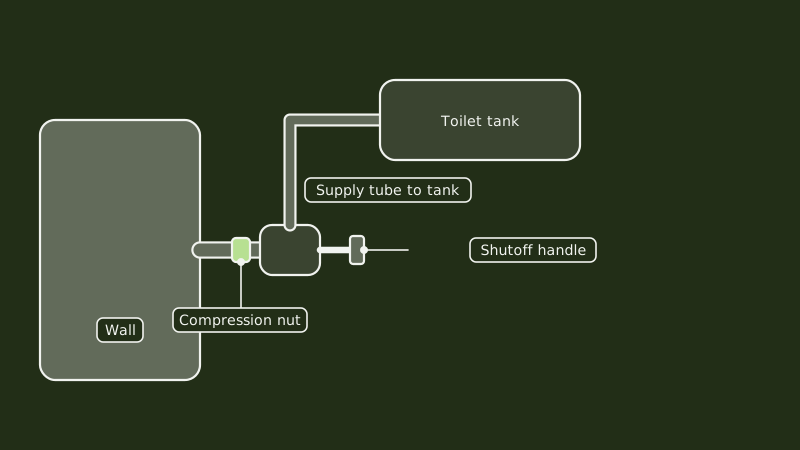
That valve behind the toilet is called an angle stop, a supply stop or a shut-off valve, and it controls water to the tank. If it drips, tighten the nut under the handle a small fraction of a turn. If it will not turn, do not force it. If it will not shut off, replace it, and plan on shutting the whole house off at the main for the swap. Our page on toilet repair covers the toilet itself.
What follows sorts leaks by where the water shows up, explains why these valves seize, and lays out a replacement step by step, including the point where it becomes a plumber's job.
Why is the valve dripping, and where is the water coming from?
The location of the drip tells you the cause. Water at the handle stem means worn packing inside the valve. A drip at the nut where the supply tube meets the valve means a loose or cracked compression joint. A drip at the pipe side, behind the escutcheon, means the valve's connection to the wall pipe is failing and the valve needs replacing.
Dry the valve with a paper towel and watch where a new bead forms. Tissue pressed against each joint shows the source in a minute.
- Stem drip: snug the packing nut under the handle an eighth of a turn. If it keeps weeping, the valve is worn out.
- Tube nut drip: the nut that grips the supply line may only need a quarter turn. A cracked ferrule or a kinked line should be replaced, not tightened.
- Wall-side drip: nothing to tighten. Replace the valve, and check the wall for stains while you are there.
A slow drip at any of these can rot a cabinet or subfloor over months, so treat even small weeps as repairs, not quirks.
Why will the valve not turn, or not shut off all the way?
Valves that sit open for years seize. Minerals from hard water crust around the stem and seat, rubber washers harden, and old multi-turn stops stop sealing. Santa Ana's tap water runs hard, about 250 parts per million by the city's number, so decades-old valves here often stick. A valve that turns but still lets water through has a worn seat.
Do not use a wrench on a handle that is stuck. Brass stems twist off, and then you have a leak you cannot shut. Work the handle gently back and forth, and apply a small amount of penetrating oil at the stem only if the valve has a metal packing nut. If it still will not move, replace it.
A bad shut-off is a hazard because you lose your safe way to isolate the toilet. That is why plumbers suggest exercising every stop in the house once a year: close it all the way, open it again, and watch for drips.
Could the valve be why the toilet runs or leaks?
Usually it is not. A running toilet points to the flapper or fill valve inside the tank, and a rocking bowl points to the flange. The valve matters because it lets you stop the supply while you fix them, and one that seeps makes every tank repair messy. Check the valve by closing it, flushing, and seeing whether the tank refills.
If the tank still refills with the valve closed, the stop is not sealing, and every repair you attempt will happen with water arriving. The fix is a replacement valve. For the toilet side of the story, start with fixing a running toilet and the notes on flapper repair.
Leaks that look like valve trouble sometimes come from the toilet's own connection to the bowl, the wax seal or the bolts. Plumber help for a toilet leak explains how to separate the causes.
What are the steps to swap in a new stop valve?
Shut the whole house off at the main, drain the branch by flushing and opening a faucet, detach the supply tube, loosen the old valve's compression nut and slide the valve off the pipe, fit a quarter-turn replacement with its nut and ring, reattach the tube, reopen the main gradually, and inspect each joint.
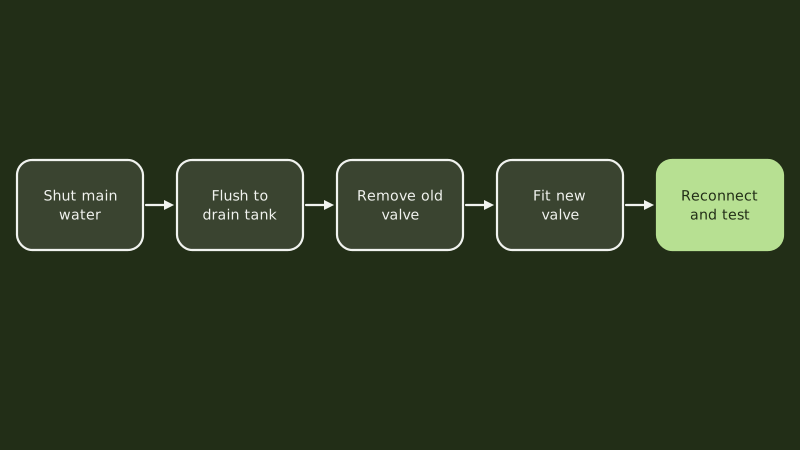
A careful owner can handle it when the wall pipe is copper or plastic and sound. It turns into a plumber's job once the pipe is corroded, the valve is soldered on, or the main will not budge.
- Buy the right valve. Most toilets use a 3/8 inch supply tube. Measure the wall pipe, since common sizes are 1/2 inch copper or plastic. Quarter-turn ball valves last longer than the older multi-turn type.
- Stop the supply. Close the main, flush, then hold the handle down to empty the tank. Sponge out what is left.
- Disconnect and remove. Unscrew the supply tube from the valve. Loosen the compression nut and slide the valve free. A ring left on the pipe may need to be cut or pulled with a ring puller.
- Check the pipe. It needs to be clean and round. If it is pitted or bent, stop.
- Install the new valve. Slide on the nut and ring, seat the valve, and snug the nut a turn past hand tight. Reconnect the tube.
- Test slowly. Open the main, open the new valve, and watch every connection for several minutes with dry tissue.
Replacing the supply tube at the same time costs little and removes a common failure point. Braided stainless lines resist kinks, but they do wear out.
At what point does this become a plumber's task?
Bring one in if the main will not close, the wall pipe is galvanized steel or visibly corroded, the old valve is soldered, the pipe twists as you loosen the nut, or the wall is damp. Each of those risks a flood. A plumber also checks water pressure, which affects how long a new valve lasts.
On older Santa Ana houses, the main valve itself may be seized, and a plumber can replace it first, making later work easier. If you plan a bathroom update, our page on toilet installation costs shows what a plumber visit usually includes, and use the price request form to set one up.
We send a local plumber out, and the price is put in writing before the work. Other jobs we handle are on the Santa Ana Plumbing Co home page.
Common questions
Should the toilet shut-off valve be fully open?
Yes, in normal use, and fully open means turned all the way counterclockwise. A half-open valve starves the tank slowly and makes it fill noisily. Leave it open, and cycle it closed and open again each year to keep it moving. If it will not close or leaks after you open it again, plan to replace it.
Can I replace the shut-off valve without turning off the main?
Not safely. The shut-off valve is the last control on that branch, so removing it means stopping the water upstream, which for most houses is the main valve. Some bathrooms have a separate shut-off for the sink and toilet line, but you should not assume that without testing.
What type of valve lasts longest?
A quarter-turn ball valve in brass or similar, with a metal handle, is usually the long-lived choice. Plastic parts and multi-turn compression stops wear sooner. Hard water shortens the life of any of them, so exercise the valve yearly and replace the supply tube whenever you replace the valve.
What is a reasonable time for a plumber to swap one?
On accessible copper pipe, a plain valve swap commonly finishes in under an hour. A seized main valve, a soldered connection or a corroded pipe adds time and parts. Ask the quote to state what is included, and ask the plumber to check that every shut-off in the bathroom still closes fully.
Sources
Last updated