Hot in the bathroom, cold at the kitchen sink? Then the heater is almost certainly working. Something between it and that one faucet is wrong: a shut valve, a clogged aerator, a pinched hose or a tired cartridge. Cold at every tap points the other way, toward the heater itself, and for that you want our overview of tankless and tank water heaters and the page on losing hot water through the whole house.
The steps below run from the easy to the fiddly. Most people locate the cause by step three, and a plumber only enters the picture at the end.
Is it the kitchen faucet or the heater?
Open the bathroom hot tap, and the shower too, for a minute. If they warm up, the heater is doing its job and the trouble belongs to the kitchen faucet or the pipes leading to it. If every hot tap stays cold, suspect the heater, its gas or power, or the main hot line, and the sink is just where you noticed it.
Two other clues help:
- Lukewarm rather than cold. Weak warmth suggests a worn mixing cartridge letting cold water slip in, or a heater thermostat set low. No warmth at all suggests a blockage or a closed valve.
- Warm, then fading. Water that starts well and drifts cold usually reflects a small tank or a long pipe run, rather than a fault.
One more test: compare the spout with the pull-out spray. A cold spout with a warm spray puts the fault inside the faucet body, not in the pipes.
In a mid-century Santa Ana house the kitchen often lies at the tail end of the hot line, and a long pipe means a long wait. Give the tap a full minute before you decide it is broken.
Did someone close the valve under the sink?
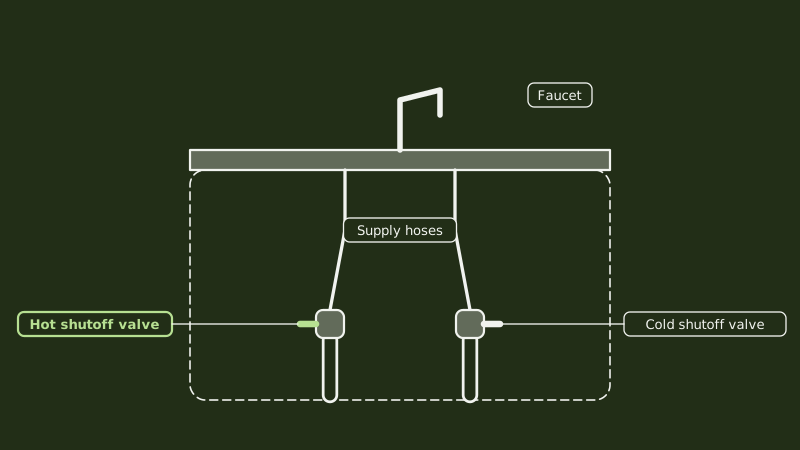
Open the cabinet and find the two small valves on the supply lines, hot on the left. Turn the hot one counterclockwise as far as it goes. A valve bumped shut during cleaning or left partly closed after a repair is a regular culprit when only that sink runs cold, and checking takes ten seconds.
A stiff valve, or one that weeps at the handle, should not be forced. An old angle stop that has seized can snap, and then the water runs until you reach the main. Replace such valves the next time a plumber is in the house. The same type of valve is shown in toilet shutoff valve repair.
While you are down there, follow the two flexible hoses up to the faucet. A kink, a tight bend or a section crushed by stored pots can choke the flow. Straighten the hose and see whether warmth returns.
Is scale blocking the aerator?
It can be, and Santa Ana water makes it likely. The city reports hardness near 250 parts per million, and the USGS calls 181 mg/L and up very hard. Heated hard water drops minerals, and the tiny screen at the spout tip is where they pile up first. A clogged aerator on the hot side can shrink hot flow to a trickle.
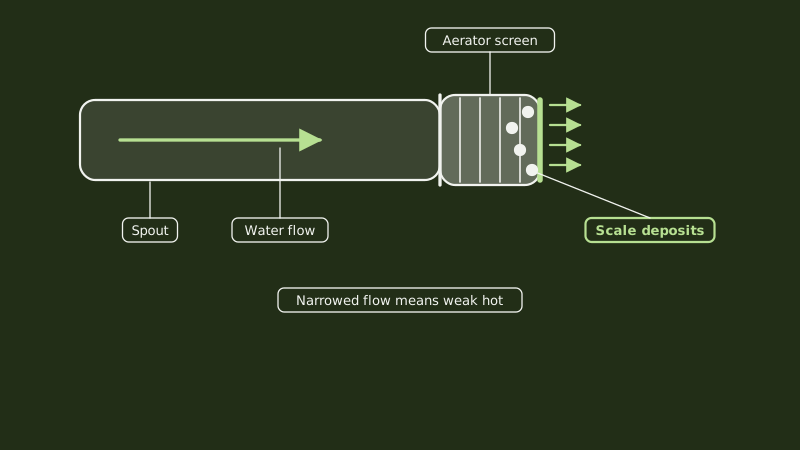
Twist the aerator off by hand, or with pliers over a cloth, knock out the grit and leave the parts in white vinegar for about an hour, then rinse. Run the hot tap with the aerator removed. A strong hot stream means the screen was to blame. Weak or cold water means the trouble lies further back.
Grit can also lodge in the faucet inlet after plumbing work or street repairs, and running the line with the aerator off flushes it. Scale likewise explains many weak-flow complaints at a kitchen sink.
Has the faucet cartridge worn out?
When the valve is open, the hose is clear and the tap still runs cold, suspect the cartridge. Single-handle kitchen faucets blend hot and cold inside it. Once it wears or clogs, the hot port can stay shut or let cold water bleed in, and a new cartridge brings the temperature back.
Many homeowners can swap a cartridge:
- Close both valves under the sink, then open the faucet to bleed it.
- Photograph each stage so the parts go back in order.
- Lever off the handle cap, take out the screw and lift the handle away.
- Unfasten the clip or nut holding the cartridge and draw it out. A cartridge puller helps with stubborn ones.
- Match the cartridge at a hardware store, or order by faucet brand and model number.
- Fit the new one facing the same way, rebuild the faucet and open the valves slowly.
A second cause is crossed supplies: hot and cold hoses swapped during installation so the handle works backwards. That one appears right after a new faucet goes in, not after years.
If the faucet leaks at the base or you cannot free the cartridge, a plumber can replace the cartridge or the whole faucet. Dripping is its own topic: see fixing a leaky faucet.
Could the heater still be involved?
Even if the kitchen is the only cold tap, look at the heater. A tank running dry, a dead heating element or thermostat, or an extinguished pilot will hit the taps farthest away first. The Department of Energy says storage heaters generally last 10 to 15 years.
Signs point to the heater when other taps run lukewarm or out fast, the tank rumbles or leaks, rusty water appears, or the pilot is out. Check the temperature setting too. A commonly used setting is about 120 degrees F, and a setting much below that can leave the kitchen lukewarm. Do not raise it above the label's maximum, because hotter water raises scald risk.
On a gas unit the label explains how to relight the pilot, yet if you smell gas, go outside and use SoCalGas's number, 1-800-427-2200. How far to take it yourself is covered in pilot light repair. A heater that runs and still gives nothing is covered in a heater that is on but gives no hot water, and a tank leaking from its body is a replacement job, described under water heater leakage.
At what point does a plumber make sense?
Call when the cause is hidden or the fix means cutting pipe: you have checked valve, hose, aerator and cartridge and the tap is still cold, the hot line seems blocked, water pools in the cabinet, or other taps are affected. A plumber can trace the line, test for a failed fitting and replace the faucet or supply line.
California's contractor license rule applies once a job needs a permit or its labor and materials add up to $1,000. A cartridge swap sits well below that figure, but chasing a hot line inside a wall does not stay small. Tell the plumber what you already tried, since it can save a diagnostic hour. Prices are in plumber cost in Santa Ana, and the quote page is how we line up the visit.
If you rent, California's habitability rules generally cover hot water, and our guide to apartment no hot water laws explains what to do.
Common questions
Why does the bathroom get hot water while the kitchen does not?
Something local to the kitchen has failed: a shut valve, a kinked hose, a blocked aerator, a worn cartridge or swapped supplies. Bathroom hot water arrives through other pipes, which shows the heater works. Check the valves under the sink first, then clean the aerator.
Why did hot water vanish after the faucet was replaced?
Make sure hot is on the hot side and cold on the cold, both valves are fully open and the aerator is clean, because installation can shake loose grit that blocks the screen. Check the cartridge position too. Swapped hoses make the handle behave backwards.
What is a normal delay for hot water at this tap?
Distance from the heater sets the wait. Several seconds up to about a minute is normal with a long pipe run, since the cooled water in the line has to clear first. Minutes, or never, means something is wrong. A recirculating pump shortens the wait.
Should I treat a cold hot-tap as urgent?
Usually not, unless water is leaking or you smell gas. It is mostly a comfort problem that a regular visit can solve. If something leaks, shut off the water and treat it as urgent. The page on no hot water as an emergency sorts out which cases are.
Could hard water be the reason?
Indirectly, yes. Scale can block the aerator, foul cartridges and build up inside the heater, reducing flow and output. Here in Santa Ana it often lies behind weak or missing hot water at a single tap, and cleaning the aerator, then treating the water if needed, handles most cases.
The home page lists more of what we arrange.
Sources
Last updated