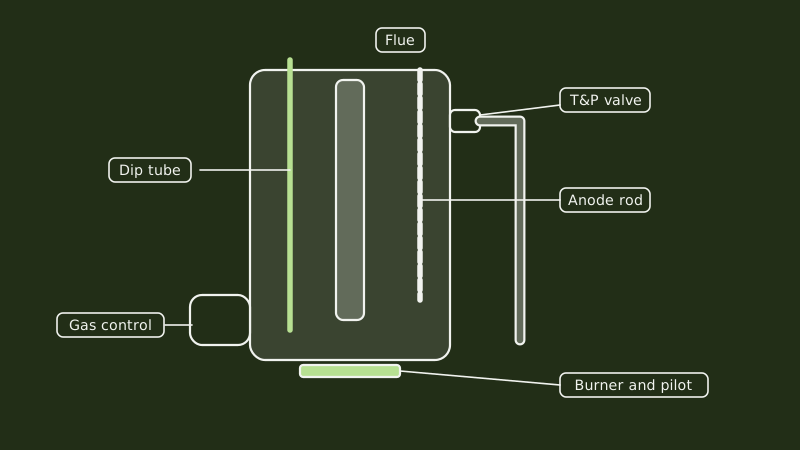
Cold water from the hot side points at the heater in nearly every case. Start at the heater: is it gas or electric, is there power or a flame, and is anything wet underneath it? Those three questions sort most no-hot-water calls in under ten minutes. Should the checks below reveal a puddle, a whiff of gas or a part past saving, a local plumber is the next step, and a worn-out heater may point toward tankless water heater installation or a new tank. How we arrange visits around Santa Ana is described on the home page.
What are the most common reasons for no hot water?
On a storage tank, the usual suspects are a tripped breaker or blown fuse, a pilot flame that went out, a dead thermocouple or igniter, a thermostat that got turned down, a failed element, or sediment piled so deep the tank cannot heat. Leaks and failed gas valves are rarer and more serious.
Which one applies depends on the heater type:
- Electric tank: breaker trouble, a tripped overheat button, a bad thermostat or an element that has burned through.
- Gas tank: a pilot flame that went out, a thermocouple that no longer senses it, or an electronic igniter that has stopped sparking.
- Tankless: an error code, a clogged inlet screen, scale inside the heat exchanger, or a gas or power supply problem.
- Boiler or other hydronic systems: rare in single-family homes here, and a heating contractor's territory.
- Everything else: a closed or failing shutoff valve, a mixing valve fault, a crossed connection, or a problem on only one fixture.
Pick the heater type from the label on the unit, which also gives the model name and the capacity.
What can I safely test myself, in order?
Go from the easiest and safest test to the hardest. Establish that the whole house is affected, look at the power or the flame, read the thermostat setting and scan the floor for water. Stop at a gas smell, a wet tank base or any step that would mean opening a panel with the power on.
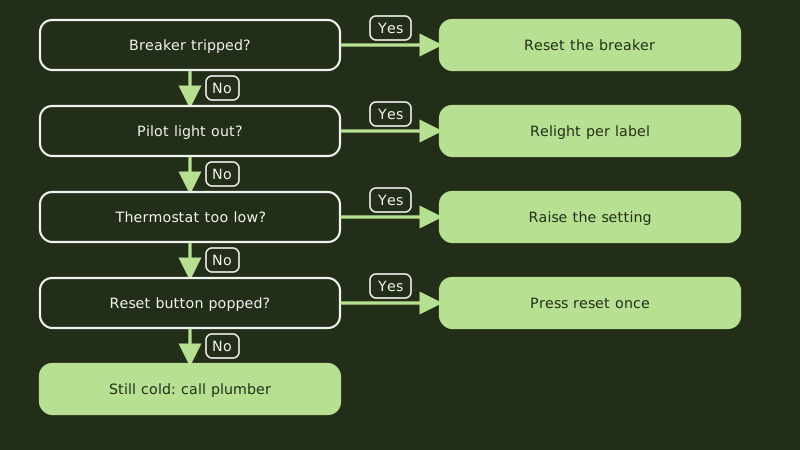
- See how widespread it is. Cold at every tap points to the heater. Cold at one tap points to a fixture or cartridge. One tap only? See the kitchen sink running cold or a shower that never warms.
- Electric heater: check the breaker. A tripped breaker rests halfway between positions. Slide it fully to off, then back to on, once. A second instant trip means stop.
- Electric heater: the reset button. Switch the breaker off, remove the upper thermostat cover, and look for a small red button. A click means the overheat protection tripped. If it trips again, a thermostat or element is likely at fault. This is the same layout on many brands, Rheem included, but check the label on your own unit.
- Gas heater: look at the pilot. If it is out and your model has a standing pilot, the label on the unit shows the relighting steps. Electronic-ignition models are not lit by hand. A flame that refuses to stay on often means a worn thermocouple.
- Thermostat setting. Plumbers often find the dial was bumped. Many households keep the setting near 120 degrees Fahrenheit as a balance between scald risk and comfort.
- Look underneath. Water pooling near the base means a leak, and the heater should be shut off, not coaxed back to life.
A gas smell at any step ends the checking. Walk out, then contact SoCalGas on its emergency line, 1-800-427-2200, from somewhere safe, adding 911 if someone is endangered. Touch no switches on the way.
When does sediment, scale or old age cause the problem?
When the tank is old or the water is hard, mineral sediment piles up on the bottom, insulates the water from the burner or lower element, and makes the heater slow, noisy or lukewarm. Santa Ana tap water is very hard, with the city reporting around 250 parts per million, so scale is a realistic suspect here.
Signs of a tired tank: popping or rumbling, rusty hot water, a supply that runs out fast, an age you cannot remember, and rust near the base. The sacrificial anode rod that protects the steel is covered in changing an anode rod. A bad element on an electric heater is the subject of replacing a water heater element.
A tank leaking through its shell cannot be patched and must be replaced. The City of Santa Ana lists water heater replacement among the jobs that need a permit. Gas units also need correct venting and an earthquake strap. For cost, see water heater replacement cost. The pilot side of gas units is in water heater pilot light repair.
Does a cold shower count as an emergency?
Mostly it is an urgent annoyance, not an emergency. The picture changes with a gas smell, water gushing from the tank, a burning smell or smoke from an electric unit, or a baby, an older adult or someone unwell in the house. Then shut off the heater or its fuel and get help.
The safe moves, in order:
- Gas smell: go outside, call SoCalGas, and ring 911 when people are endangered.
- Water escaping the tank: close the cold supply valve above the heater, kill its breaker, or turn a gas unit's dial to the off or pilot mark.
- Scorch smell or overheating: cut power at the breaker.
- No danger signs: wait for a booked visit and warm dish water on the stove.
Describe the situation on the form and we will set the visit up to match. We read enquiries weekdays from 9am to 5pm and are not an after-hours emergency line. A fuller answer is in our page on cold-water urgency. If this is a rental and the landlord owns the heater, see apartment no hot water laws.
Who do I phone when the water runs cold?
Renters start with the landlord or property manager, since California habitability law (Civil Code 1941.1) lists hot water among a landlord's duties in most rentals. Owners call a plumber who works on water heaters, and anyone smelling gas calls SoCalGas. Ask whether the plumber handles electric, gas and tankless, because tankless repair can be specialist work.
Useful details to send with your request: gas, electric or tankless, the brand, a rough age, which checks you already did and any error code. A photo of the data label saves time. A replacement conversation will cover tank size, venting, gas line capacity, strapping and the permit.
A heater replacement usually clears the $1,000 mark at which California requires a contractor license. Ask for the license number, look it up with CSLB and get both scope and price on paper.
What is the objection some plumbers have to tankless heaters?
Many are not against them at all. The concerns depend on the house: a higher purchase price, gas line or venting upgrades, an electrical load that older panels may not carry, and upkeep in hard water. A plumber who has seen your house can say whether the trade-offs fit.
The points plumbers commonly raise:
- Installed price. A tankless unit generally costs more up front than a tank of similar output, and a gas model might need a bigger gas pipe and different venting.
- Scale. Hard water leaves mineral buildup in the heat exchanger. Santa Ana's hard water makes periodic flushing a realistic part of ownership.
- Flow and temperature. A tankless unit needs a minimum flow to fire, and a tap running very low may turn it off.
- Waiting time. Water still has to travel from the heater to the faucet, so distance matters more than the heater type.
On the upside, tankless units do not store a tank of heated water and can last well. Which one suits you is a question to settle with your own numbers. Tank versus tankless sets out the comparison and tankless installation costs covers price.
Common questions
What if the cold water is in my apartment?
With a shared boiler or a heater you do not control, tell the landlord or manager quickly and in writing, because hot water falls under California rental habitability rules. If the heater is yours to control, run the breaker, pilot and thermostat checks above. Tenant rights are in apartment no hot water laws.
The heater is running, so why is the water cold?
Heavy sediment, a lower element that burned out, a thermostat that drifted, or a broken dip tube letting cold water mix at the top can each do it. A gas burner may fire but heat poorly through scale. Pinning down which falls to a plumber, and a leak means stopping right there.
What do I do about an electric heater giving only cold?
Look at the breaker, then at the red reset button beneath the upper thermostat cover, with the power off. A second trip of either means stop. A burned-out element or a bad thermostat is likely, and reaching inside a live heater is dangerous. A plumber can test and swap the parts.
Can hard water cause my water heater to stop working?
It can contribute. Hard water leaves sediment on the tank bottom and scale on elements and heat exchangers, which makes heating slow and shortens life. Santa Ana's water is very hard by the city's figures. Flushing a tank periodically helps. Ask the plumber what suits your heater's age.
Is it safe to relight the pilot myself?
On a standing-pilot gas heater, the label spells out the steps, and many owners handle it. With gas in the air, step outside and call SoCalGas before anything else. A pilot that will not hold, or a unit with electronic ignition, needs a plumber, and anything touching the gas piping needs a contractor.
Sources
- SoCalGas, natural gas leaks
- City of Santa Ana, permits counter (replace water heater)
- City of Santa Ana, tap water hardness
- California Contractors State License Board
- California Civil Code section 1941.1 (habitability), hot and cold running water
Last updated