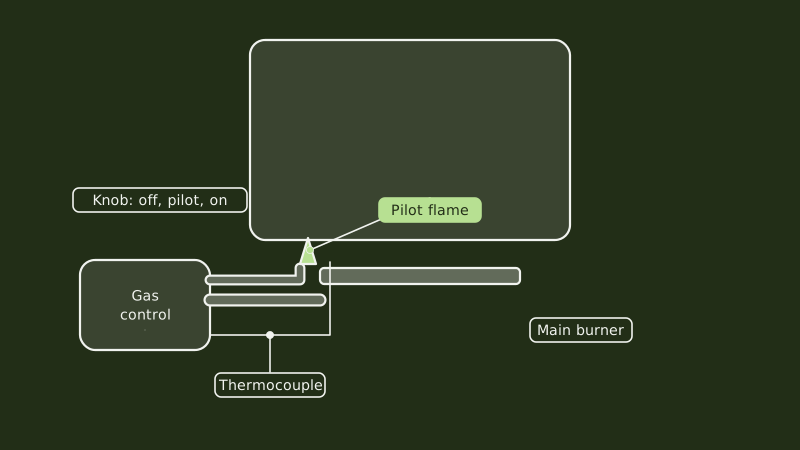
If the pilot is out on a standard gas tank water heater and you smell no gas, you can relight it using the steps printed on the unit: turn the control to PILOT, depress the button, light the flame, keep the button down, then let go and move the dial to ON. If it goes out again within days, the part that senses the flame is usually worn. Newer heaters with electronic ignition keep no flame burning between cycles. For the wider picture of water heater work, see water heater service and installation.
One rule beats every step below. Smell gas and nothing gets lit, no switch gets touched. Everyone leaves, and from the street you ring SoCalGas at 1-800-427-2200.
Why did my water heater pilot light go out?
The usual causes are a thermocouple that no longer senses the flame, a pilot tube clogged with dust, a draft or backdraft blowing the flame out, low or interrupted gas supply, or a gas control valve that is failing. Often a single gust, such as a garage door slamming, is enough to blow a weak pilot out.
A thermocouple is a small metal probe that sits in the pilot flame. Heated, it generates a tiny current that keeps the gas valve open. Lose the flame and the current stops, so the valve shuts, which is the safety design. A worn probe can fade even while the flame looks fine, and then the pilot dies as soon as you let the button up.
Here are the common patterns:
- Lights, then dies on release: thermocouple or thermopile worn, or sitting outside the flame.
- Pilot burns weak or yellow: a dirty pilot tube or orifice, or poor combustion air.
- Pilot goes out in wind or after the garage door closes: draft, or a blocked flue pulling the wrong way.
- Pilot will not light at all: no gas reaching the unit, a closed valve, or a failed control.
What is the safe way to relight the pilot?
Confirm there is no gas smell, then follow the label on the heater itself. Broadly, you set PILOT, hold the button in, light the flame with the built-in igniter or a long lighter, keep pressing for around a minute, release, and turn to ON. Trust the label's wording over mine, since models differ.
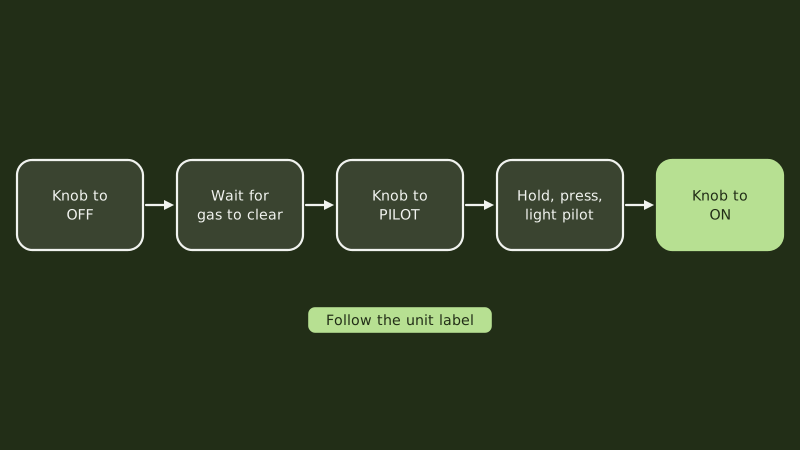
Before you start, look at the unit. If there is rust streaking, scorching around the burner area, soot, a leak, or a gas control that looks damaged, stop. Also stop if the flame ever burns yellow or orange with soot, a sign of poor combustion.
Steps that fit most standing-pilot tanks:
- Set the control to OFF and give it a five-minute pause so stray gas can clear.
- Remove the burner access cover and look at the pilot area.
- Set the control to PILOT and press the button down.
- Light the pilot with the igniter button or a long match while holding the button.
- Keep the button down for 30 to 60 seconds so the thermocouple heats.
- Release slowly. If the flame stays, turn the dial to ON and replace the cover.
If it goes out when you release, repeat once. A second failure means a parts problem, not technique. Many newer units use an intermittent pilot or a hot surface igniter with no standing flame to relight, and for those the fix is different.
A standing pilot keeps burning through a blackout, while electronic ignition may not.
How much does fixing the pilot problem cost?
A national 2026 guide puts a gas thermocouple replacement at about $100 to $250 total, because the part costs only a few dollars and the labor and visit make up the rest. A failed gas control is a bigger repair, around $300 to $550. These are guide figures, and a plumber's written quote sets the actual price.
The calculation changes with age. A heater younger than ten or so is normally worth a new thermocouple. On a unit past twelve years or with a leaking tank, the same money goes toward replacement. Ranges for a new unit sit in what a replacement costs, and the timing question has its own guide, when a heater is due.
Santa Ana's hard water, about 250 parts per million by the city's number, leaves scale on a tank floor as the years pass. That sediment makes the burner run longer and hotter, and wears the heater down. A yearly flush helps, and the plumber can demonstrate it for your model.
Is it safe to keep relighting a pilot that will not stay on?
No. A pilot that repeatedly dies is a message that the safety system or the combustion air needs attention. Relighting over and over, or defeating the thermocouple, can leave gas flowing without a flame. Try once or twice to confirm the pattern, then stop and book a repair.
Watch for carbon monoxide warnings. A flame that is yellow, orange or sooty, a flue that feels cold during a burn, a sooty draft hood, or headaches and dizziness while the heater runs are all reasons to turn the unit off, open windows, get fresh air and call for help. A working carbon monoxide alarm near the sleeping area is a good safeguard in any home with gas appliances.
Do not stuff the draft hood, block the vent, or store paint, solvents or gasoline near the heater. The garage is a common home for water heaters in Santa Ana, and the flame in there is a reason to keep flammables far from it.
What can an owner fix, and what should a plumber handle?
You can relight a standing pilot, clear light dust around the burner area, and tell whether it is a draft. Leave the thermocouple or thermopile swap, the gas control and anything touching gas piping, venting or the burner assembly to a plumber. Replacing the whole water heater needs a permit, a strapped unit and proper venting.
Gas work is regulated. California requires heaters to be strapped under Health and Safety Code 19211, and replacement is permit work that the City of Santa Ana's permits counter handles. The usual faults are listed in gas water heater repair, and water heater on but no hot water helps if the pilot is lit but nothing heats.
To line up a visit, enter the make, the age and what you saw on the price request form. Other trades are on the Santa Ana Plumbing Co home page.
Common questions
Why does my pilot go out when I let go of the button?
That usually means the thermocouple is not producing enough current to hold the gas valve open. It may be worn, loose or not sitting in the flame. A new thermocouple is a small part, and replacement is quick for a plumber. If a new one fails the same way, the gas control may be at fault.
Can a pilot light go out because of a draft?
Yes. Open vents, a garage door, a strong gust through an air gap or a blocked flue can blow out the flame or push exhaust the wrong way. If the pilot goes out only when a door shuts, a draft is likely. If a flue is blocked, treat it as a safety problem and have the heater checked.
Which questions are worth putting to the plumber?
Check that the price covers the part, and that a leak test and flue check follow. Write down the contractor's license number, then confirm it on the state board's website. On an old heater, request a replacement price alongside, so the two can be compared.
Does a dying pilot count as an emergency?
On its own it can wait a few days, but not long. Gas smell or soot makes it urgent: leave the house first. Otherwise stop relighting, switch the control to OFF if the heater cannot stay as it is, and arrange a repair. Cold showers are a nuisance. Gas leaks and carbon monoxide are the real risks.
Sources
Last updated