Water damage in a ceiling gets fixed in a set order: stop the leak at its source, make the area safe, dry everything that got wet within a day or two, then repair the finish. Skipping ahead to paint is the classic mistake, because a stain that returns means the pipe is still dripping. Source work belongs to a plumber, and our leak and burst pipe page covers that side.
The sections below follow the same order, starting with what the damage itself is telling you about the leak above it.
What does the damage on my ceiling tell me about the leak?
A brown or yellow ring means water has soaked through and dried at least once, often a slow or repeating leak. A fresh, spreading dark patch means water is arriving now. Bubbling paint, a bulge or a sag means plaster or drywall is holding water and may fall. A stain beneath a bathroom usually points to the tub, shower or toilet above.
Read the location against the layout of the house. A stain directly under a bathroom suggests a drain, trap or supply line there. A stain along an exterior wall near the roof edge may be rain getting in. A stain near a ceiling light or vent means water is following wiring or ductwork, and that changes the safety picture.
Some stains are not from a leak at all, such as condensation on a cold duct. That situation gets its own page, stains with no leak behind them. Unsure what you are looking at? Check the signs listed in is a pipe actually burst may help.
What comes first once I notice water coming through?
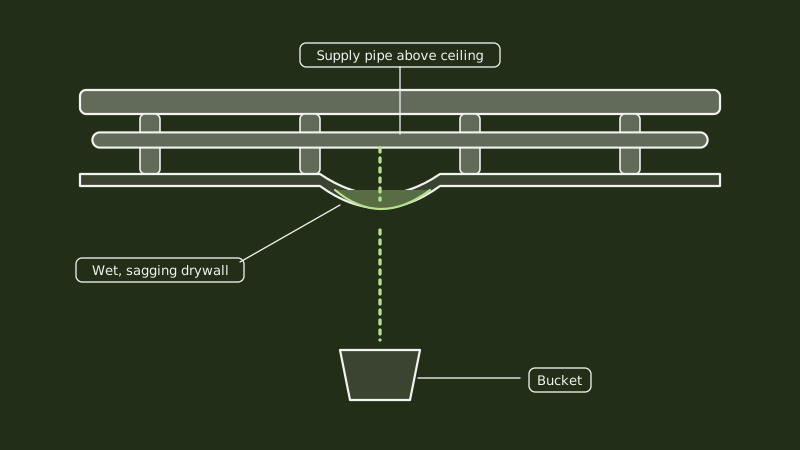
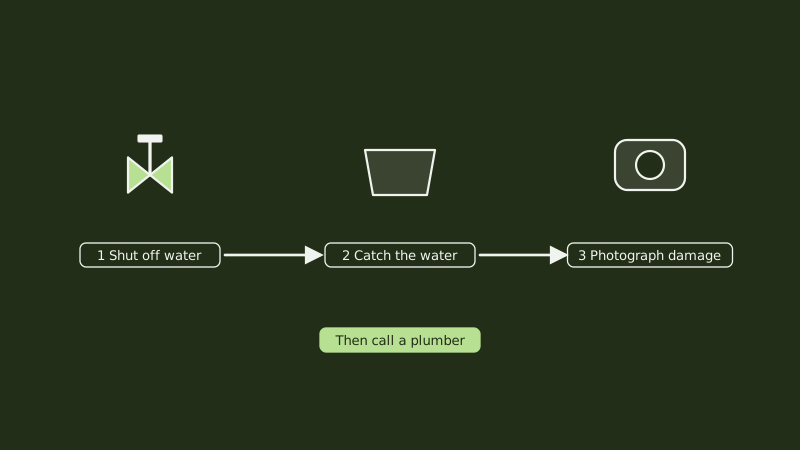
Stop the water supply if you can, keep people away from the wet area, and protect the room. Close the main valve when a pipe is the source, move furniture and rugs aside, and set buckets under drips. If the ceiling bulges, make a small hole at its lowest point over a bucket so the water can drain instead of dropping the sheet.
Where water touches a light fixture, fan or outlet, switch off that circuit at the panel, provided the floor around the panel is dry and you can reach it without wading. Never touch a wet switch. If a fixture is dripping or sparking, leave the room and call an electrician or the plumber for guidance. Water and wiring in one place is the one risk on this page that can hurt you outright.
Photograph the damage with the date visible, before you clean or cut anything. Our guide on what to do about water leaking from a ceiling has the sequence in more detail, and for a leak around a light there is a page on water in a ceiling light.
For a failing pipe that cannot wait, an emergency burst pipe visit can be arranged through us.
How fast does a wet ceiling need to dry?
Wet materials should dry within 24 to 48 hours, the EPA says, because mold generally will not grow on materials dried in that window. Get air moving with open windows, box fans and a dehumidifier, and keep wet insulation away from occupied rooms. The EPA notes that porous items such as ceiling tiles may have to be thrown away if they stay damp.
Treat 48 hours as a rule of thumb, not a promise. Mold can appear sooner or later depending on temperature and humidity. Once you have the source fixed, the job is moisture control: bring the humidity down, open the space, and check the cavity above the ceiling for wet insulation. Insulation holds water long after the surface feels dry.
If you find mold, the EPA sorts jobs by area. A patch smaller than roughly 10 square feet counts as small. From 10 to 100 square feet the EPA calls it medium and advises choosing a remediation manager. Mold that returns after cleaning usually means moisture is still present somewhere.
Is it safe to cut into or scrape a damaged ceiling?
Open a small inspection hole only with nearby power switched off, and think first about what the ceiling is made of. Older Santa Ana ceilings may carry textured finishes, and the EPA lists textured paint and patching compounds as places where asbestos has been used in older homes. Do not scrape or sand a textured ceiling you suspect.
Exposure generally comes from disturbing the material, the EPA says. If your house is from before the 1980s and the texture is damaged, have it tested by an accredited lab before it is sanded or cut. A test costs little compared with a contaminated house. When a test shows asbestos, the work moves to an abatement contractor.
Wet drywall that sags is heavy and can fall. Support it with a prop and a board, wear eye protection, and cut away only what is clearly ruined. Uncertain what lies behind the damage? Stop and ask for help.
What does repairing a water-damaged ceiling involve?
Once the area is dry and the leak is fixed, damaged drywall is cut back to sound material, patched or replaced, taped, textured and painted. A stained but firm ceiling may only need a stain-blocking primer. A sagging, soft or moldy section is replaced, not covered. Paint over wet drywall fails within weeks.
Who does which part matters. The plumber stops and repairs the leak, and may open the ceiling to reach the pipe. Drywall and painting are usually a different trade. Under CSLB guidance, work totalling $1,000 or above across labor and materials requires a California contractor license, which puts a bigger repair in that category. The board suggests checking that number online before work begins and collecting several written bids.
Ask for a call before any opening is closed, so the pipe can be pressure tested and photographed. Then the repair is not a guess. The plumbing half of the bill is broken down in fixing a leak: plumber costs.
How do I handle insurance for ceiling damage?
Report it promptly, document everything, and hold on to damaged materials until an adjuster looks at them. Policies often pay for harm from a sudden, accidental discharge and turn down slow leaks, and the pipe is frequently excluded. Carriers also look for reasonable effort to limit the loss, so early drying and shutting off the water count.
File the plumber's invoice and any note on what caused the leak. Save receipts for fans, dehumidifiers and repairs. The coverage question is answered in full under insurance and burst pipes, and for what damage looks like after a burst, burst water pipe damage. Your policy is the deciding document, and your agent can explain how it reads.
Common questions
Can a water-damaged ceiling be saved?
Often yes, if it is firm, dried quickly and has no mold. A stain can be sealed with primer and repainted. A ceiling that sags, crumbles or smells musty is better replaced in sections. When in doubt, open a small test hole once the leak is fixed and inspect the back of the board.
How long does a ceiling take to dry after a leak?
Surface moisture may clear in a day or two with fans and a dehumidifier, but insulation and framing above can stay damp longer. The EPA's guideline is to dry wet materials within 24 to 48 hours. If the ceiling still feels cool, damp or smells earthy after that, keep drying and check for mold.
Should I poke a hole in a bulging ceiling?
If water is pooling in a bulge, a small hole at its lowest point over a bucket lets it drain in a controlled way. Do it only when no light fixture or wiring is close by and the power is off nearby. Stand to the side, not directly under, and wear eye protection.
Do I need a plumber, or a contractor for the ceiling?
You need both, in order. The plumber finds and fixes the leak, so the damage stops growing. After the area dries, a drywall and paint contractor repairs the ceiling. Water that came off the roof calls for a roofer first instead. Keep each invoice for your insurer.
For the wider picture, start with plumber in Santa Ana.
Sources
- US EPA, Mold Course Chapter 4 (drying water-damaged materials, ceiling tiles)
- US EPA, Learn about asbestos (textured paint and patching compounds)
- California Contractors State License Board, finding the right contractor
- Insurance claim guidance and industry sources on sudden versus gradual water damage, checked November 2026
Last updated