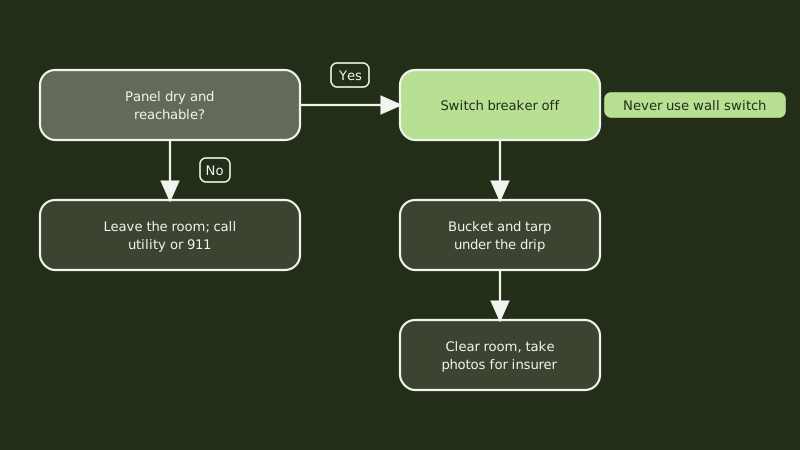
Do not touch the switch. If water is dripping from a light fixture or a recessed can, go to the electrical panel and turn off the breaker for that room, or the main breaker when the right one is unclear. Stay out from under the fixture and keep family and pets away. A drip you cannot trace may come from a burst pipe upstairs; the page on burst pipes in Santa Ana covers what to do about the water itself once the power is off.
What is the first move when a light fixture is dripping?
Shut off the breaker, but only if the panel is dry and you can reach it without wading through water. Then stay clear of the fixture, catch the drip in a bucket and shift furniture away. If the panel is not safely reachable, leave the room and phone the electric utility or 911. Leave the wall switch alone.
Why the switch is dangerous: water inside a fixture can short wiring, and a wall switch completes that circuit while your hand is on it. Water running along wires can also pool in a junction box where you cannot see it.
After the power is off:
- Set a bucket and a tarp beneath the drip.
- Clear rugs, electronics and furniture from the wet zone.
- A ceiling swollen with trapped water is sometimes relieved by a pro who pierces the bulge's low spot with a screwdriver, standing aside, over a bucket, so it drains in a controlled stream. Only do this with the power off, and wear eye protection. If you are unsure, leave it and call someone.
- Take photos of the damage for the insurance file.
- If you smell burning, see sparks or the light has been warm or buzzing, call 911.
Where is the water in my ceiling light coming from?
Usually it is one of four things: a plumbing leak in the floor above, a roof leak, condensation from an air conditioning line or attic ductwork, or an overflowing fixture upstairs. The fixture is just the lowest point, so water follows the ceiling cavity and finds the hole the wiring goes through.
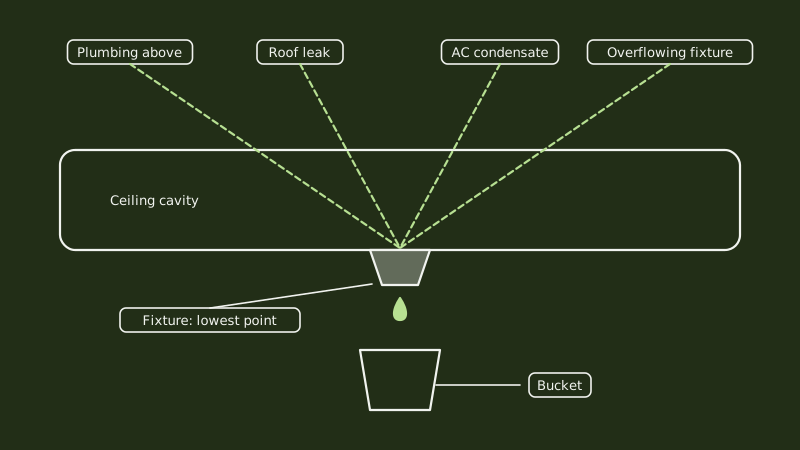
Clues point to the cause:
- A bathroom or laundry above the light. A failed supply line, a leaking drain or an overflowed tub is the usual suspect. Dripping that continues with the roof dry points to plumbing.
- Drips only during or after rain. That is a roof or flashing leak. Southern California gets most of its rain in winter, so a leak that appears with the first heavy storm after a dry summer is common.
- Drips on hot days, from a light near an AC unit or attic duct. A clogged condensate drain or sweating duct is the likely source.
- Constant drip, no rain, no fixtures above. A pressurized water line inside the ceiling or wall is more likely. A meter dial still moving with every tap off confirms a leak, and signs that a pipe has burst adds more clues.
A stain with no active wetness is a separate puzzle, handled in a stain on the ceiling with nothing leaking. For the general response to water coming through any ceiling, see water leak from ceiling: what to do.
Santa Ana has many two-story homes and condos, so an upstairs neighbor's fixture or supply line is a real possibility. Renters and condo owners should tell the landlord or the association at once.
Who fixes a leak that comes through a light fixture?
It depends on the source, and often two trades are involved. A plumber stops and repairs a water line or drain. A roofer fixes roof or flashing leaks. An electrician checks and replaces wet wiring and the fixture. An HVAC contractor deals with condensate. California licenses these as separate classes, so ask which one the job needs.
Start by finding where the water starts. If plumbing is the suspect, turn the main water valve off and see whether the dripping stops within a few minutes. If it does, a pressurized line is the source and a plumber is the first call. If it continues, look at the roof and the attic.
Wet wiring needs inspection by an electrician with a California contractor license before the circuit is switched back on, because soaked insulation can fail. The fixture itself is usually replaced. Drywall that stays damp can grow mold within days, so drying is half the repair; ceiling damage from a water leak covers what happens to the ceiling afterward.
Look up each contractor at the state license board. The license is a legal requirement for work reaching $1,000, or any job a permit covers.
What will fixing the ceiling leak cost?
The cause decides. From national price listings read in November 2026, a plumber's repair of an accessible leak runs about $150 to $550, while one buried in the wall or ceiling cavity can reach $500 to $2,000. Roof repairs and electrical work are priced separately, and ceiling patching and painting come on top.
Detection often adds $150 to $400 when the source is not obvious. The visiting plumber's quote on paper is the figure to trust. The full ranges, including slab and outdoor lines, are in what a plumber costs to fix a leak.
Insurance may cover sudden water damage, though policies differ on the cause and on the pipe repair itself; burst pipe insurance questions describes the usual pattern. Photographs and receipts help.
What keeps this from coming back?
Fix the source, not just the stain. Replace the failed supply line or drain, repair the flashing or roof penetration, and clear the AC drain. Have an electrician approve the fixture before power returns. Check the roof, attic and upstairs plumbing each autumn, before the rainy season.
Some habits pay off: learn the locations of the main water shutoff and the electrical panel, keep the panel labeled, and do not ignore a small ceiling stain, which tends to precede a bigger leak. Braided supply lines under upstairs sinks and toilets are worth replacing when they are old or bulging.
To involve us, call in weekday phone hours, 9am to 5pm, or describe the drip through the price request page. A plumber from the area visits and quotes on paper. Other jobs are listed on the Santa Ana Plumbing Co home page.
Common questions
Is it safe to turn off a light that is dripping water?
No. Flipping a wet fixture's switch can trigger a short with your hand on the circuit. Use the breaker at the panel instead, provided you can get there dry-footed. Otherwise step out of the room and ring the utility or 911. Do not touch the fixture until an electrician has checked it.
Can I use the light again after it dries?
Not until an electrician has inspected the wiring and fixture. Water can corrode connections and soak insulation in ways that are not visible, and a fixture that works today may short later. A wet recessed can or junction box is often replaced rather than dried. Treat the circuit as off until it has been checked.
Why is water coming from the ceiling light when it has not rained?
Because the source is often plumbing or air conditioning, not the roof. A leaking supply line or drain in an upstairs bathroom, a cracked pipe in the ceiling, or a clogged AC condensate line can all send water through a light fixture. Check what sits above the light and watch the water meter with taps off.
How long until the ceiling is repaired?
Stopping the leak can be quick, from an hour for a fitting to a day for a roof repair. Drying the ceiling cavity takes a few days, and patching, sanding and painting follow. Electrical inspection and fixture replacement are usually quick once the area is dry. A plumber or roofer can estimate once the source is found.
Sources
- California Contractors State License Board
- Published leak repair prices from several national cost guides, checked November 2026
Last updated