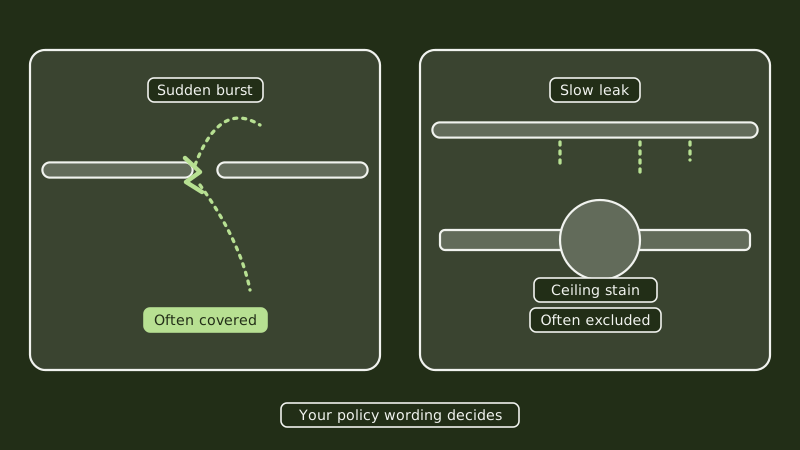
Often yes, if the burst was sudden and accidental. Standard homeowners policies commonly pay for the water damage that follows a pipe that suddenly breaks, and commonly turn down leaks that dripped along for weeks or months. The pipe repair itself is frequently on you. This is general information, not insurance advice: your policy wording governs. For repair steps, see our burst pipe guide.
What kinds of burst pipe damage does a homeowners policy usually pay for?
Usually the damage that results: soaked drywall, flooring, cabinets and belongings after a sudden failure such as a burst supply line, a failed hose or an overflowing water heater. Many policies cover that resulting damage even when they exclude the broken pipe itself. Treat "sudden and accidental" as the phrase insurers apply to a break at an identifiable moment.
Washington State's insurance commissioner describes the same pattern in plain terms: sudden accidental water damage, such as a burst pipe, is often covered, while long-running leaks are not. California carriers use similar language. Mold is where policies differ most; many limit it unless it grows from a covered loss. Read the water damage and mold sections of your own policy before you assume anything, and ask your agent which endorsements you carry.
Why would a claim for a leaking pipe be denied?
Most denials say the damage was gradual. Slow seepage, wear and tear, corrosion and poor maintenance are typically excluded, even when you did not know the leak existed. Insurers also resist claims where the owner delayed repairs after discovering the problem, or where a long-vacant house had a loss.
In an older Santa Ana home, a pinhole leak in aged copper can drip behind a wall for months. That looks gradual on paper. Evidence that helps shows a break at a specific time: a plumber's report describing a rupture, a sudden jump in water use on a given day, dated photographs. Compare how a slab leak specialist documents a hidden leak, and how ceiling damage from a leak is described.
What comes first once the water starts pouring?
Turn off the main valve first. If the electrical panel is dry and easy to reach, cut power to the soaked rooms, then crack a low faucet to relieve the line. Film and photograph all damage before moving anything, and then ring both a plumber and your insurer. Policies expect sensible steps to limit further damage, and delay can shrink a payout.
A short sequence:
- Close the main shutoff valve.
- A bulging ceiling or water near outlets means staying out of that room.
- Record video of everything, with the date visible if possible.
- Carry belongings to dry spots, but hold on to ruined items for the adjuster.
- Book the repair; the emergency visit for a burst pipe is described on its own page.
A gas smell is a different emergency from a water leak: leave, and once outside, SoCalGas takes the report at 1-800-427-2200. Save 911 for danger.
How does the plumber's report help the claim?
A written description of what failed, where, and why is the strongest piece of evidence you can add. It tells the adjuster the break was a rupture at a joint, a split in the pipe or a failed fitting, not years of seepage. Ask the plumber to note the location, the pipe material, the visible condition and the date.
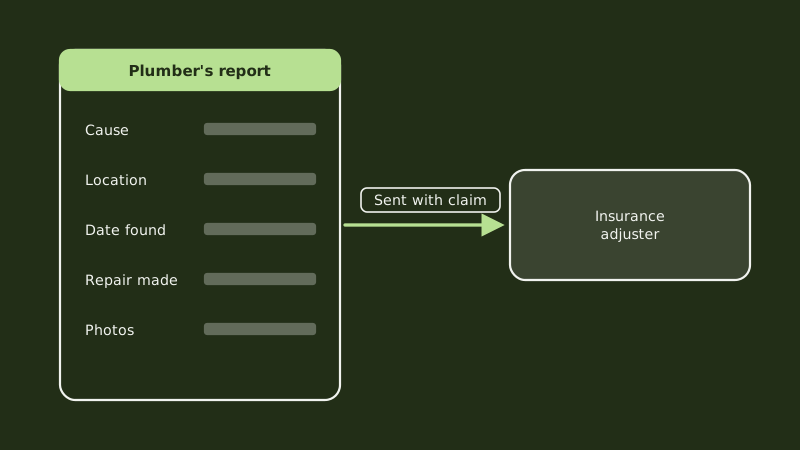
If the plumber cuts out the failed section, hold onto it, because the adjuster may ask to examine it. Ask for photographs before and after the repair. The page on recognizing a burst pipe lists what a plumber looks for, and burst water pipe damage shows typical results. We arrange the plumbing; the claim itself is between you and your insurer.
What won't a standard policy cover, even after a burst?
Policies usually leave out flood from outside, sewer or drain backup unless an add-on was purchased, damage from a house left vacant for a long stretch, and the cost to fix the failed pipe itself. Some policies cap mold. One California explainer, citing state guidance, says losses in a house left vacant for 60 days or longer are generally not covered.
Read the exclusions section and the declarations page. If you have not been told whether sewer backup is covered, ask now rather than after a loss. Tenants need renters insurance for their belongings, while the landlord's policy covers the building, so a tenant should put it in writing to the landlord that same day.
How do I keep a claim from being rejected?
Keep the plumbing maintained, fix small leaks promptly, and keep records. Insurers look for a pattern of neglect. Swap out old supply lines and corroded fittings, and learn where your main shutoff sits. If a drip appears, have it fixed and keep the invoice. Repair after a burst should happen quickly, with the written report in hand.
Prevention also helps in other ways. Santa Ana's warm climate means freeze bursts are rare, so most bursts here come from age, pressure and corrosion: see burst pipe prevention and why pipes burst in winter. For costs, burst pipe repair cost lists ranges. If a ceiling already shows a stain, start with the steps for a leak from the ceiling.
Common questions
How quickly can a burst pipe be fixed?
A break on an accessible supply line is often repaired within hours. Hidden breaks, slab leaks and repiping run longer, and drying the damaged area takes days. Ask for a time estimate when you book, and pass the schedule to your insurer so an adjuster can inspect before the walls are closed.
What should I settle when I book the repair?
Request the diagnosis and the repair price in writing, and see if the plumber will note the cause for your insurer. Look up the plumber's record at the contractor licensing board. Raise permits if pipe replacement is likely, and find out whether the failed section will be saved.
Must I be present while the pipe is repaired?
Someone adult should open the door, show the shutoff and agree the price. Hovering is optional, though the plumber may want a decision if the break turns out worse. If you are away, name a person who can let the plumber in.
Does insurance cover a leaking pipe inside a wall?
It depends on whether the loss looks sudden or gradual and on your policy's wording. A leak that suddenly opens inside a wall may be paid for in terms of resulting damage, and a slow leak seldom is. Report it quickly, keep the plumber's report, and ask your insurer in writing what applies.
This guide is one of many on the plumber guide for Santa Ana.
Sources
- Washington State Office of the Insurance Commissioner, leaks, water damage and mold
- SoCalGas, natural gas leaks
- California Department of Insurance, Residential Property Claims Guide
- Published California homeowners insurance explainers, checked November 2026
Last updated