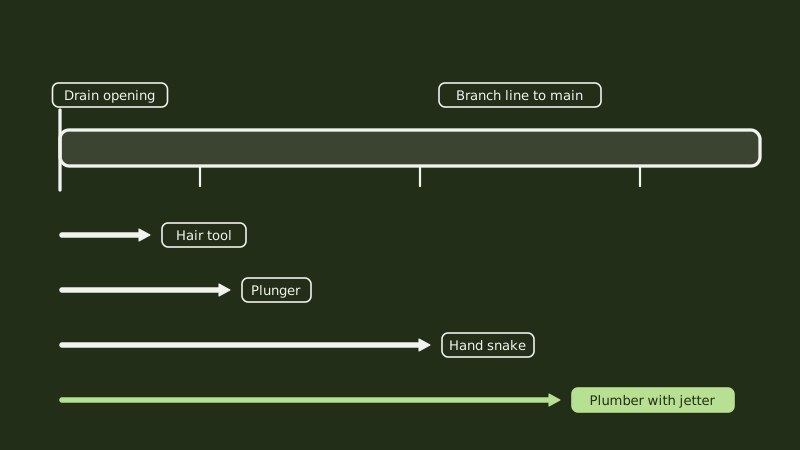
Work up the ladder for a sluggish sink or tub. Begin with a plunger that seals well. Grease calls for very hot (not boiling) water and dish soap, hair for a plastic hair tool, and a stubborn one for the trap beneath the sink. Leave the bottled cleaners on the shelf. Backup in several fixtures at once is a main line matter, and that is plumber territory. For clogged toilets, see the toilet clog page.
What follows is organized by what is clogging the drain, because the cure depends on it.
Which home remedy works for which kind of clog?
Hair clogs respond to a snake or hair tool, grease to hot water and dish soap, soap scum to repeated flushing with hot water, and a lodged object to the trap or a snake. A plunger helps with soft blockages in sinks and tubs. Baking soda and vinegar rarely clear a solid clog.
Figure out the type first. A tub that drains slowly with hair visible at the stopper almost always has hair a few inches down. A kitchen sink that smells and drains sluggishly after months of cooking is probably grease. A bathroom sink that stops all at once, after a ring or toy went missing, has an object.
| Clog | Try first | If that fails |
|---|---|---|
| Hair in tub or shower | Pull the stopper, hook out the hair, plastic snake | Clean the trap or call |
| Grease in kitchen sink | Hot water and dish soap, then plunger | Snake or call |
| Soap scum, slow bathroom sink | Plunger with the overflow blocked | Remove and clean the trap |
| Dropped object | Remove the trap | Call |
How do I clear a drain with a plunger?
Add enough water to submerge the cup, press a damp cloth over the overflow opening, settle the cup gently, then pump firmly some 15 to 20 times and snap it free. Running water means success, so flush with hot. Sinks and tubs want the flat-bottom cup, while a toilet takes the flanged style.
Use a separate plunger for toilets and sinks. A plunger works by moving a plug of water back and forth, so a poor seal wastes the effort. For tubs, plunging with the overflow plate covered gives more pressure on the clog. If three rounds do nothing, stop. The blockage is probably deeper.
Is the baking soda and vinegar trick worth trying?
Only a little. The fizz can loosen light film and freshen a drain, yet plumbers say it will not dissolve a dense hair mat, thick grease or a lodged object. It does no harm to try, but nothing should ride on it.
Should you try it anyway, measure about half a cup of each, baking soda going in first, leave the stopper on for ten minutes, then rinse with hot water. Keep it away from commercial cleaners. A drain that still crawls afterward needs mechanical help.
Is boiling water safe for clogged drains?
Hot tap water or a pot that has stopped boiling is safer than a full rolling boil. A rolling boil can soften plastic fittings and joints, and thermal shock can crack porcelain fixtures. It works best on grease in metal pipes, followed by dish soap. Pour slowly and in two or three rounds, not all at once.
Many Santa Ana houses have a mix: cast iron or galvanized drains from decades ago, plus newer plastic sections added in remodels. You may not know what is under the floor, so go with very hot, not boiling.
How do I use a drain snake or hair tool?
Slide a plastic hair tool or a small hand-crank snake down the drain until it meets resistance, twist to snag the clog, and draw it up slowly. Hair and slime are the expected haul. Repeat until the tool returns clean, then rinse the line with hot water. A hard stop deep in the line means quit.
Plastic zip tools cost a few dollars and work on tub and shower drains. A short hand auger reaches farther into a kitchen line. Avoid power augers unless you have used one before, because they can scratch pipes or injure a hand. Garbage disposal problems are separate. Never put a hand in a disposal, and see unclogging a garbage disposal drain.
Can I take apart the trap myself?
Yes, under a sink. Park a bucket under the curved trap and loosen both slip nuts, using pliers only if fingers fail. Lower the trap away, tip its contents into the pail. Rinse it, refit it with the washers seated, and snug the nuts. Then run the tap and look for drips. Gloves are wise, because the contents are foul.
A quick phone photo of the pieces helps reassembly. A frozen nut on an old metal trap should not be forced. A drip after refitting calls for a slightly firmer nut or a reseated washer. The trap is also where a dropped ring or small object ends up, so look.
Why should I avoid chemical drain cleaners?
Their active ingredients are strong caustics or acids that burn skin and eyes, and product left sitting in the trap can spit back at you when you plunge or open the pipe. Repeated use can also wear older pipes and fittings, and the EPA tells septic owners to avoid them. Anyone hurt by fumes should phone the Poison Control line, 1-800-222-1222.
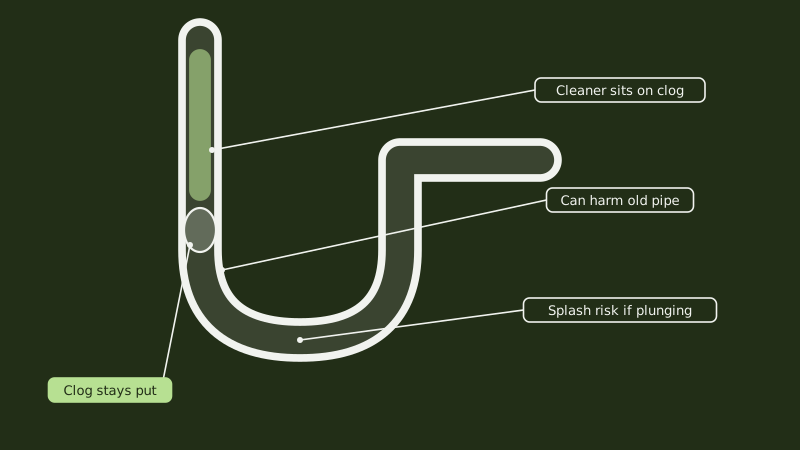
Never stir cleaners together, or add vinegar or bleach, because dangerous gas can result. If one has already gone down and failed, say so when the plumber arrives, so the line is opened with care. A snake or hydro jetting clears clogs without chemistry.
When is a clogged drain more than a home remedy can fix?
Phone a plumber if several fixtures run slow or back up, if sewage odor or water surfaces at a floor drain or tub, if the clog is back within days, or if the snake stops on something hard. Each of these points toward the main line, where root intrusion, a belly in the pipe or a collapsed section could be to blame.
Santa Ana's older homes have clay and cast iron sewer laterals that roots enter at joints and that scale inside over the decades. A camera run shows what sits down there, and the cleanout, normally a capped pipe on the side or front of the house, is the plumber's way in. For related drains, see unclogging a shower drain, a slow bathroom sink and a bathtub drain. The price page for unclogging a drain shows what a professional visit tends to cost.
How do I keep drains from clogging again?
Use a hair catcher in tubs and showers, wipe grease from pans into the trash rather than the sink, run hot water after washing dishes, and avoid flushing wipes. Every month or so, run a kettle's worth of hot tap water through any drain that has started to drag. Ask a plumber about cleaning if a line is clogging regularly.
Hard water in Santa Ana leaves extra scale and soap film, so periodic cleaning or a softener helps, and removing hard water scale goes into that. A clog that keeps returning deserves a closer look, so put it on the price request page and we have a plumber sent out to track down the cause.
Common questions
What clears a drain quickest without chemicals?
A plunger with a tight seal and a plugged overflow usually wins, with a plastic hair tool or hand snake next. Grease responds to very hot water and dish soap. Most household clogs give way in minutes, and two failed tries suggest the blockage sits past what home tools reach.
Can the fizzy mixture damage pipes?
In normal amounts, no. The mix is mild and fine for freshening. It is just not strong enough to clear a real blockage. Do not combine it with commercial drain cleaners, and do not seal it into a closed pipe, where the fizz can build pressure.
Is a snake safe on every drain?
On most sinks and tubs a small hand tool is fine. Never force it, and keep power snakes off thin plastic or old pipe unless you have the experience. A toilet needs a closet auger, which is shaped so it will not scratch the porcelain.
What makes a clog return?
A repeat clog means the original cause stayed put, or the pipe itself has trouble: a sag, roots, thick scale or a rough joint that catches hair, grease and soap. A plumber with a camera can tell which. Cleaning, repair or replacement are the usual fixes.
For the wider picture, start with Santa Ana plumber.
Sources
- Poison Control, 1-800-222-1222, for anyone exposed to drain cleaner fumes or contact
- US EPA guidance advising septic system owners to avoid chemical drain openers and use mechanical methods
- Published plumber and consumer guidance on drain cleaning methods, compared November 2026
Last updated