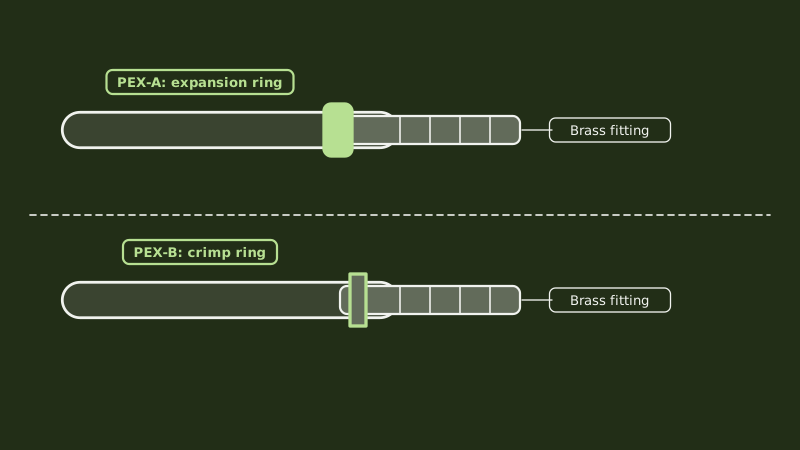
Short answer: PEX-A is not simply better than PEX-B, and B is not simply the budget option. The Plastics Pipe Institute says the letters describe how the pipe is made, not a rating of quality, and any type sold for drinking water has to satisfy the same ASTM F876 standard. What differs is feel and fittings. PEX-A bends more easily and can have kinks relaxed with a heat gun. PEX-B is stiffer, usually costs less and connects with crimp or clamp rings.
If you are weighing a whole-house repipe, the PEX repiping overview covers the whole job, and the quote page handles requests for a price. Here the only question is A versus B.
How do PEX-A and PEX-B actually differ?
Each letter names a cross-linking method. PEX-A is cross-linked during extrusion while the polymer is hot. PEX-B is cross-linked afterward with moisture and heat. PEX-C uses an electron beam after extrusion. The result is a different feel in the hand and different fittings, not a different purpose.
A side-by-side from published sources:
| Point | PEX-A | PEX-B |
|---|---|---|
| Made by | Peroxide method during extrusion | Silane moisture cure after extrusion |
| Flexibility | Most flexible, tightest bends | Stiffer |
| Kinks | Can often be repaired with a heat gun | Cut out the kink and add a coupling |
| Usual fittings | Cold-expansion rings (ASTM F1960) | Insert fittings with copper crimp or stainless clamp rings |
| Flow at fittings | Larger bore with expansion fittings | Insert fittings narrow the bore slightly |
| Cost | Generally higher | Generally lower |
| Connection strength | Strongest with expansion fittings | Fine with the right rings |
Plumber Magazine reports about 85 percent cross-linking for PEX-A, 65 to 70 percent for PEX-B and 70 to 75 percent for PEX-C, though the standard sets minimums and both pass them. I did not confirm the exact minimum cross-link figures in each standard, so ask the plumber for the product's listing.
PEX-C is the third type. It is stiffer, and Plumber Magazine notes it can yellow from oxidation unless pigmented.
Is PEX-A better than PEX-B?
For some jobs, yes. PEX-A suits tight bends, retrofit work behind walls and repairs where a kink may happen, because it springs back and a heat gun can relax a kink. PEX-B suits straight runs and budget jobs, and many installers use it for entire homes without trouble. The better pipe is whichever one the installer handles well.
The pros of PEX-A:
- Tighter bends mean fewer fittings in a retrofit, where pipe has to snake through existing framing.
- Expansion fittings give a bigger waterway and a very secure joint.
- Heat-gun repair of a kinked section saves a cut-and-coupling.
The pros of PEX-B:
- Lower pipe cost, and crimp or clamp fittings and tools are cheaper.
- Common and well understood, with a wide choice of fittings.
- Stiffness helps on long straight runs, which hold their line.
The honest downsides: A costs more, and its fittings and tools cost more. B makes tight turns awkward, needs more fittings in a retrofit and narrows flow slightly at each insert fitting. Neither is a defect. The two can also be mixed in one system with the right transition fittings.
Does it matter more which brand or rating I choose?
Often, yes. The tubing carries a printed code showing its chlorine resistance and UV exposure limit, and those ratings vary by product, not by letter. Ask which rating the tubing carries and who made it, and ask that fittings carry a drinking-water listing. A well-rated PEX-B can outlast a poorly rated PEX-A.
The Plastics Pipe Institute publishes chlorine resistance guidance because chlorinated water slowly degrades some plastics. Municipal water in Orange County is disinfected, so this applies here. It is the same reason polybutylene failed in many homes; see what happened to polybutylene. Check the code printed along the pipe, and ask the plumber to confirm that the product is listed for potable water.
UV matters on site: PEX should not sit in sunlight. Manufacturers publish how many months of exposure their tubing tolerates, often one to six, and a job that leaves coils outdoors for weeks is a red flag.
Which one costs less for a Santa Ana repipe?
PEX as a family costs less than copper, and B tends to cost a little less than A. Cost guides show whole-house repipes spanning roughly four to fifteen thousand dollars, with PEX toward the lower end for a house of 2,000 square feet and copper at roughly double that. The A-or-B difference is a sliver of that, because labor, access and patching dominate.
So letters rarely move a bid by much. What does: house size, slab versus raised floor, plaster walls and patching, bathroom count, and the permit and inspection. A breakdown is in what a repipe costs, and PEX against copper compares the materials. If your Santa Ana house was built between the twenties and the fifties and still has galvanized pipe, the bigger decision is leaving steel behind, which redoing an older home's plumbing discusses.
Does a PEX repipe need a permit here?
A repipe in Santa Ana needs a city permit whichever pipe you use, because the city requires one before a regulated plumbing system is installed, altered or replaced. PEX is a standard material in modern plumbing codes, but the plumber should confirm the current rules and that the product is approved for potable water here.
A contractor license goes with permitted work in California, and with any job whose labor and materials reach $1,000, so a repipe belongs with a contractor. That contractor generally obtains the permit and schedules the city inspection. See how to pull a plumbing permit and how a house gets repiped.
I could not confirm the California Plumbing Code wording on PEX from an official source in this check, so treat code language as something to put to the plumber and the Building and Safety Division, not as a fact from this page.
Which questions should I put to the installer about the tubing?
Find out the type, the brand and the chlorine and UV rating the tubing carries. Ask what fittings are used and whether they are listed for potable water. Ask how the pipe is protected from sunlight, nail plates and sharp edges, who patches the walls and who pulls the permit. Get the answers on paper.
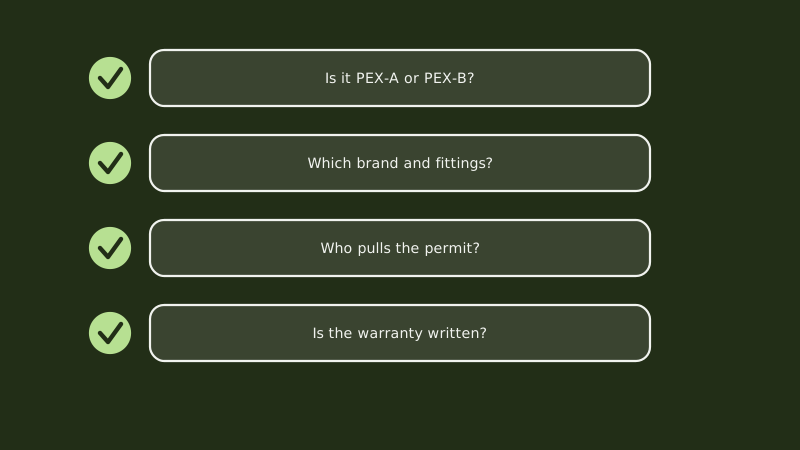
Some extra checks that separate careful installs from careless ones:
- Pipe is supported at proper intervals and not left to hang.
- Protection plates where pipe passes through studs.
- No PEX against a flue, water heater vent or recessed light; hot parts need the right connectors.
- A pressure test before walls close, and an inspection.
- A transition to the water heater using approved connectors.
Common questions
Is either type better for hot water lines?
Both are made and listed for hot and cold potable water, and both go into hot water lines. What matters is the temperature and chlorine rating printed on the tube and the quality of the fittings. Have the plumber confirm that the rating covers your water heater's temperature setting.
Is it acceptable to mix the two in one house?
Yes, with transition fittings made for the combination. Many installers carry both and pick whichever suits each run. What you must avoid is fittings not designed for the pipe in question, because a mismatched fitting often leaks, and the plumber should pressure test everything.
Does one letter last longer?
Neither letter predicts lifespan. Published guides often give 40 to 50 years for PEX in general, and good installation plus the chlorine rating matter more than the letter. Poor fittings, sun exposure and over-stressed bends cause most failures, so ask about all three.
Do cold nights affect one type more?
PEX in general tolerates freezing better than rigid pipe because it can expand, which is one of its selling points. Hard freezes are uncommon in Santa Ana, but attic and outdoor runs still deserve insulation. Neither type should be relied on to survive repeated freezes.
Is PEX fine for drinking water?
PEX listed for potable water meets the standards that apply to drinking water plumbing, and tubing and fittings should carry a potable listing. If someone in the household has a concern, ask the plumber for the product's listing and read it. The comparison in PEX against copper covers the materials side by side.
You can see more of our services on the Santa Ana Plumbing Co home page.
Sources
- Wikipedia, Cross-linked polyethylene (how PEX types are made)
- Plumber Magazine, Not All PEX Is Created Equal (manufacturing, kink repair, fittings)
- Plastics Pipe Institute, Guide to Chlorine Resistance Ratings of PEX (TN-53)
- Published whole-house repipe cost guides (PEX and copper), checked November 2026
- City of Santa Ana, When is a Permit Required?
Last updated