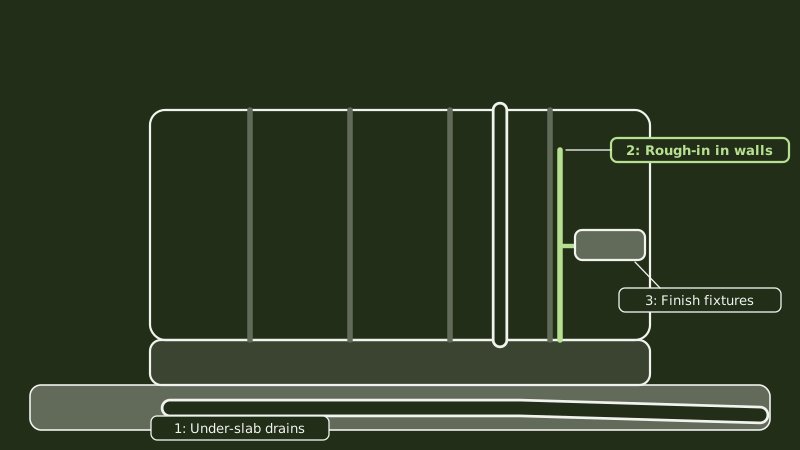
Cost guides put plumbing a standard new house in a band of eight to twenty thousand dollars overall, which works out to four to ten dollars a square foot. Rough-in alone averages near $4.50 a foot, with finish work and fixtures added afterward. Those figures are national, so the price for your project can only come from a written bid on your plans.
Building, adding a unit or finishing a shell? The quote page is where a bid begins, and our home page shows the other services we arrange. Ahead: the three phases, what moves the number, what Santa Ana adds, and what to do if the "new house" is only new to you.
What does plumbing a new house usually cost?
Most guides settle between eight and twenty thousand dollars for a standard home, and above twenty-four thousand for large custom builds with premium fixtures. By area, expect roughly four to ten dollars a square foot. Taking a house of 2,000 square feet with two or three baths, rough-in typically falls between eight and twelve thousand, and finish work between two and five thousand.
Guides slice the total differently, hence the spread. One puts rough-in plus fixture installation near twelve to twenty thousand. Another gives eight to fifteen thousand for a complete job. A third lists eight to sixteen thousand for rough-in plus two to five thousand for finish. All of them share one shape: pipe in the walls costs much less than the fixtures that come last.
Wet areas drive cost more than floor area does. Three bathrooms stacked above one another cost less to plumb than three at opposite ends of a sprawling plan. Quoted per fixture, rough-in is commonly five hundred to fifteen hundred dollars.
A rough breakdown from the published ranges:
| Phase | Typical range | What it covers |
|---|---|---|
| Rough-in, mid-size house | $8,000 to $12,000 | Drain, waste, vent and supply pipe in framing or slab |
| Finish and trim | $2,000 to $5,000 | Setting fixtures, connecting, testing |
| Fixtures, each | $450 to $1,800 | The toilet, sink, tub or shower itself |
| Whole house, complete | $8,000 to $20,000 | Standard home, rough-in through finish |
What are the phases of new house plumbing?
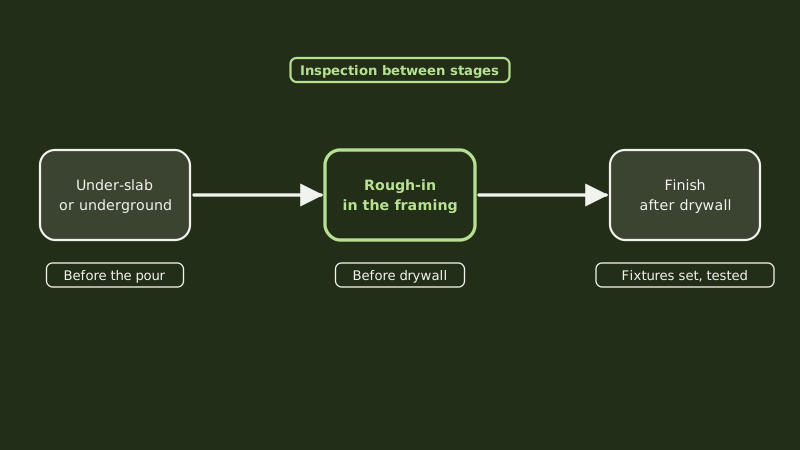
Plumbing a new house runs in three stages: underground or under-slab piping before the pour, rough-in once the walls are framed, and finish after drywall and flooring. Each stage normally passes a city inspection before the next starts. The order matters, because errors buried in concrete or walls cost the most to correct.
- Underground or under-slab. Drain lines and sewer connection go in the ground before the slab is poured. Santa Ana has many slab houses, so this stage defines the layout for good.
- Rough-in. Supply lines, drains, vents, shutoff valves and gas piping go through the framing. The water heater location and any HVAC condensate drains are planned here.
- Finish or trim. Toilets, sinks, faucets, showers, the water heater and appliance connections are set, then tested.
Inspections in between are typical, with the plumber pulling the permit and booking each visit. For how permits work in the city, see how to pull a plumbing permit.
What pushes the cost of new construction plumbing up or down?
The drivers are bathroom count and layout, fixture quality, pipe material, slab versus raised floor, gas appliances, water heater type and site conditions such as sewer depth. A modest builder-grade house costs less. Premium fixtures, copper throughout, extra bathrooms or a tankless water heater add real money.
- Count and spread. More wet areas, with more distance between them, mean more pipe and labor.
- Fixture choice. A budget toilet and a designer one install alike, but the purchase price differs a great deal.
- Pipe material. PEX generally costs less than copper. See PEX versus copper.
- Foundation. Slab work is done once, early. Raised floors let plumbers reach lines later.
- Gas. Running gas to a range, dryer, furnace or fireplace adds piping and a gas inspection. Our page on gas line costs covers it.
- Water heater. A tank unit costs less than a tankless one, which can also demand a bigger gas line or special venting. See what a tankless installation costs.
- Labor rates. Guides show plumbers near $75 to $150 an hour, so labor-heavy designs cost more. Plumber cost in Santa Ana explains how rates are built.
What does a new Santa Ana house need that others might not?
Santa Ana adds a city permit and inspections through the city's Building and Safety Division, a decision on whether the home will have gas, and a slab foundation plan if the house sits on one, as many local houses do. A bathroom or accessory unit raises the plumbing scope and the inspection count with every new wet area.
Permits come first. Santa Ana requires one before anyone installs, alters or replaces a regulated plumbing system, and new construction adds plan review. Fees depend on the project, and no current schedule was available to me, so ask the city or the contractor to show the permit line on the bid.
Water supply details also matter. The city serves its own water, and supply to a new house typically involves a meter and a backflow device on certain connections, such as irrigation. See backflow testing rates for what that costs over time. California's energy code, Title 24, affects water heating and pipe insulation requirements, so confirm the requirements with your designer before bidding.
Whether the new home will use gas at all is worth checking with the city early, because local rules on gas in new buildings vary around California. Gas piping, if included, is regulated work for a contractor, finished with a pressure test and inspection, and SoCalGas handles the meter side.
On hiring: permitted work, and any job whose labor and materials reach $1,000, falls under California's contractor license rule, so the plumber on a new house should hold a license. Look the number up before you sign anything.
How do I compare bids for a new house?
Collect two or more written bids on the same plans and fixture list, and compare them line by line. Check whether each covers underground work, rough-in, finish, fixtures, the water heater, gas piping, permits and inspections. A bid that omits fixtures or the water heater is not really lower.
Ask for:
- The license number, to check with the state.
- A fixture allowance and who buys the fixtures.
- Whether gas piping, the water heater and the hose bibs are included.
- Who pulls the permit and pays for inspections.
- A payment schedule that you understand and that fits California's rules on deposits.
- The plan if an inspector orders a change.
What if "new house" means a house that is new to me?
Then the plumbing money goes to inspection and repairs, not construction. A sewer camera inspection typically costs $125 to $500, and a plumber's visit to assess old pipe is a separate small fee. Older Santa Ana houses may hide galvanized or polybutylene supply, cast iron or clay sewer lines, and worn-out water heaters.
Before closing, ask for a sewer scope, check the water heater's age and strapping, find the main shutoff and test pressure. For a house of real age, redoing an older home's plumbing shows what a major overhaul runs, and water heater replacement shows the likely next expense. A remodel that opens walls is a good moment to upgrade; see plumbing for a bathroom remodel.
Common questions
What should rough-in cost?
Guides give about eight to twelve thousand dollars for a house of 2,000 square feet with two or three bathrooms, or five hundred to fifteen hundred per fixture. The spread reflects layout, material and whether slab work is included. Ask whether the bid covers underground pipe, gas and the water heater.
How many weeks does new house plumbing take?
It is spread across the whole build. Underground work takes days before the pour, rough-in a few days up to a couple of weeks depending on size, and finish a few days at the end. Framing, inspections and other trades set the calendar, so the plumber's visits arrive in three blocks.
Is the plumber already in a builder's price?
Usually, yes. When you buy from a builder, the plumber is a subcontractor whose cost is built into the price. If you act as your own general contractor, you hire and pay the plumber directly. Either way, note the license number and ask who obtains the permits.
Does the plumbing get its own permit on a new build?
Plumbing is typically permitted alongside the building project, with its own inspections, and the plumber or builder typically obtains the paperwork. Because requirements depend on scope, ask the city or the contractor how your project is handled and which inspections to expect.
Will a new house need a backflow device?
Not always, though irrigation and a few other connections may call for one. The water supplier sets the rule, and installed devices must be tested every year. The usual price appears in backflow testing rates, and the city can confirm what your lot needs.
Other plumbing work we arrange appears on our Santa Ana Plumbing Co home page.
Sources
- Published new construction plumbing cost guides (per square foot, per fixture, rough-in and finish), checked November 2026
- Published plumber hourly rate guides, checked November 2026
- City of Santa Ana, When is a Permit Required?
- California Contractors State License Board, AB 2622 minor work limit
- SoCalGas, Natural Gas Leaks
- Published sewer camera inspection cost guides, checked November 2026
Last updated