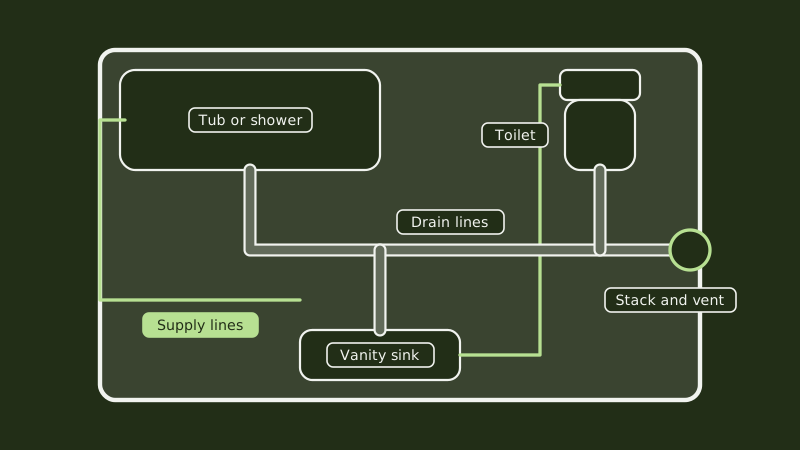
Settle the plumbing layout before you order a single tile. A bathroom remodel has two plumbing phases: rough-in, when pipes and drains go in behind open walls and get inspected, and finish, when the fixtures are set after the surfaces are done. Moving a toilet, a tub or a shower changes the rough-in and the price, while swapping fixtures in place does not. What else we line up for Santa Ana homeowners is on our home page, and the price request form starts a visit.
Which plumbing jobs are part of a bathroom remodel?
Most remodels touch four things: supply lines to the sink, toilet and shower, the shower or tub valve, the drains and their vents, and the shutoffs. A plain fixture swap is light work. Moving the shower, relocating the toilet or adding a second sink means opening walls or floors and changing drains, which is the expensive part.
Think of the work as layers:
- Shutoffs. The small valves at the sink and toilet, plus the shower valve. Old ones frequently stick or weep once touched, so a remodel is the moment to replace them.
- Supply lines. Hot and cold lines to each fixture, in copper or PEX. The usual trade-offs are laid out in PEX against copper.
- The valve. The mixing valve behind the shower wall controls temperature and is sealed in the wall, so choosing it comes before tiling.
- Drains and vents. Every fixture needs a trap, a drain sloped toward the main line and a vent so it empties quietly.
- Gas and ventilation. Bathrooms rarely have gas piping, but a gas water heater or a wall heater nearby affects what can be moved. An exhaust fan and any heater are HVAC trades, separate from plumbing.
Is a city permit needed, and who applies?
In most cases, yes. Santa Ana puts plumbing work on its list of permit jobs handled by the Building and Safety division, and a remodel that moves or adds pipes counts. The contractor usually applies, and an inspector looks at the rough-in before walls are closed.
A short checklist for permits:
- Ask whether the permit covers only plumbing or the whole remodel, and who applies for it.
- Confirm the inspection order: rough plumbing first, then wall closing, then final.
- Keep the signed inspection card. It matters when you sell.
- If you live outside Santa Ana, a different city office issues the permit. Irvine, Tustin, Garden Grove and the other nearby cities each run their own.
For how the process works in general, see how to pull a plumbing permit. An owner can sometimes do work on their own home, though a remodel with moved drains is a poor first project, and mistakes hide behind tile.
Per the Contractors State License Board, a job reaching $1,000 once labor and materials are added together calls for a California contractor license. Most bathroom remodels pass that line, so run the license number through the state board's lookup before signing.
What is SB 407, and does it change my remodel?
SB 407 is a state law that expects older fixtures to be replaced with water-saving ones when a house is altered under permit. For a single-family house dating to January 1994 or earlier, noncompliant fixtures must be replaced before a permitted alteration receives final approval. Noncompliant means a toilet rated above 1.6 gallons a flush, a showerhead above 2.5 gallons a minute, or an interior faucet above 2.2.
Local offices apply it a little differently. Orange County's own policy reads it as applying to permitted work, and Santa Ana publishes its own SB 407 page on what triggers it, which says a water heater replacement does not. Ask the permit counter how it treats your remodel, and have the quote price any replacement fixtures.
For replacements, the commonly cited standards are 1.8 gallons per minute for showerheads and kitchen faucets at 60 psi, and 1.28 gallons per flush for toilets in new construction under current state green building code. The county form lists 1.6 gallons per flush for toilets under the retrofit rule, so the standard that applies to your job is for the permit office to confirm.
What changes when the house has a slab, plaster or old pipes?
Moving a toilet on a slab means cutting the concrete to relocate the drain, which adds time and cost, and many people choose to keep the toilet where it is. Plaster walls, cast iron drains and galvanized supply lines make demolition slower and can turn up surprises. Plan a contingency in the budget for what is behind the walls.
Santa Ana's older housing makes this relevant. Houses from the twenties to the fifties commonly keep original cast iron or clay drains plus galvanized steel supply pipe, and some of those are close to worn out. When a remodel opens the wall, the plumber can see the real condition and may recommend replacing the section you can reach rather than reconnecting new fixtures to a failing pipe. Considering the whole house? See plumbing replacement in an old house.
Other things to expect in older bathrooms:
- Tile or adhesive from before the 1980s may contain asbestos. Have it tested before you break it up, and follow state rules if it is positive.
- Rot or water damage under an old tub or shower pan, found only once the surfaces come out.
- Hard water scale in old valves and fixtures. The city reports Santa Ana tap water at roughly 250 parts per million hardness, which is why older shower valves often seize.
- Low pressure on the line may become more obvious with new fixtures. Look at low water pressure from the shower if that is a worry.
In what order should the plumbing and finish work happen?
The usual order is demolition, rough plumbing, rough inspection, wall and waterproofing work, tile, finish plumbing, and a final inspection. Plumbing comes before and after the other trades, which is why delays in one hold up the next. Ask the plumber to confirm dates for both visits, not only the first.
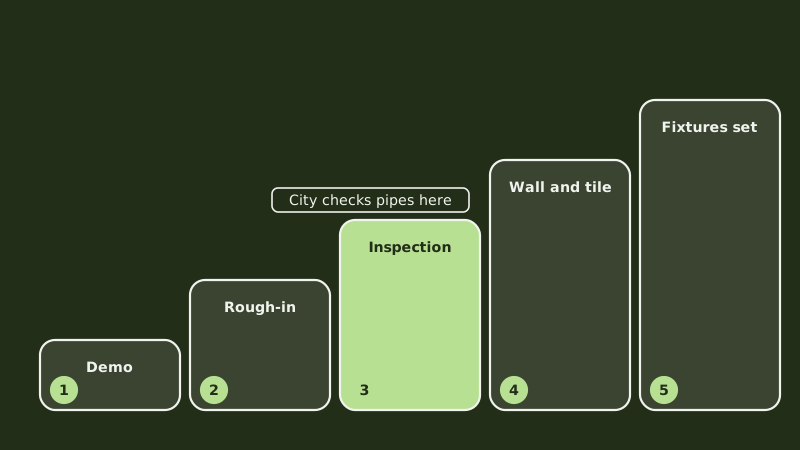
A sample sequence:
- Demolition and moving of any fixtures you want to reuse.
- Rough-in. Drains, vents and supplies are set, and the shower valve is placed at the right depth for the tile.
- Pressure and drain test, then inspection by the city.
- Walls, waterproofing and tile.
- Finish plumbing. Toilet, vanity, faucets and shower trim are set and connected.
- Final inspection and signed-off permit.
Order fixtures early. A valve has to match the trim you choose, and a vanity with an unusual drain can force a change. Keep boxes and paperwork, because they show the model numbers inspectors and warranty offices ask about.
How should I choose fixtures and keep maintenance simple?
Choose fixtures with parts that are easy to find, and keep access to shutoff valves. Skip rare specialty valves, since repairs get harder when parts are discontinued. Put an accessible shutoff for the bathroom, so a leak does not mean closing the whole house. A toilet and a quality shower valve are the places not to economize.
Useful choices:
- Toilet. A standard-size model with a common flapper makes later repair easy. See toilet repair for what gets replaced over time and what toilet installation costs.
- Shower valve. A scald-protecting mixing valve is standard, and the plumber can show you where its service access sits.
- Drain. A hair catcher in the shower saves a clog call later.
- Shutoffs. Quarter-turn valves at every fixture, a small outlay next to a flooded floor.
Maintenance after the remodel is light: look for drips under the sink twice a year, test shutoff valves, and do not use caustic drain openers on new traps.
Common questions
How long does the plumbing take in a bathroom remodel?
Rough-in is often a day or two, and finish plumbing a day, spread across the project because tile and waterproofing come between them. Moving drains or working on a slab adds time. Treat those as typical figures and ask the plumber for dates for both visits in your written scope.
Can I move the toilet or shower?
Usually, yes, at a cost. On a raised floor the plumber reroutes the drain between joists. On a slab, relocating a drain means cutting the concrete. Shower position also depends on vent routing and available space. Ask for the cost of moving it and the cost of leaving it in place.
Must the old fixtures come out?
Possibly. SB 407 expects noncompliant fixtures in older single-family homes to be swapped when an alteration permit is issued, though offices read it differently. The Santa Ana permit counter, or the office for your own city, can tell you how it treats your project.
Who connects the water and drain at the end?
A plumber does the final connections after the finishes are in. Some owners install a vanity or toilet themselves, but gas piping and permitted work must follow code. If connections leak after the finish is done, the damage is hidden in new cabinets, so many people have the plumber do the finish too.
Does a remodel affect my water pressure or hot water?
It can. New fixtures draw water differently, and added fixtures can show weak spots in old pipes. A remodel is a good time to check static pressure and the water heater's capacity. Have the plumber read pressure before and after and say whether the heater is big enough.
Sources
Last updated