To winterize a mobile home, you close the main valve, drain every line and the water heater, open the faucets, protect the traps with plumbing antifreeze, and insulate anything exposed underneath. Santa Ana does not often see hard freezes, so the job matters most for a home that will sit empty. Routine checks like these are also what a maintenance plumber does. For other services, see the home page.
Do I need to winterize a mobile home in Santa Ana?
Usually not for a lived-in home, since sustained freezing rarely reaches the Orange County lowlands. It is worth doing when the home will be vacant for weeks, when you are going to be away in cold weather, or when exposed pipes sit in an open underfloor area. A single cold snap can crack a pipe nobody is watching.
Occupied homes get a lighter version: insulate exposed lines at the supply connection, keep skirting intact so wind does not blow under the floor, and know where your shutoff valve is. For more on the problem itself, the pages on why pipes burst and how to prevent a burst pipe explain the physics and the habits that help.
What are the steps to winterize the plumbing?
Shut off the main where water enters the home, open every faucet to empty the lines, drain the water heater, and pour a food-safe plumbing antifreeze into each trap and the toilet. A gas heater's control goes to its off or pilot setting as the maker directs. Unsure about a step? Leave it to a plumber.
A reasonable order, working from the supply in:
- Start with the water heater: cut its power or set its gas control to off, so nothing heats an empty tank. Then close the main valve, whether it is the park's or the home's.
- Open the highest and lowest faucets, flush each toilet, and let the lines empty.
- Drain the water heater from its bottom valve.
- Pour propylene glycol antifreeze made for plumbing into each sink, tub and shower trap and the toilet bowl.
- Close the faucets, label the main valve, and note the date.
Never use automotive antifreeze, which is toxic. When you reopen, run water slowly and check inside the cabinets for drips before you trust the system.
What does the plumbing in a mobile home look like?
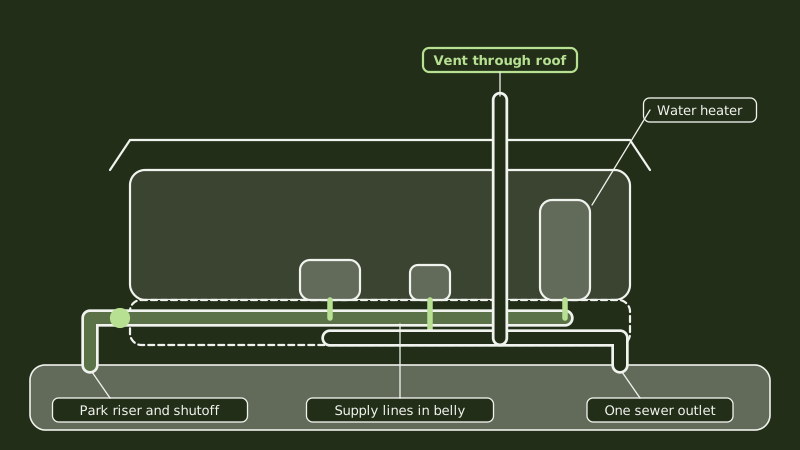
A typical layout runs water in from the park riser or street connection, through a shutoff valve and often a pressure regulator, to the water heater and fixtures, with drain lines collecting under the floor and leaving at a single outlet to the sewer connection. Vents carry air up through the roof. Every make is a little different.
Water lines usually run in the belly between the floor joists, where a layer of insulation and a bottom cover keep them out of the weather. Drains are commonly plastic, and some older homes carry polybutylene supply pipe, which has a known failure record: read polybutylene replacement if you see gray flexible tubing. The data plate inside a cabinet or closet carries the manufacturer's name and the serial number, which tells a plumber which layout to expect. For a deeper look, our page on mobile home plumbing inspection shows where leaks hide.
Who is allowed to repair mobile home plumbing?
Work on the home itself falls under the state housing department (HCD), not the city, which handles permits for changes to a manufactured home or mobilehome. Park-owned lines are the park's concern. Expect the plumber to know HCD's rules, and expect to phone its Mobilehome Assistance Center if a permit question comes up.
HCD publishes guidelines on alterations, including drain, waste and vent repair. I could not read the permit table in full, so I will not say which repairs are exempt. Ask the plumber, and read your park's rules too. City permits, including the how to pull a plumbing permit guide, apply to site-built houses and are not the same system.
What do mobile home plumbing vents do, and how do I check one?
Vents let air in behind the water in the drains so traps hold and drains flow without gurgling. A vent cap on the roof keeps rain and debris out. A blocked or broken vent shows up as slow drains and sewer smell. From the ground or a ladder at a safe spot, look for a missing or crushed cap, leaves, or a bird's nest, and stay off a wet or weak roof.
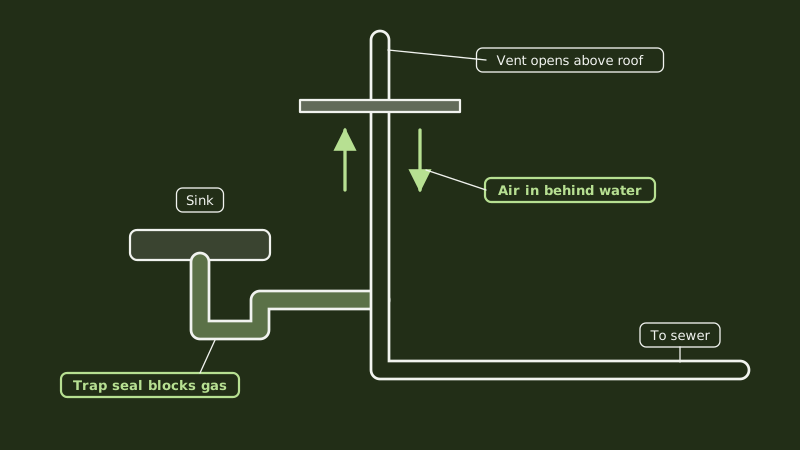
Typical symptoms are a sink that gurgles when the toilet flushes, a dry trap, or a sewer smell in one room. A plumber can clear the stack or fit a new cap. Never seal a vent shut.
What does a maintenance plumber check on a routine visit?
A maintenance plumber looks at the things that fail quietly: valve operation, water heater condition, supply line condition, drain flow, visible leaks, pressure and any gas appliance connection. The aim is to catch a corroded connector or a stuck shutoff valve before it becomes an emergency. A visit usually ends with a written list of what to fix and in what order.
The checklist usually includes:
- Exercising the main and fixture shutoff valves, since valves that sit untouched for years seize.
- Reading water pressure, because high pressure wears fixtures and causes water hammer.
- Inspecting the water heater: tank condition, relief valve, venting and any gas connection.
- Running every drain and watching for slow flow.
- Looking inside the cabinets under each sink for dampness.
- Checking the appliances that share the space, since gas water heaters and furnaces share venting and an HVAC contractor may need to coordinate.
A gas smell is never a maintenance item. Walk out first. Once outside, SoCalGas takes the report on its emergency line at 1-800-427-2200, and 911 is for real danger.
Common questions
How do I read a mobile home plumbing schematic?
Look for the supply symbols first, usually a main shutoff, regulator and water heater, then branch lines to each fixture, then the drain lines with their vent connections. Diagrams differ between makers, so find the one for your model. If you cannot find it, the plumber can sketch the layout after a look under the floor.
How long do water pipes last before replacement?
No fixed schedule exists. Lifespan varies with the metal or plastic, the water chemistry and the quality of the install, so go by condition: leaks, rusty water, falling pressure. A plumber can inspect and test. For options, our comparison of PEX versus copper covers the common replacement materials.
Can I insulate mobile home pipes myself?
Yes, foam sleeves on exposed pipe near the supply connection are a simple owner task. Do not pack insulation against a gas water heater vent or a flue. Heat tape needs correct installation and should never be wrapped over itself. If the belly cover is torn, a plumber or a repair specialist can reseal it.
What does a maintenance visit cover for a vacant home?
They shut and drain the system, protect traps, check for leaks on startup and look at anything likely to fail while unattended. On reopening they test pressure and valves before water stays on. The result is a written note on condition, which also helps if an insurance question comes up later.
Sources
Last updated