Here is the short version for a copper pinhole. Stop the water, dry the pipe, wrap or clamp over the hole, and treat that as a bandage. The cure is cutting away the pitted stretch and fitting new pipe with a solder, push-fit or press coupling. One pinhole often means the wall is thinning elsewhere on the same run, so have the rest checked. A plumber can handle the permanent repair, and the quote page takes the request.
The guide sits within our burst pipe section. After the pinhole it covers the leaks people search for alongside it: a weeping joint, a suspected break inside a wall, a stained ceiling and a damaged line in the yard.
Why does copper pipe develop pinhole leaks?
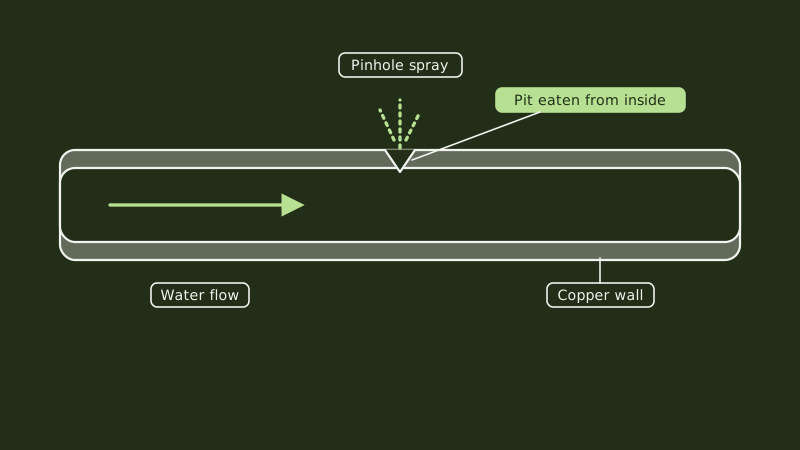
A pinhole is a minute opening that corrosion has bored through the copper wall, mostly from the inside. It may spray a fine jet or seep for months unseen. Research ties pinholes to water chemistry, contaminants on the pipe surface and microbial corrosion, with fast flow and sharp bends making things worse.
Virginia Tech work found that water containing aluminum, a high chlorine residual and relatively high pH can pit copper tube, and that pitting grew with heavier use and just past bends. Failure analyses from the Copper Development Association add poor workmanship, sulfide-induced pitting and erosion where water moves fast. No single cause fits every house, and I cannot name the cause of your leak without seeing the pipe.
In Santa Ana, copper is common in houses that were repiped or built after the galvanized era. When copper that is decades old begins to pit, pinholes often arrive in clusters. A second one within months is the cue to have a plumber review the entire run. What that involves is laid out in repiping prices.
Can I stop a pinhole leak temporarily?
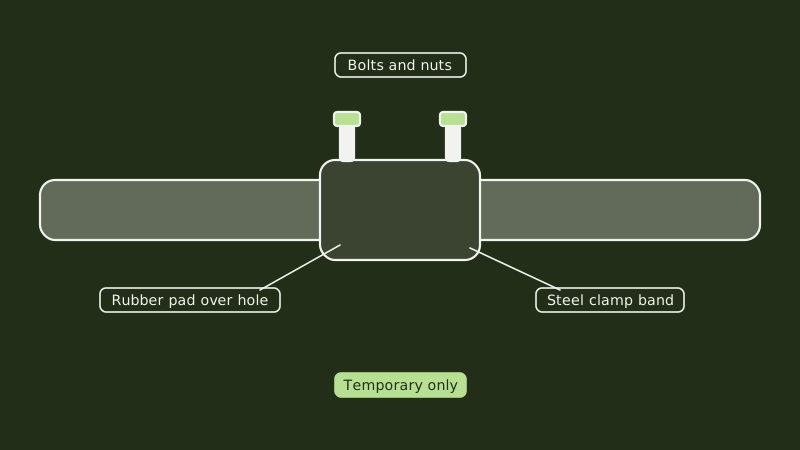
Yes. Turn off the supply, let a tap run empty, dry the spot, then use a rubber-pad repair clamp, two-part epoxy putty or self-fusing silicone tape. Cover well beyond both edges of the hole, bring the water back slowly and watch for drips. Whatever you choose is a stopgap for days, not for years.
From quickest to sturdiest:
- Self-fusing silicone tape. Pull it taut, overlap each turn and carry it beyond the hole. Suits a pinhole on a straight run.
- Epoxy putty. Knead it, press it over the hole, let it cure per the label. The pipe must be dry, which draining achieves.
- Repair clamp. A rubber pad sits on the hole under a steel band. Of the three, it holds best under pressure.
- Push-fit repair coupling. This is where a stopgap becomes a permanent fix, and it needs a clean cut, so it edges into plumber territory.
Let the plumber know what you used, because a patch hides how worn the pipe really is. Keep open flame away from a damp or insulated wall. On the legal side, the state contractor board sets its line at a $1,000 combined total for labor plus materials, and any permitted job needs a contractor, so patching a pinhole is yours while reworking the plumbing is not.
What does a lasting repair involve?
You remove a short length around the pinhole and bridge the gap with new copper, joined by solder or by a push-fit or press coupling. Use lead-free solder and fittings rated for drinking water. The pipe must be completely drained, since water inside keeps solder from flowing. Torch work near framing is a fire risk, so push-fit and press joints are popular.
The sequence a competent repair follows:
- Shut the supply and open one tap high in the house and one low, so the line empties.
- Cut the damaged length with a tubing cutter, leaving clean round ends.
- Deburr, clean, and test-fit the coupling before committing.
- Make the joint by solder, push-fit or press tool.
- Bring water back gradually, check each joint, and leave the wall open for a day before closing it up.
Plumbers carry press tools and heat shields, and can judge whether the rest of the run has thinned. When the leak hides behind a finished wall or under a slab, finding it comes first, and detection gear does that without opening the whole wall. For concrete floors, see slab leak repair.
What are the signs of a break behind the drywall?
Listen for hissing or running water with every tap closed, and watch for a damp, stained or bubbling wall, a floor that is warm in one place, a musty odor, a pressure drop or a climbing bill. To confirm, read the water meter with all use stopped, wait two hours and read again. Movement means water is escaping somewhere.
The meter check comes from EPA WaterSense. If the dial moves while nothing visible is wet, the leak is hidden in a wall, below a slab or underground. Shut the main to stop the flow and call a plumber. Each clue gets a fuller treatment in spotting a burst pipe.
Resist cutting into the wall at a guess. Plumbers pinpoint the break with acoustic or thermal tools and then open a small patch. Treat a wet wall near outlets as live. Illinois Extension and Ready.gov both warn about electric shock around standing water, so cut power to that area at the breaker if water is near wiring.
What is the right way to dry a ceiling after a leak?
Fix the source, then move air: fans, a dehumidifier, and wet insulation out. EPA advises repairing leaks promptly and drying everything completely, and notes that porous materials like ceiling tiles may need to be thrown out if mold takes hold. A ceiling that sags or bulges is holding water and often has to be opened.
A workable order of events:
- Cut off the water and, where fixtures are wet, the power to that circuit.
- Set buckets and clear the furniture.
- If the ceiling bulges, pierce it at the lowest point so the water runs into a bucket. Wear eye protection.
- Pull soaked insulation and any drywall that is soft or drooping.
- Run fans and a dehumidifier, and open windows when the weather permits.
- Look for mold after a few days. EPA points professional help at mold across about 10 square feet or any damage from sewage.
Textured ceilings and old materials in older Santa Ana homes can contain asbestos, so have a sample tested before scraping or sanding. A plumber mends the pipe, while drying and drywall are other trades. Related pages: what to do about water from a ceiling and ceiling damage after a leak.
What about a leaking joint, such as PVC?
Drain and dry the joint first. A threaded fitting may tighten a quarter turn, but a solvent-weld PVC joint cannot be re-glued while it leaks. What works reliably is removing the joint and fitting a new coupling, either with primer and cement or a mechanical coupling, once the line is depressurized.
Joint type decides the fix:
- Threaded: tighten a little, or take apart, re-wrap with tape or sealant and reassemble.
- Soldered copper: a weeping joint normally has to be redone, because new solder will not bond to wet or dirty metal.
- Solvent-weld PVC: cut out and replace with a coupling.
- Push-fit: often a poorly cut pipe end or a missing insert. Remove, inspect the end and reseat.
PVC mostly serves drains and outdoor irrigation. Supply lines indoors are more often copper, CPVC or PEX, so identify the material before picking a repair. More detail in fixing a leaking pipe joint.
What can I do for a leaking pipe outside, or any leak until help comes?
Close the nearest valve or the main, drain the line and apply a clamp, putty, tape or rubber patch to buy time. For a broken line in the yard, shut the irrigation valve or the main, and ring 811 before digging so buried utilities get marked. Leave the patch on only until a plumber renews the section.
For a burst yard line, see a burst water pipe in Santa Ana, and for the first minutes of any burst, the emergency burst pipe page. A sprinkler line often has its own valve, and any backflow device on it may need a test after the repair.
Common questions
Will a pinhole leak ever heal on its own?
Occasionally mineral deposits plug the hole, and research notes that flow through some copper pinholes dropped because of deposits. That is a pause rather than a cure, since the wall is still thin and the leak can come back. Inspect the pipe rather than trusting the lull.
What does a pinhole leak repair cost?
A small repair at an accessible spot is a short visit: a call-out fee, an hour or so of labor and a few parts. Behind a wall or under concrete the price rises with the work needed to reach the pipe. Typical bands are in plumber costs in Santa Ana.
Is a pinhole leak urgent?
Urgent, though not frantic. A fine spray in a wall can saturate insulation and drywall within a day. If you cannot reach the spot, or it is near wiring, close the main. A visible drip at an open pipe, with the water caught, can wait for a normal slot.
Should every copper pipe go after one pinhole?
Not automatically. A single pinhole in otherwise sound pipe is a repair. Two or three in a few years says the pipe is wearing out, and the sensible step is for a plumber to assess the whole run. A repipe costs more but ends the cycle.
Will my home insurance pay for a pinhole leak?
Policies differ, though sudden leaks tend to be covered and long-running damage tends not to be. Photograph everything, keep the removed pipe section and ask your insurer before repairs begin. See insurance and burst pipes for the usual dividing line.
Everything else we arrange is listed on the Santa Ana Plumbing Co home page.
Sources
- Virginia Tech research on copper pitting and pinhole leaks (water chemistry, chlorine, pH, flow)
- EPA WaterSense, Home Maintenance (meter check for leaks)
- EPA, Mold Cleanup in Your Home
- Illinois Extension, Water Pipes (shutoff and safety when a pipe bursts)
- Ready.gov, Safety Skills (main shutoff valve, electricity)
- California Contractors State License Board, AB 2622 minor work limit
Last updated